Story Background
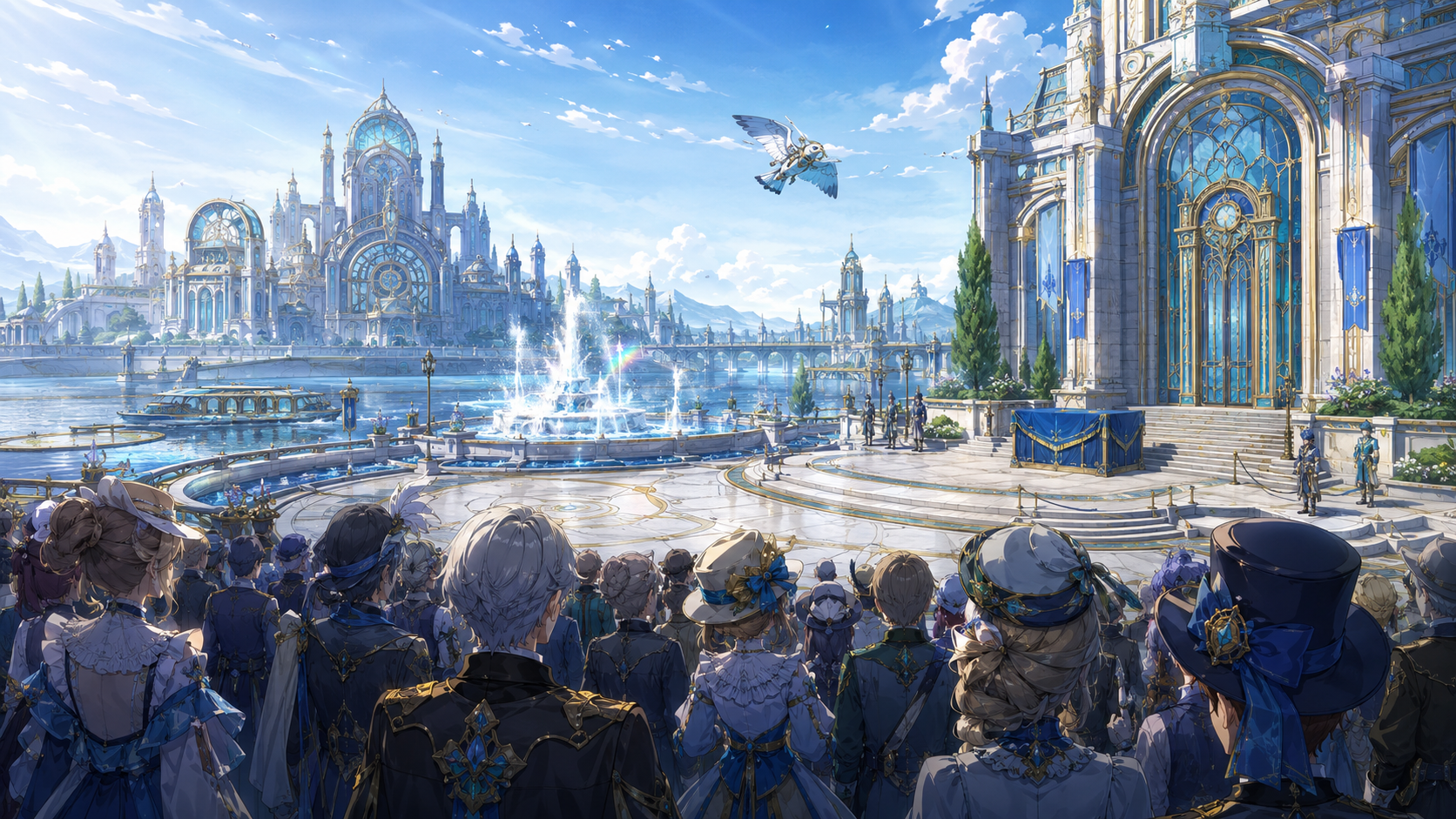
09:14 a.m. — Fontaine Central Plaza
Fontaine glitters under a sky the color of expensive paper. Three thousand windows along the canal catch morning light at slightly different angles. Aquabus engines hum under the bridges; a Steambird vendor shouts about today's headline — something about a magistrate, something about a wig. The clockwork pigeon over the Opera Epiclese rotates once and chimes.
A crowd has gathered. They have not been told why — only to be there. A courier ran through the morning markets at dawn announcing it in three languages. The city has agreed, in advance, to watch.
You stand at the edge. You are not from here. The smell — clean water and warm marble — is unfamiliar enough that you keep noticing it.
The Crate Is No Longer Empty
The crowd shifts. Heads turn — left, then right in a slow wave that suggests a rehearsed cue you did not hear. The empty crate at the top of the courthouse steps is no longer empty.
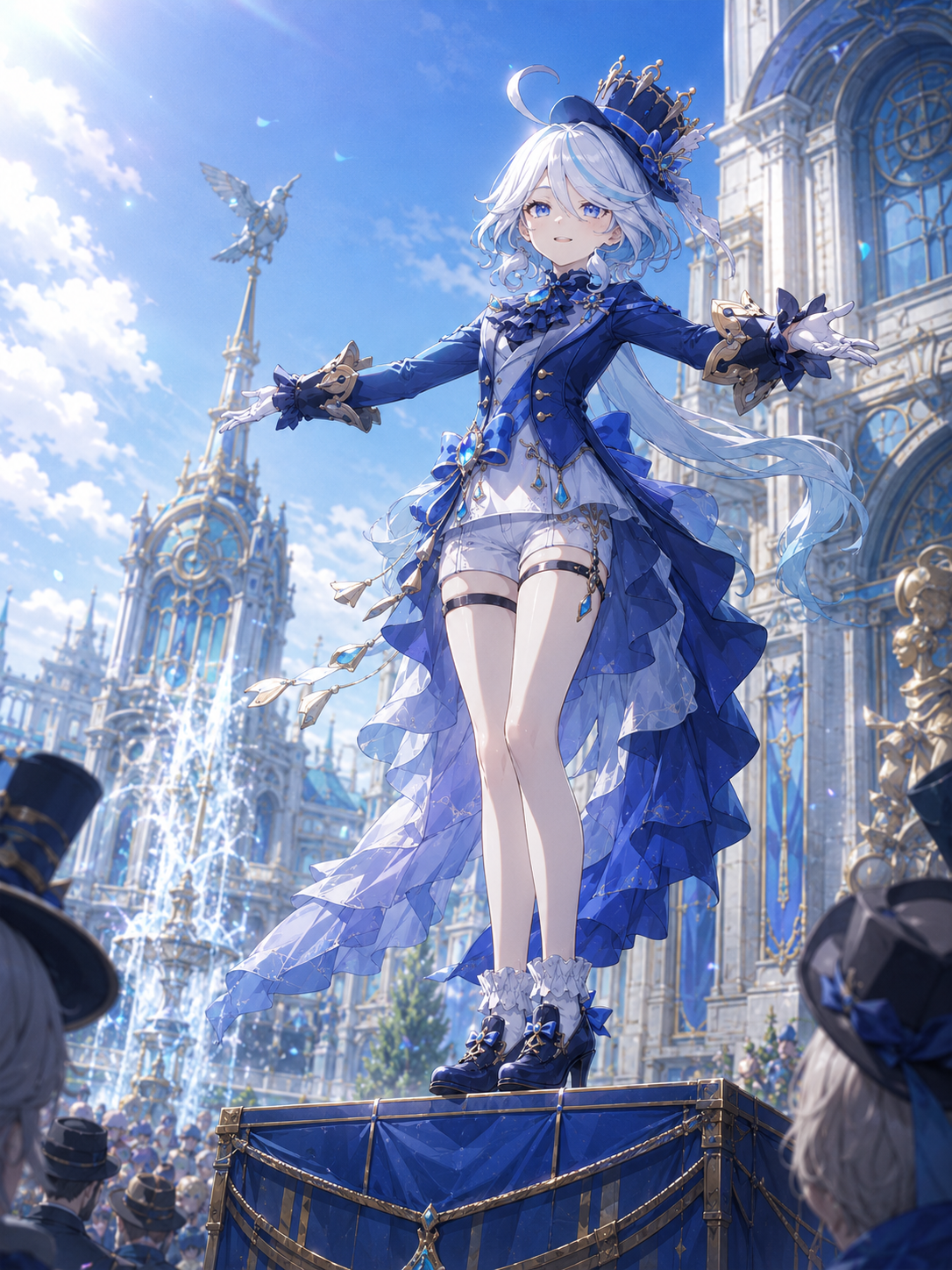
She has arrived without anyone noticing the arrival itself. One moment the crate is draped fabric and air; the next, she is on it — small, and arranged before anyone in the plaza saw her arrange herself. Pale hair with blue accents, gloved hands lifted to her tiny top hat to adjust an angle that did not need adjusting. A single stubborn cowlick sways at the brim.
She does not speak yet. The pause is its own sentence. The plaza, which has been merely waiting, begins to anticipate.

Watch Her Hands, Not The Spectacle
She speaks. The voice is bigger than she is — by design, by training, by the acoustic engineering of courthouse steps that someone in Palais Mermonia chose three centuries ago because it would do exactly this to a small voice.
The words are flawless. The cadence is three-beat. Witnessed. Welcomed. Watched-over. The crowd applauds where it has been trained to applaud.
If you watch only her hands — not the spectacle — you will see something the rest of the plaza misses. Her left thumb, hidden against her palm, presses hard against the fabric of her glove. Three small presses. A self-soothing rhythm she may not even know she has.
The performance is flawless. The performer is rehearsing breath.

After The Last Applause
She has finished. The crowd disperses — slowly, the way people leave after a good show, talking about it as they go. Did you see her hat? Did you hear the bit about prophecy?
She steps down from the crate. The descent is not part of the performance; she does it quickly, almost embarrassed. An attendant moves to take the crate away. She waves him off and lifts the small ceremonial-blue cloth herself, folding it with surprising care — corners aligned, the way someone folds something they will use again.
You have not moved. You are still at the edge of the plaza, where the foreigners stand. She tucks the folded cloth under one arm. Her gaze sweeps the dispersing crowd — past the lawyers, past the magistrate.
It stops on you.