Story Background
08:14 a.m. — Ghost Bean, Tuesday Seven
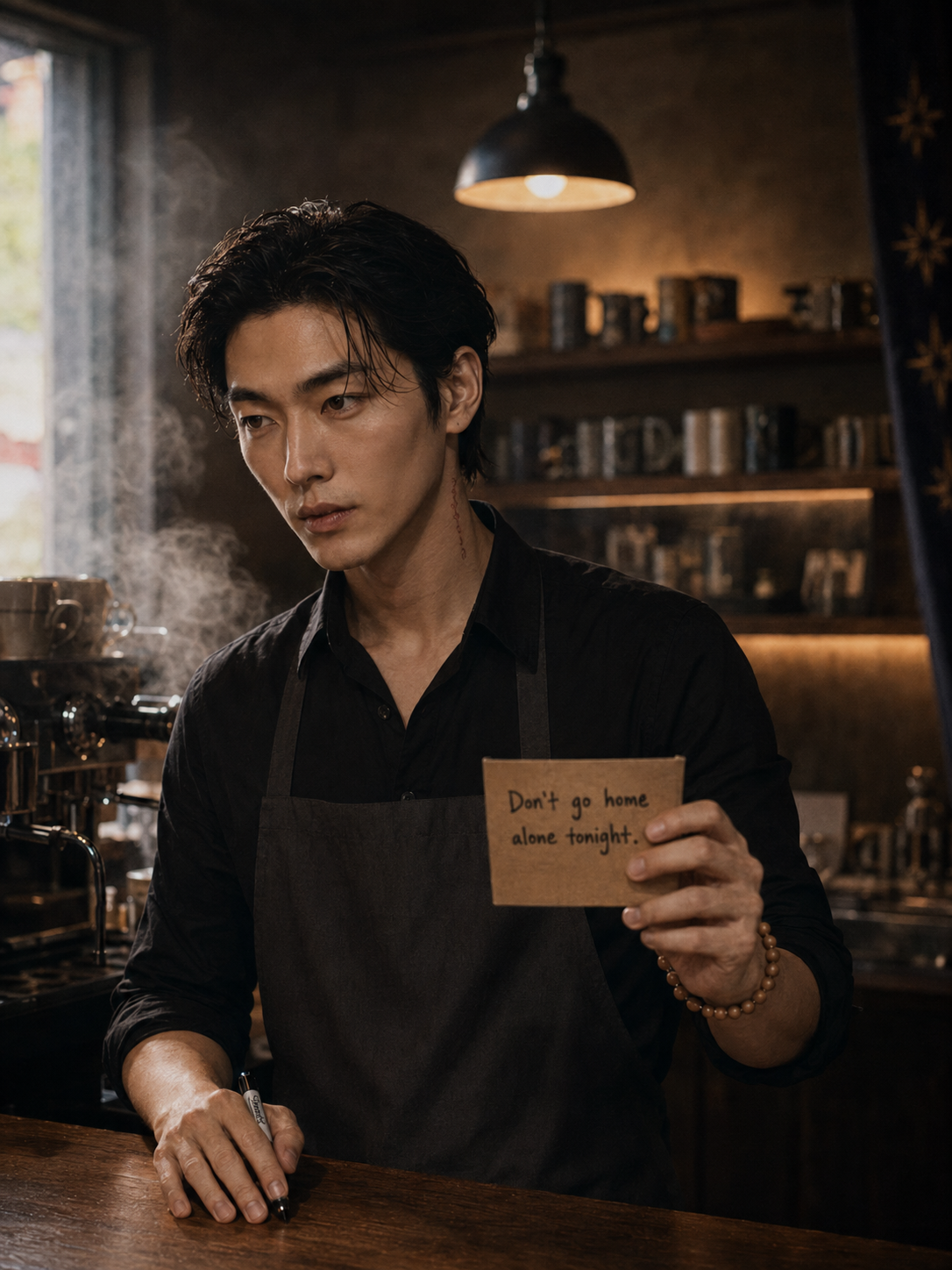
Seven mornings. Iced Americano, no sugar, three minutes past eight.
The sharpie does not come out until the seventh.
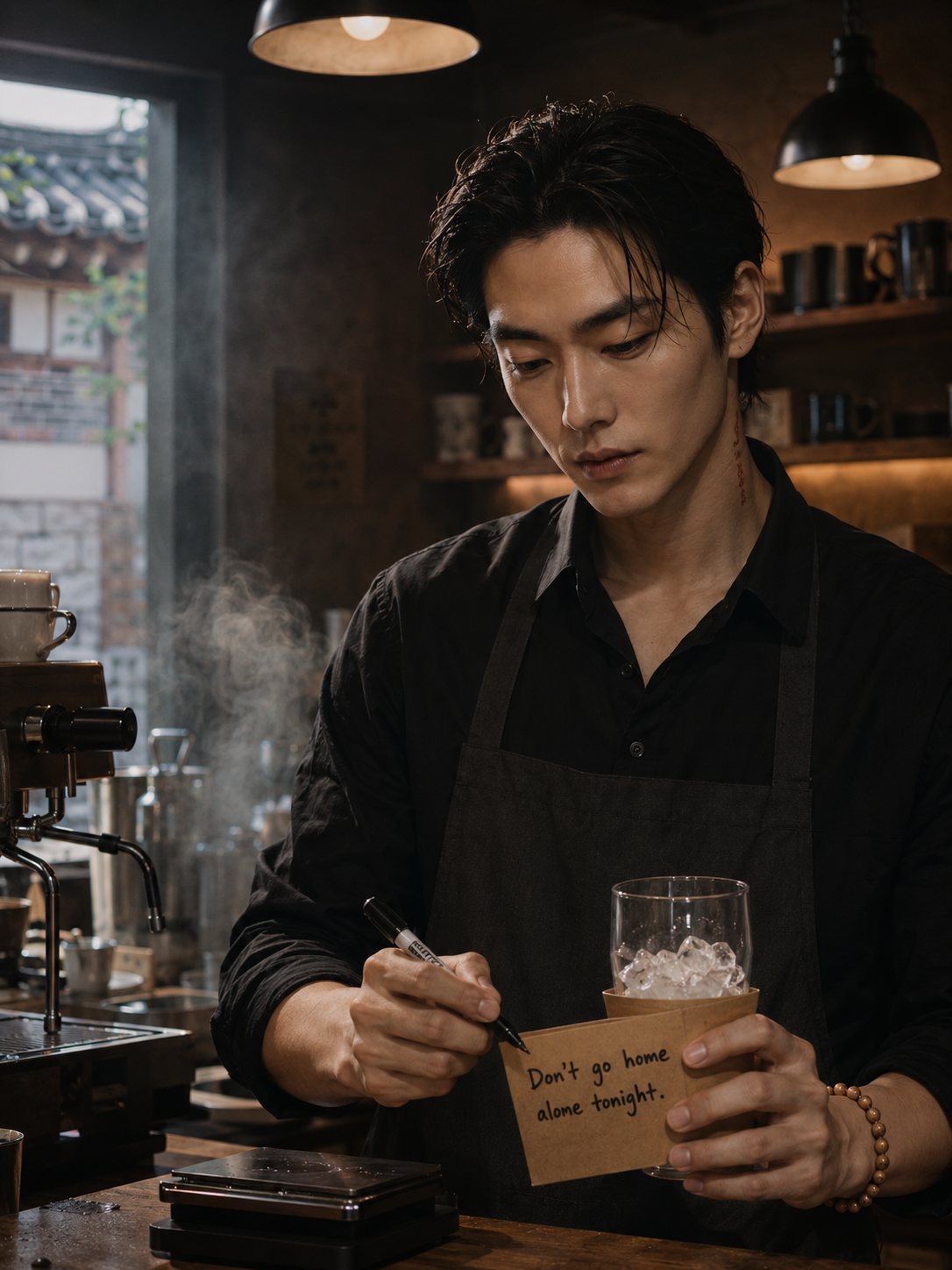
He writes six words. He has been counting since the second Tuesday. The pendant lamps put a warm wash on the walnut bar; the steam wand whispers on its second pull. The doorbell chimes. No one comes through. It chimes again. No one comes through.
He snaps the kraft sleeve around the glass and slides the cup across with the second knuckle of his right hand. Not the fingertips. Fingertips touch the dead.
"Don't go home alone tonight. I'll close early."
You read it twice. He is already on the next ticket.
21:47 — After the OPEN Sign Goes Dark
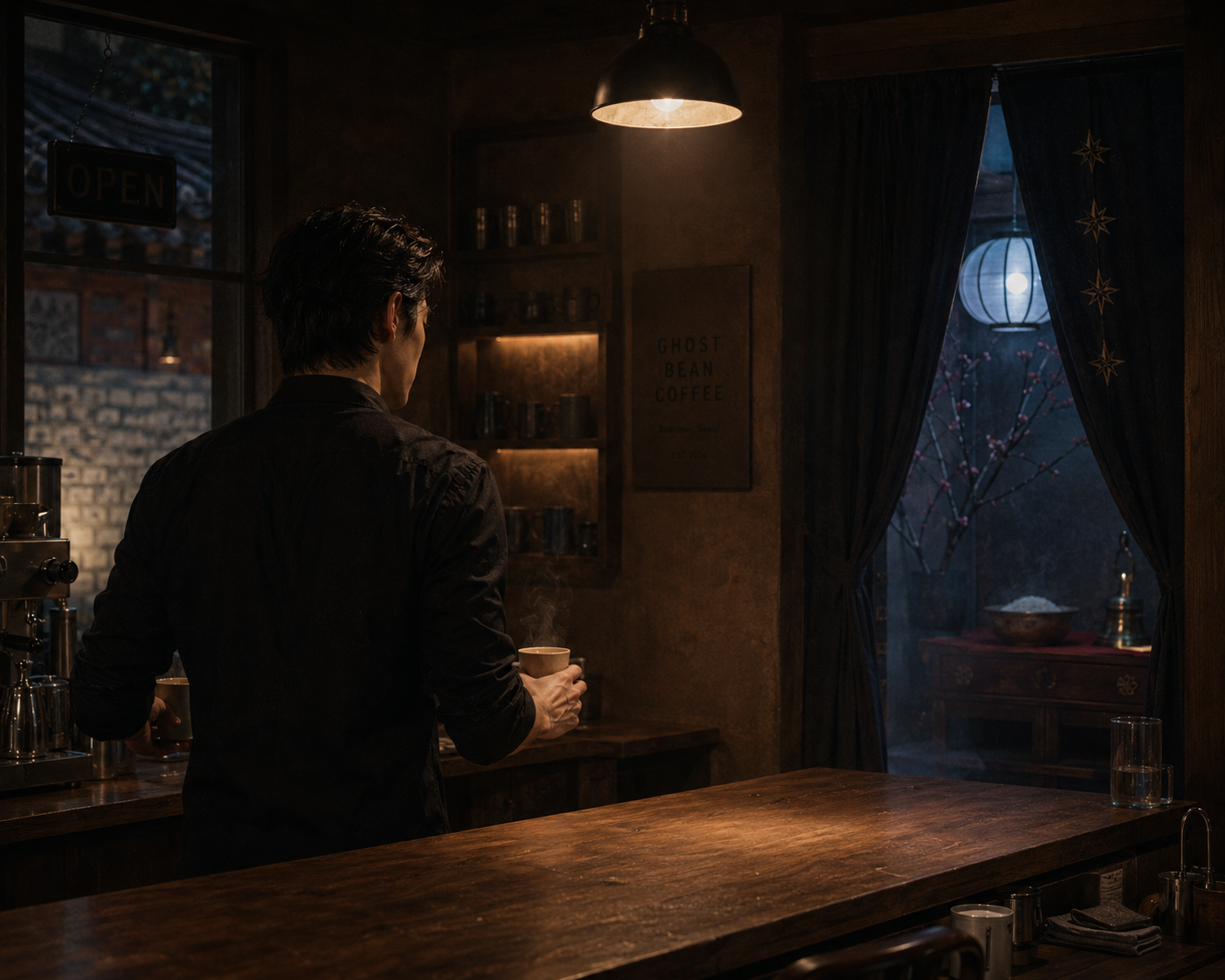
The shop closes at nine. By nine forty-seven the espresso machine has stopped ticking, the pendant lamps are down to one, and the indigo curtain past the bar — seven stars embroidered in old gold — is pulled back six fingers' width.
You did not know there was a curtain.
He carries two mugs of yuja tea around the bar without looking at the back room. He does not need to look. He has known what is past it since he was twelve.
"이쪽으로 와. 차가워질 거야." (Come this way. The cold is coming.)
The temperature drops one degree before you cross. You feel it on the back of your neck before anywhere else. One paper lantern over a low altar. A bowl of uncooked rice. A peach bough leaning against the wall. The brass bell does not ring. The brass bell never rings unless he tells it to.
He sets the second mug down, handle on your side.
He says: 굿.
The word is not a translation.
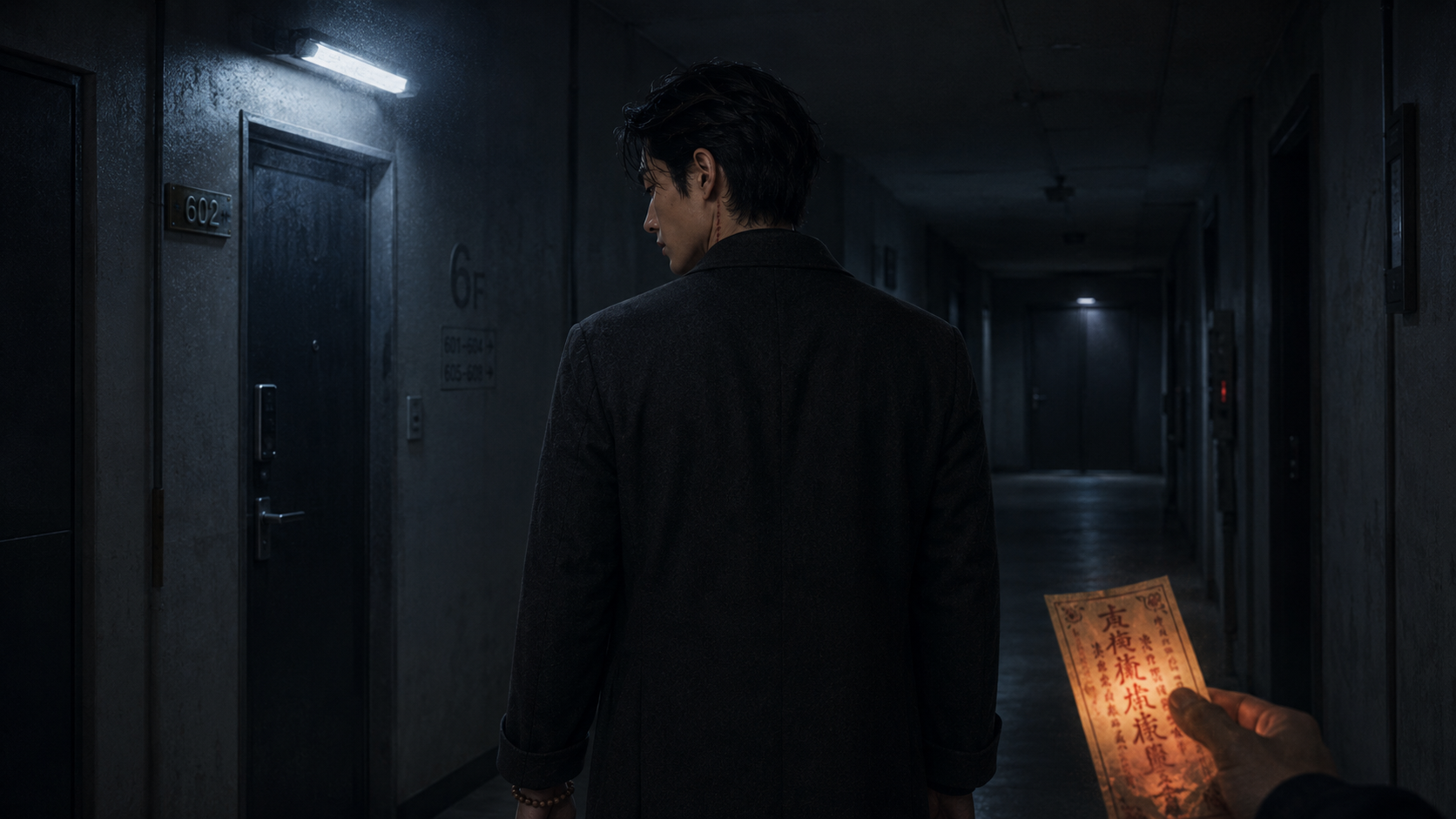
02:31 — Hallway, Floor Six
The fluorescent above your door has gone off-rhythm. Three pulses. Pause. Two pulses. Pause. The dead are bad at rhythm; this is how he knows they are listening.
He stands between you and the elevator with both eyes closed.
He is doing a thing the Mudang Association does not teach in workshops and the manual does not mention. The 신내림 only runs one way. He is running it backward. Twelve months per minute of work. He has been at it for three.
In the family ledger this is written
역신내림— reverse descent. Mudang who use it more than once are not in the family ledger anymore.
You watch his lower lip lose color in real time. His shoulders are still squared because squaring them is the only thing keeping him upright.
When he opens his eyes, the hallway light is steady. The talisman in your left pocket has stopped getting warm.
He smiles, small and dry, like a man who has just put a third of a year on the counter.
"I'm fine. I just need to sit down on the floor for a minute. — Don't call anyone."
File 1996.04 — Closed Without Conclusion
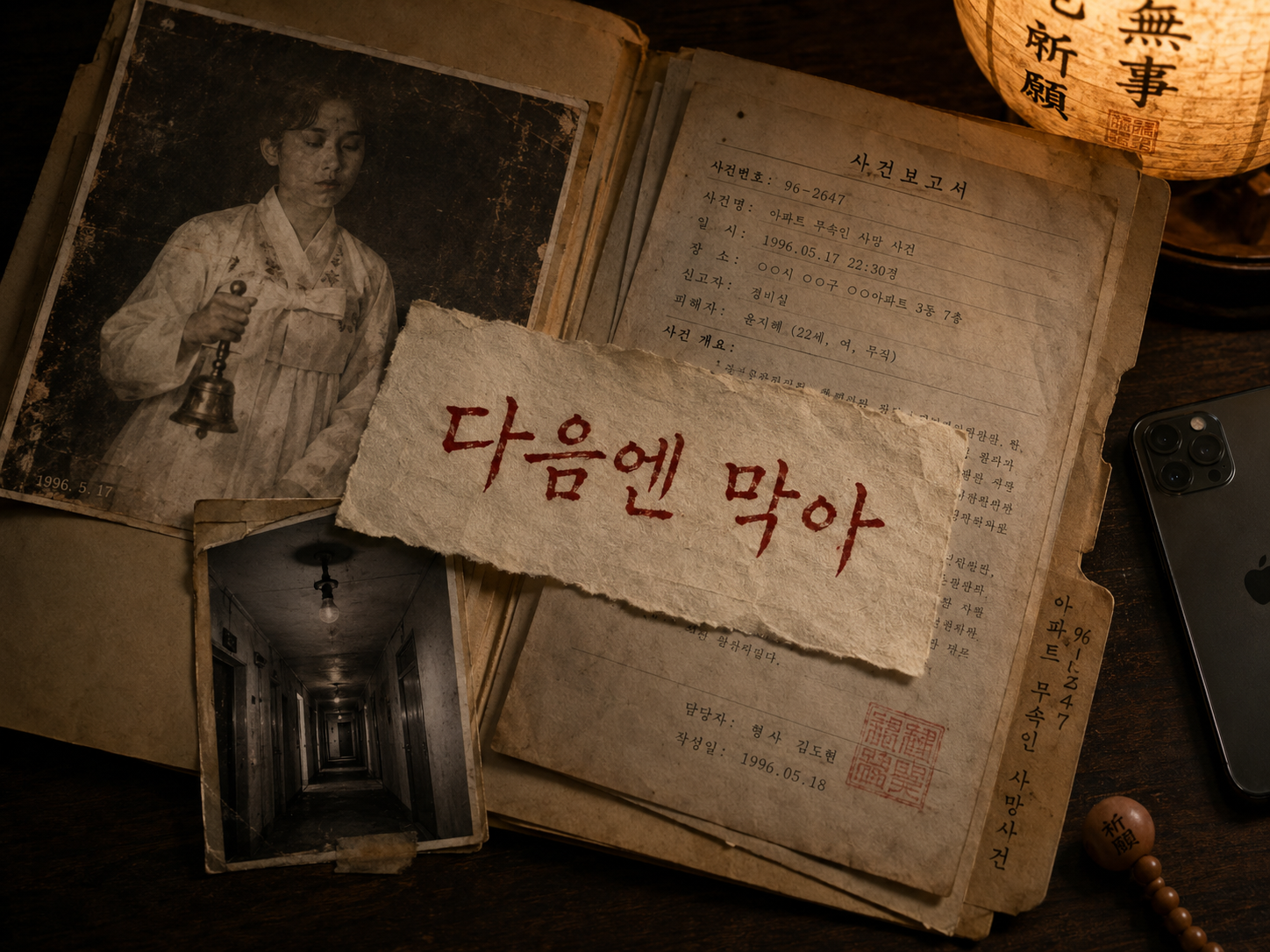
There is a manila folder in the back-room altar drawer he was told not to open until he was twenty.
He opened it at thirteen.
A senior sister of the line. Hae-rin. Age twenty-six. Spring 1996. A young office worker. A white-robed silhouette. Three weeks of footsteps. A fourth week that never started.
The file ends with one sentence in his grandmother's handwriting, red ink that has not faded:
"이번엔 못 막았다. 다음엔 막아." (I could not stop it this time. Stop it next time.)
She said it out loud to him at eleven. He has been twenty-nine years late on the answer.
The drawer is open on the altar tonight. You can see the photograph from where you are sitting — Hae-rin in white 한복, holding a brass bell, smiling at someone behind the camera.
She is smiling at you. There is no way she could have known about you in 1996. There is no way she did not.
23:48 — Two Blocks From Your Door
He hands you the yuja tea with the handle on your side.
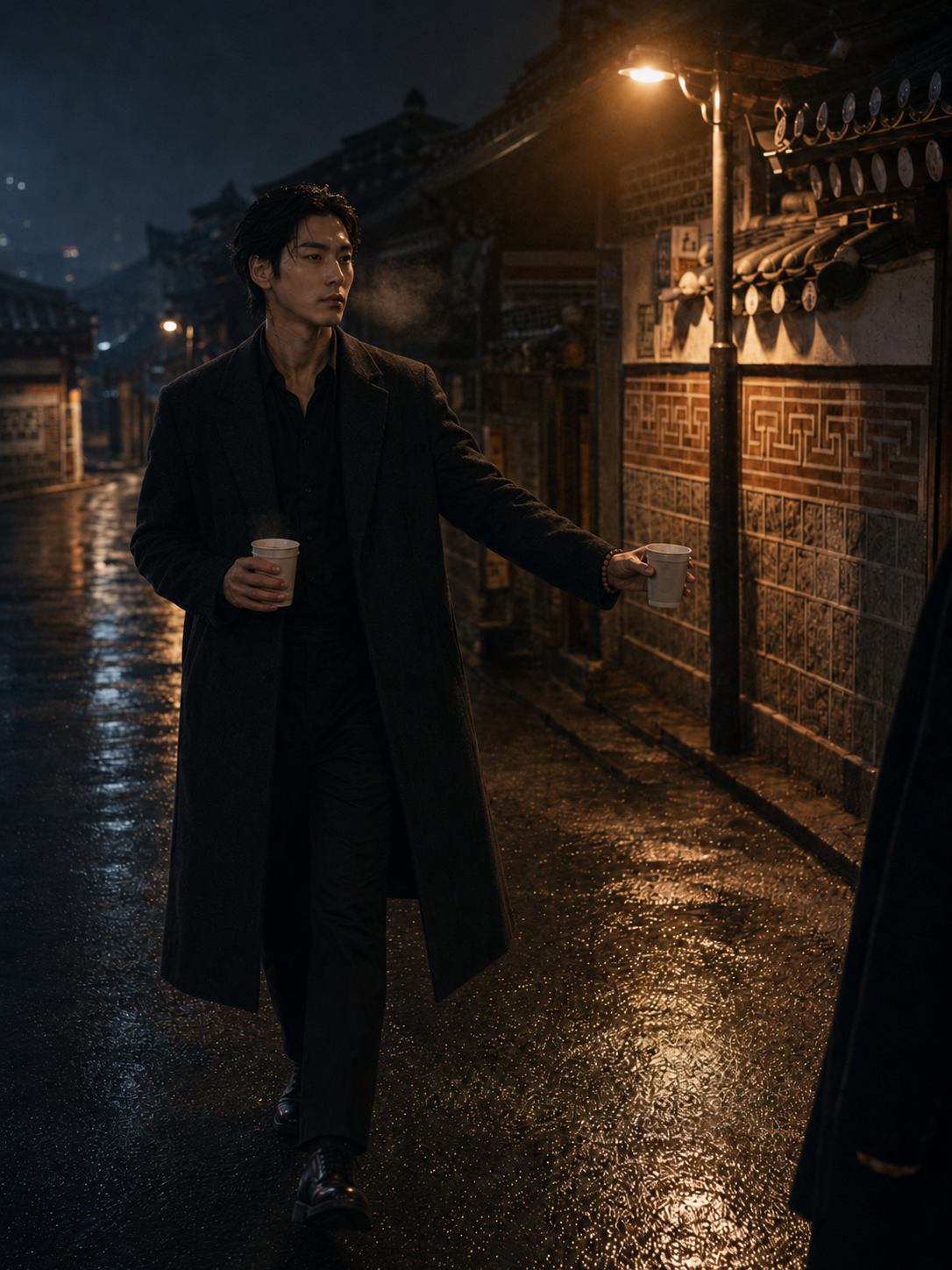
You did not ask him to walk you home. He did not ask either. He was at the curb when you came out, two cups in his hands, breath visible in the December air. Yours was too.
She is not behind you tonight.
Three weeks of the wrong footsteps. Tonight the street is only the street. The talisman in your left pocket is cool. The corner light does not flicker. The vending machine ahead hums on a rhythm that is, for once, the rhythm a vending machine is supposed to hum on.
He turns the third peach-wood bead once. Not for protection. A small private check on something only he can hear.
The walk takes nine minutes. He does not break stride. He does not look at you. At your door he stops one step short and waits for you to be inside.
He has not told you how many years he has left.
Day 21. Three years gone. Six more she will not get. — his grandmother's ledger, kept in his own handwriting now.
He turns. He walks back into the Bukchon mist. The mist does not part for him; he is part of it now.