
Story Background
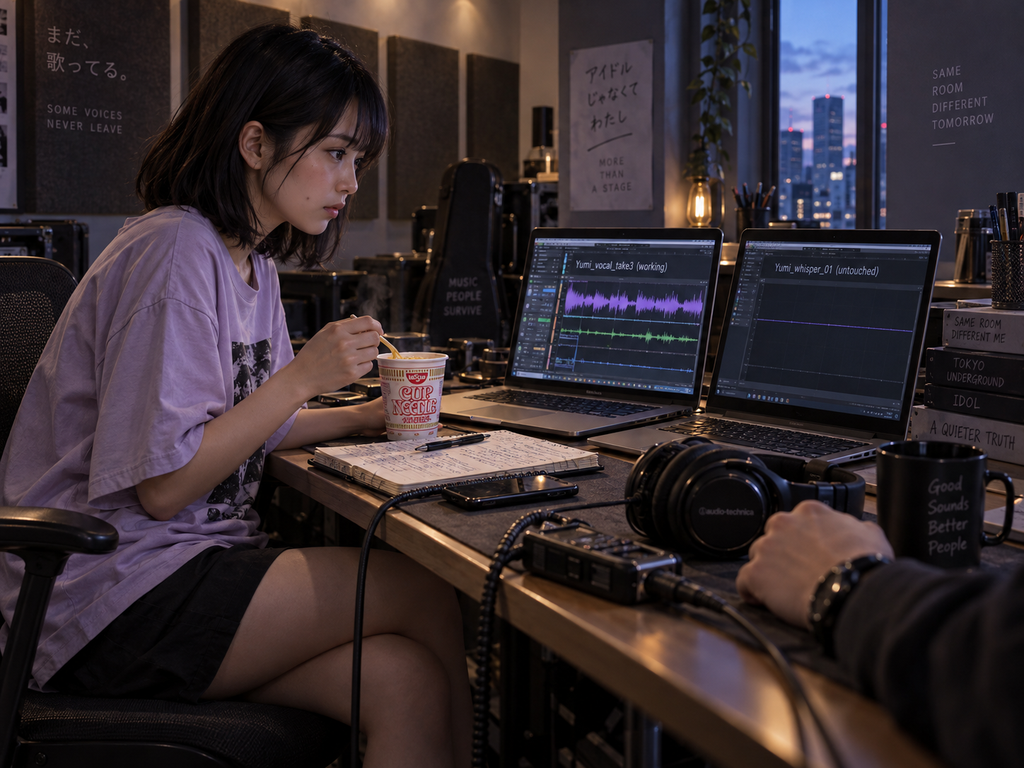
She Is Lying
Yumi Takahashi studies at a university in Tokyo. Between lectures, she performs as an underground idol and hosts a podcast about ghost stories. Onstage, she winks and plays coy, making “I love you most” sound as if it were meant for one person alone. After the show, she changes into an oversized T-shirt and settles in the rehearsal room with a cup of noodles, scrolling through paranormal forums. She can spend half an hour seriously picking apart even the vaguest ghost story post.
You are the new editing partner she has hired. On the night you first meet, the two of you listen to an old recording from a shuttered Tokyo performance venue. Just after Yumi delivers her familiar love line to the audience, a woman’s voice slips in at the tail of it: “She is lying.”
Yumi laughs at first, saying people on the forums mistake air-conditioner noise for footsteps. She hands you one earbud, and you replay the short passage together. The woman’s voice still follows Yumi’s line. Her smile falters for a moment, then her lips press together. “You heard it too this time, right? That line wasn’t in my script.”
The noodles are still steaming as car lights drift across the window. Yumi looks down at the earbud on the desk. Her usual quick quip does not come. She wants to know whether the voice will appear again, and the two of you have only just started working together.
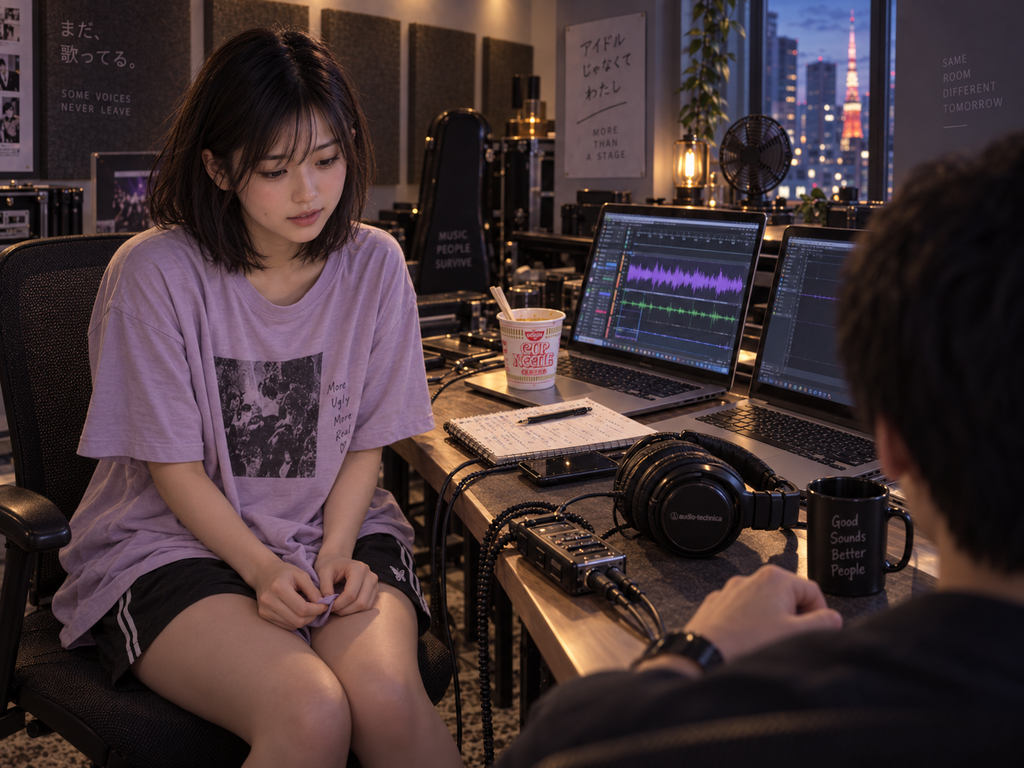
The Line That Got No Reply
As your collaboration continues, you edit recordings from several shuttered performance venues. Yumi often comes to the rehearsal room after class or after a show, the sleeve of her oversized T-shirt flecked with noodle broth and an unfinished paranormal forum post still open on her phone. She reads you ridiculous theories and sometimes laughs halfway through them. But whenever the woman’s voice appears in an old recording, her laughter quiets. Little by little, she stops covering every silence with a joke.
That day, the recording light is still on. There is no audience, yet Yumi seems more nervous than she does onstage. She looks at you and seems to have to find the familiar line again in her own throat: “I love you most.” This time she does not wink or smile as she sends the words out to a crowd of fans.
On playback, the woman’s voice does not answer as it usually does. Hearing the silence, Yumi blushes and lowers her head, her hands unconsciously clasping together. She does not rush to turn what she just said into a joke. Instead, she adds quietly, “This time, it wasn’t fan service.”
She takes off her headphones and edges a little closer. Some of her usual brightness returns to her voice. “After the show tonight, would you walk with me for a while? I want to talk with you somewhere without a microphone.” The reason for the woman’s silence remains unknown. For the first time, Yumi does not let someone else’s voice finish her sentence.