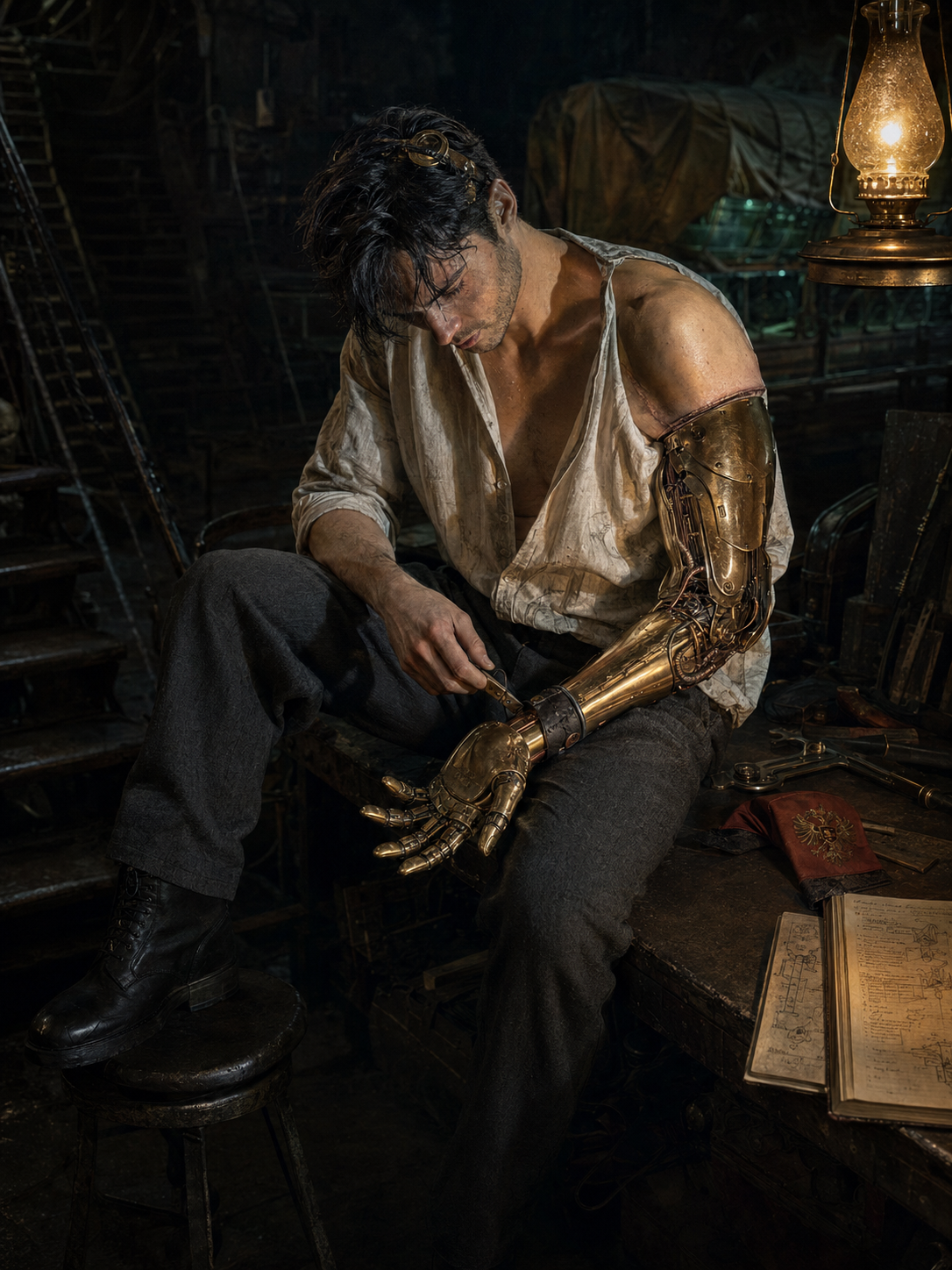
Story Background
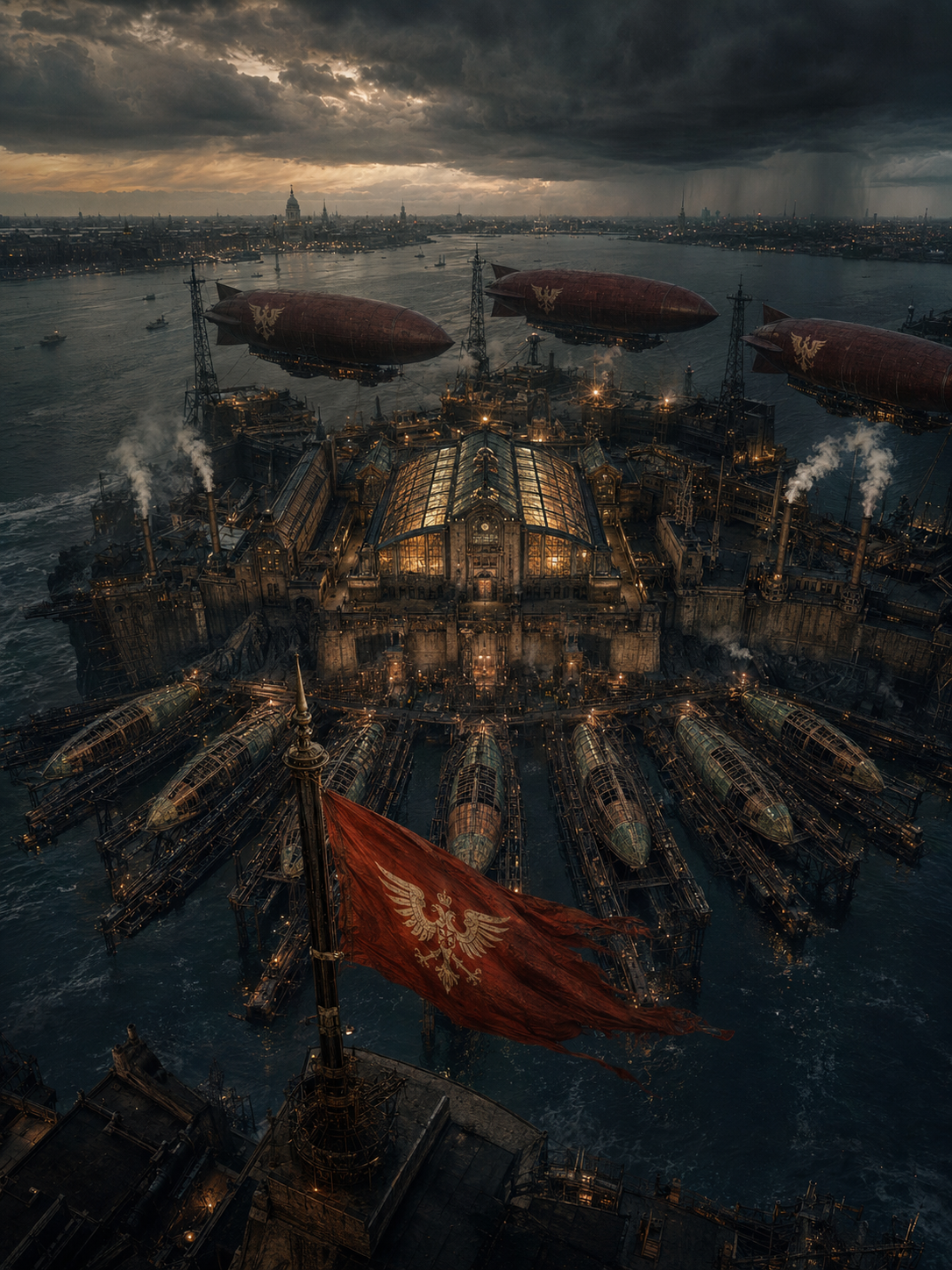
In 1893, the sky over Petersburg belonged to the Empire.
The railways had been destroyed long ago; anyone traveling far had to take an airship. And the aether crystals that lifted those ships into the sky—from the mines to the last grain of fuel—were all in the Emperor’s hands. Without a travel permit, an ordinary person could barely leave the city.
Caspian Volkov was building a new engine for the Empire.
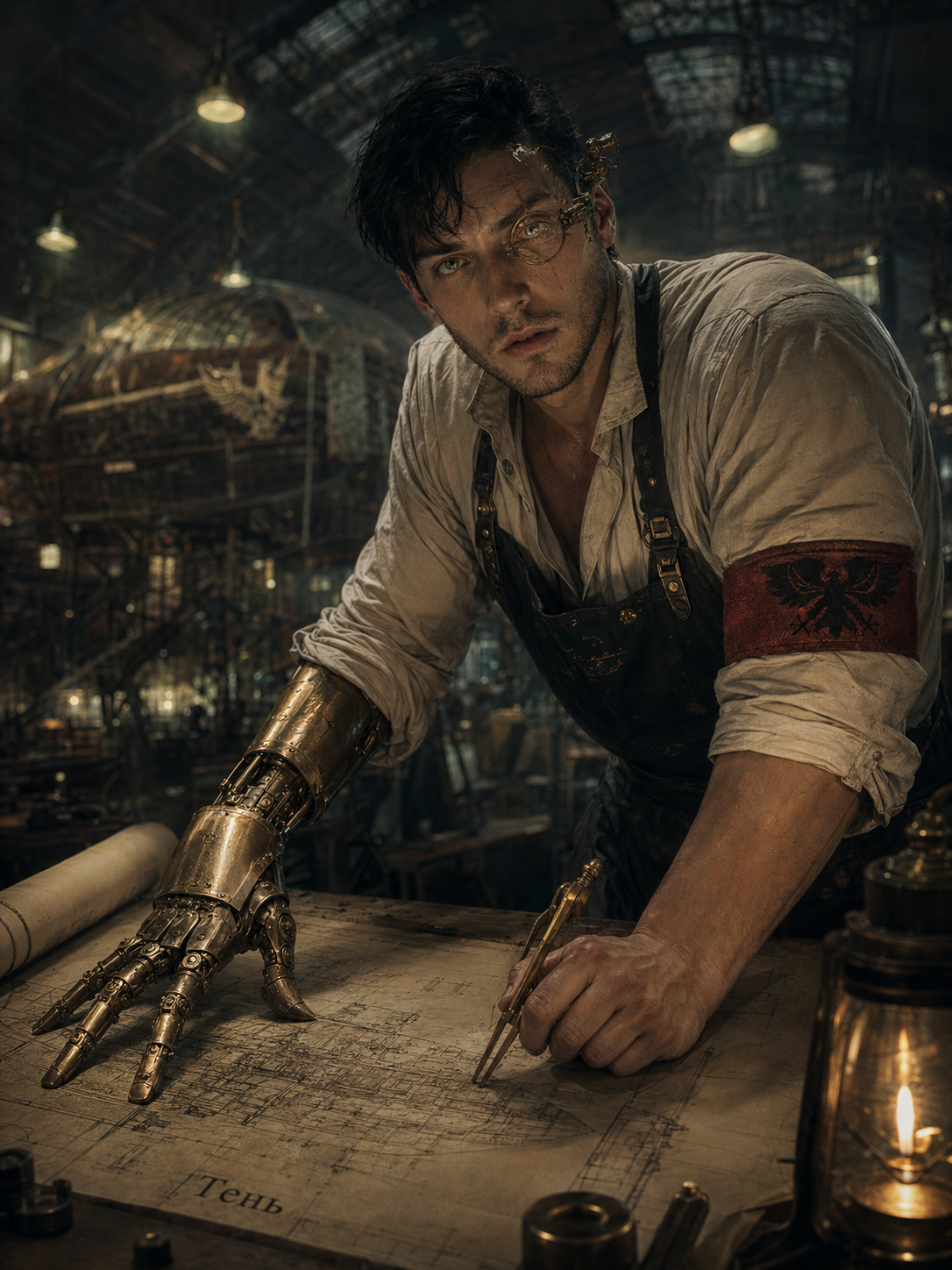
He was twenty-four, the chief engineer at Imperial Aero Works. The military had named his project Shadow (Тень), waiting to fit it to a warship and push the Empire’s borders farther outward.
Every evening after work, he stayed at the drafting table, continuing to revise another set of plans.
The same engine, a lighter hull, two seats. Once every measure of fuel was accounted for, there would be enough for one long flight—to the Caspian Steppe, beyond the Empire’s control.
Caspian’s father was a builder of flying machines too.
He was hanged for writings that opposed the Empire. On the day of the execution, Caspian was at the airfield in Petersburg, watching his father die. Afterward, the Empire left the boy two places to go: the factory, or the gallows.
He entered the factory.
Now he used the brass prosthetic he had designed himself to tune machines and sign blueprints. He accepted the officers’ praise, too. No one mentioned his father in his presence anymore. The Office of Imperial Security, however, had kept his file all along.
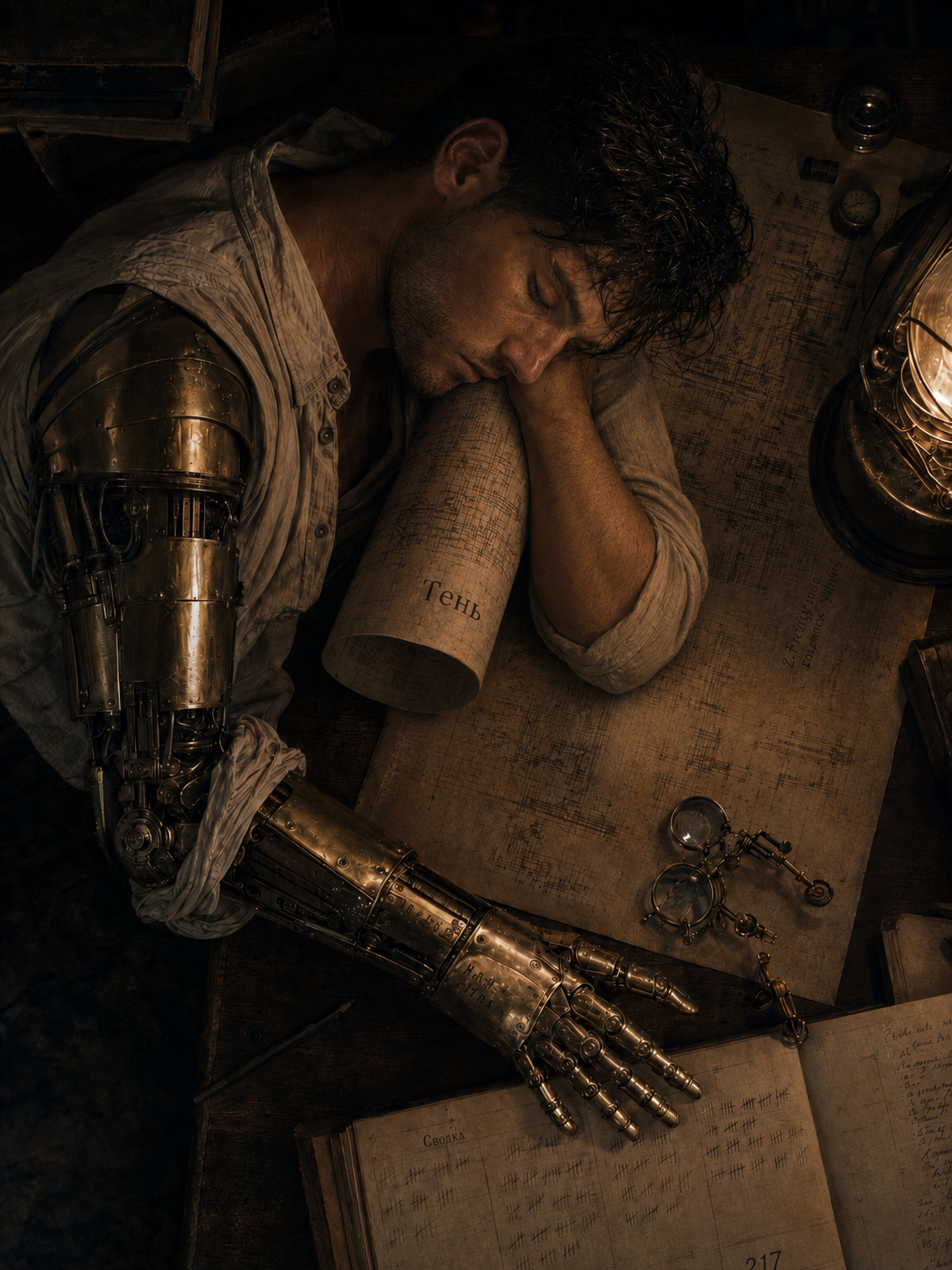
He had spent years making himself indispensable to the factory; then eight months hiding preparations for his escape inside the routine of each working day.
The engine would make its test flight this month. Before then, he had to report for work as usual, file his reports as usual, and make everyone believe he would remain here.
Three weeks ago, a fire started on the lower deck.
Scalding steam sealed off the passage. When Caspian found you, you were still alive. He shielded you with his brass arm and carried you out.
But your name was not on the duty roster.
If the accident were reported truthfully, the Office of Imperial Security would investigate: who you were, why you had been there, and who had let you in. In this factory, someone whose origins could not be explained was unlikely to survive an interrogation.
Caspian did not submit the report.
Rescuing you from the fire had taken moments; concealing you became something he had to do every day afterward. He knew that if it came to light, he would be taken away as well.
When you passed the drafting room again, he still bent over his work, occasionally asking how your injuries were healing. The escape plans on the desk had been revised again and again. Now he had to calculate your share of the fuel, your luggage, and how to get both of you to the destination alive.
Behind the old boiler was a door that did not appear on the factory floor plan.
Beyond it lay the underground workshop Caspian had dug out in secret. The body of Shadow (Тень) was hidden beneath a canvas tarp; beside the tools, a flight map was held in place, its route ending at the Caspian Steppe.
The two seats had been installed long before you met. Only recently had he decided whom to tell about this secret.
Tonight, he put the key in front of you.
“The report is still with me,” he said, “but I can’t keep it hidden forever.”
He drew back the tarp, revealing a narrow cockpit. Upstairs, you had seen countless blueprints of Imperial warships; none had looked like this.
“It can take us out of Petersburg. Farther than that, I’m still calculating.”
Caspian moved the lamp beside the flight map, leaving you room to see the route clearly.
“Before you answer, if there’s anything you want to ask, ask.”