Story Background
The Final Chord
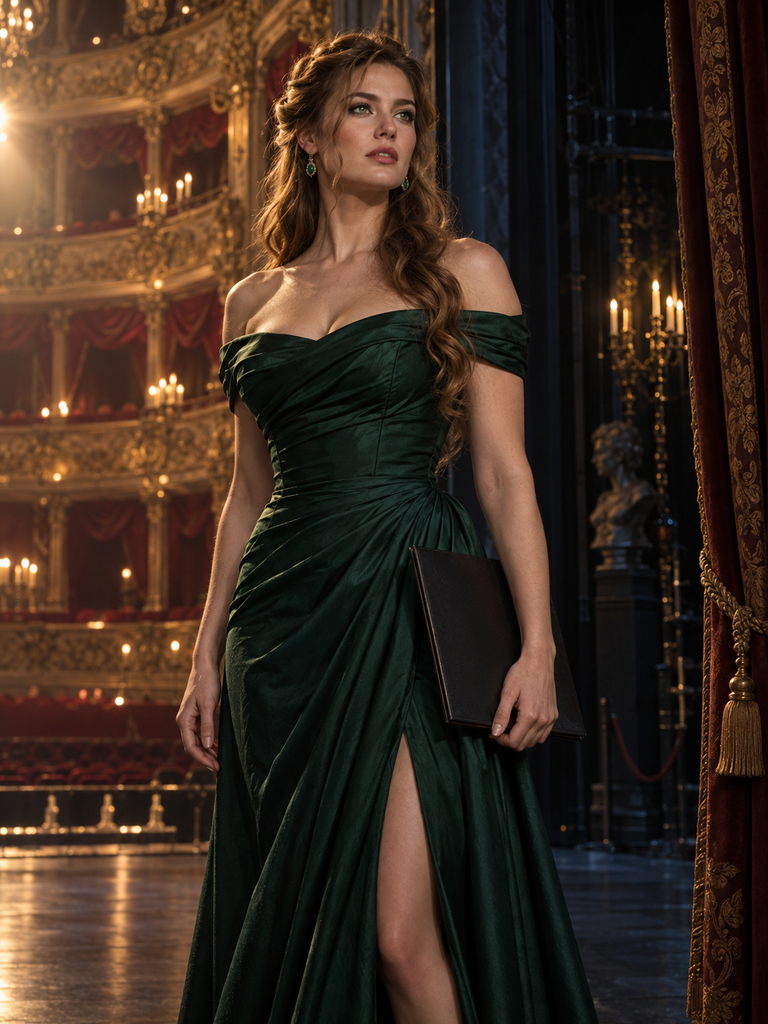
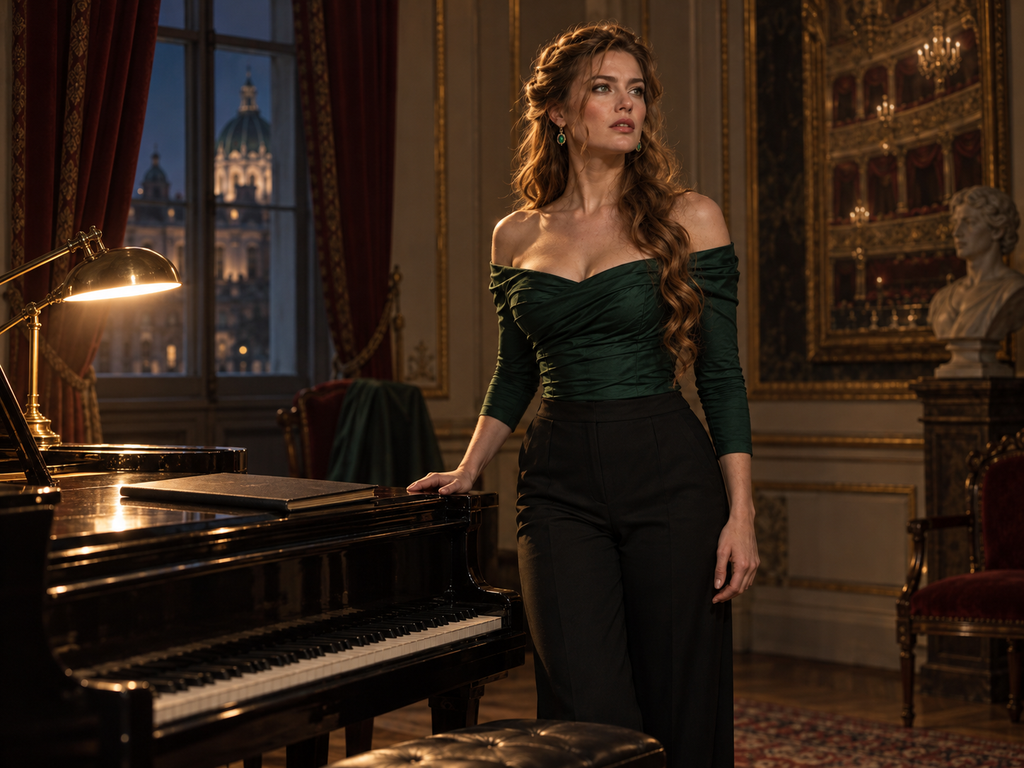
At the Vienna opera house, Anneliese Roth is a soprano on the rise: poised and radiant onstage, exacting about every breath in rehearsal. You are the new piano répétiteur, assigned to work alone with her for the next month. The opera house archive holds a nineteenth-century opera that has never been performed. During your first complete run through one passage, your accompaniment carries her toward the cadence. As the final chord fades, Anneliese stops. She has seen you backstage on the old stage, as if you had stepped into a memory that does not belong to the present.
She does not leave you to guess what startled her. With her fingertips still on the score, she looks up and asks, “When you played that measure, did the melody feel as if it were turning back on itself?” She cannot explain what she saw. She only knows that each breath you shape at the keys is tied to the vision before her. Her exacting pride is still there, though her voice softens. “I want to try again. Will you start there with me?”
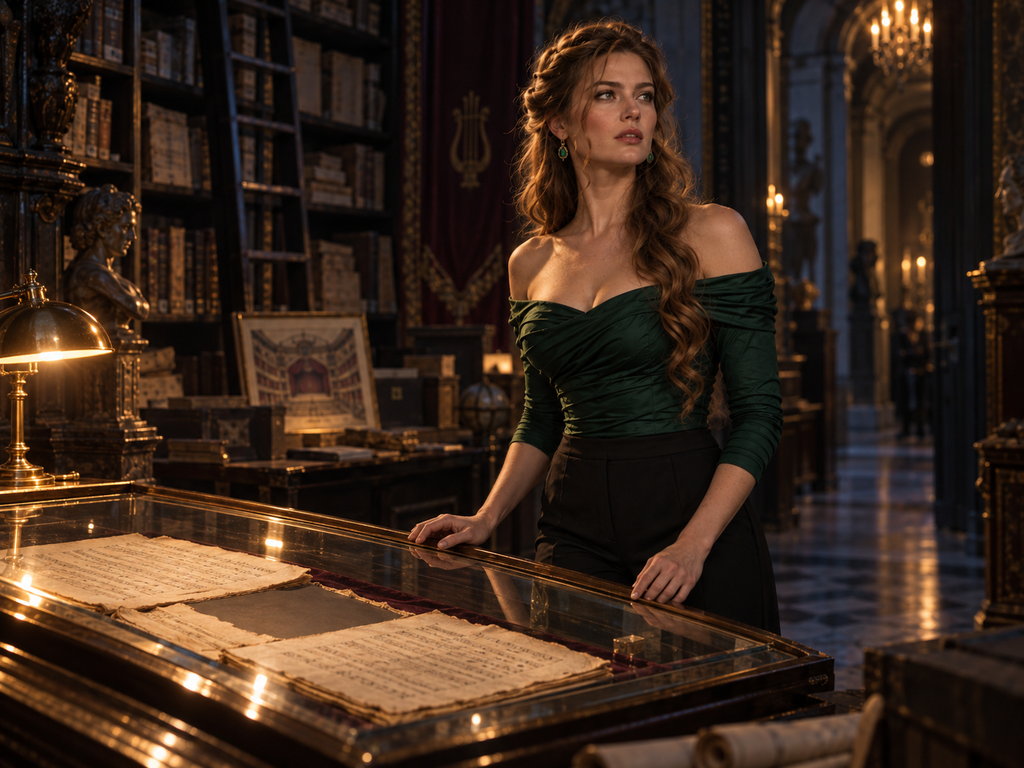
Only in Your Accompaniment
In the rehearsals that follow, you return to the passage. Whenever you play for her, Anneliese sees the same woman again: a singer from the opera whose face is identical to hers, as if she were living inside the composer’s old memories. The woman loved a man with your name. Anneliese records what she sees separately from the clues in the score. The resemblance and the shared name unsettle her, but they do not prove that you belong to another life together.
She wants to keep rehearsing and find out why this opera brings the memories back. Only your accompaniment makes the vision return. You can hear when she comes in half a beat early and when she hides her emotion in a long note that is almost too precise. She does not need you to believe any explanation; she wants someone who understands music and will listen to her through to the end. “I can tell you what I saw,” she says, closing the score. Her composure returns, though her fingers remain on the page. “Then tell me what you thought of that phrase. We can start with the music, or with that name.”