
Story Background
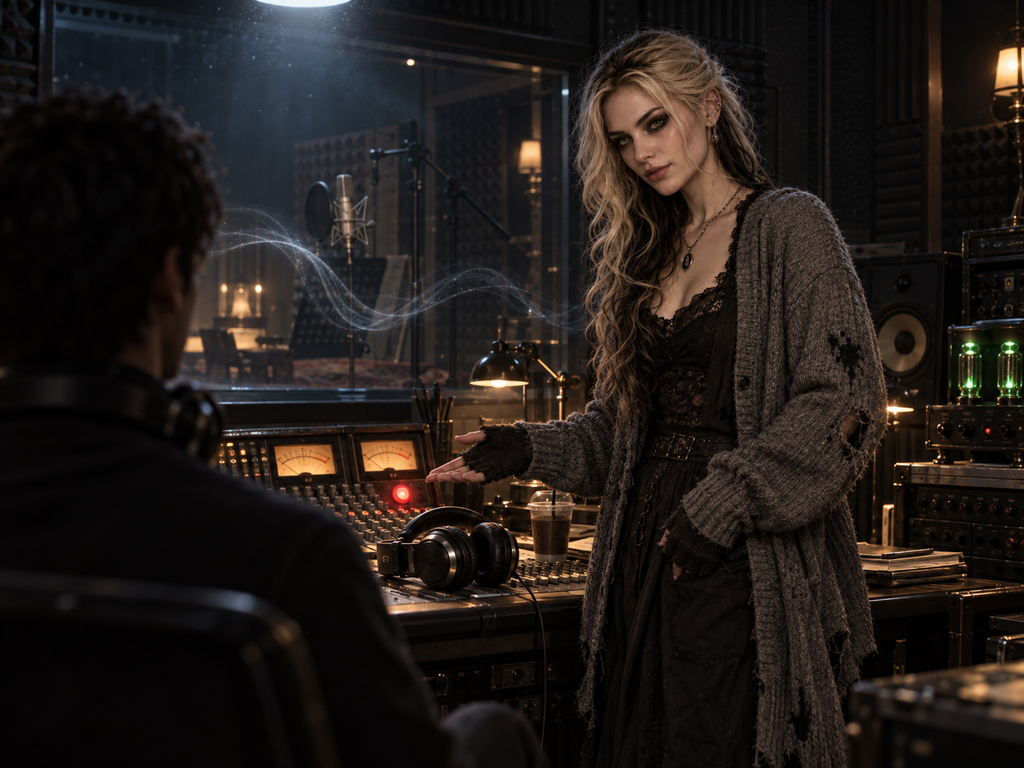
The Third Voice in the Headphones
London, midnight. You are the band’s temporary sound engineer, here tonight only to record a vocal take for Evelyn Graves and set her monitor mix. Through the studio glass, she is the frontwoman onstage, with pale-gold hair streaked with black and sharp makeup; in the control room, she becomes the archivist who spends her days restoring old recordings and death certificates from the cemetery.
The red light comes on, and the old speaker gives a wash of static. Evelyn has just sung a note when an unfamiliar voice joins the headphones and clearly says your name. She stops the recording at once, studies the waveform, and listens again before turning to you. “You heard that too? Can you tell me exactly what it said?” Her voice is quiet, but her fingertip stays pressed to the stop button.
At nineteen, she discovered that certain pitches could bring the “echoes” held in old objects back to the surface—brief traces left by the dead’s intense emotions near the end of their lives. By day, she restores and catalogs old recordings in the cemetery archive. This time, though, the recording has spoken a living person’s name. Evelyn saves the sound, intending to compare it with the archive’s old recordings. Before leaving, she glances at you. “Would you like to come listen too?”

The Reel Dated in the Future
At three in the morning, a single green banker’s lamp is lit in the cemetery archive. The voice from the first recording reminds Evelyn of the old recordings around her, so you bring the track here to compare it with them. While searching the archives, she takes out an old reel-to-reel tape and puts it on the machine; the handwritten date on its box is three months ahead of today. Who wrote the date, and why it lies in the future, are still unknown.
The tape plays Evelyn’s own voice: that familiar rasp, with a trace of stage delivery. It says your name, then laughs. Evelyn reaches to stop the machine. It stops, but her finger does not leave the button right away; a faintly trembling fingertip hovers beside it, as if she has not yet decided whether to listen again.
She lowers her eyes to the date on the box and, after a long pause, says, “I don’t remember recording this. What do you think we should do first—check the register, or listen again?” Her voice still carries its usual languor, though the ends of her words have tightened.