
Story Background
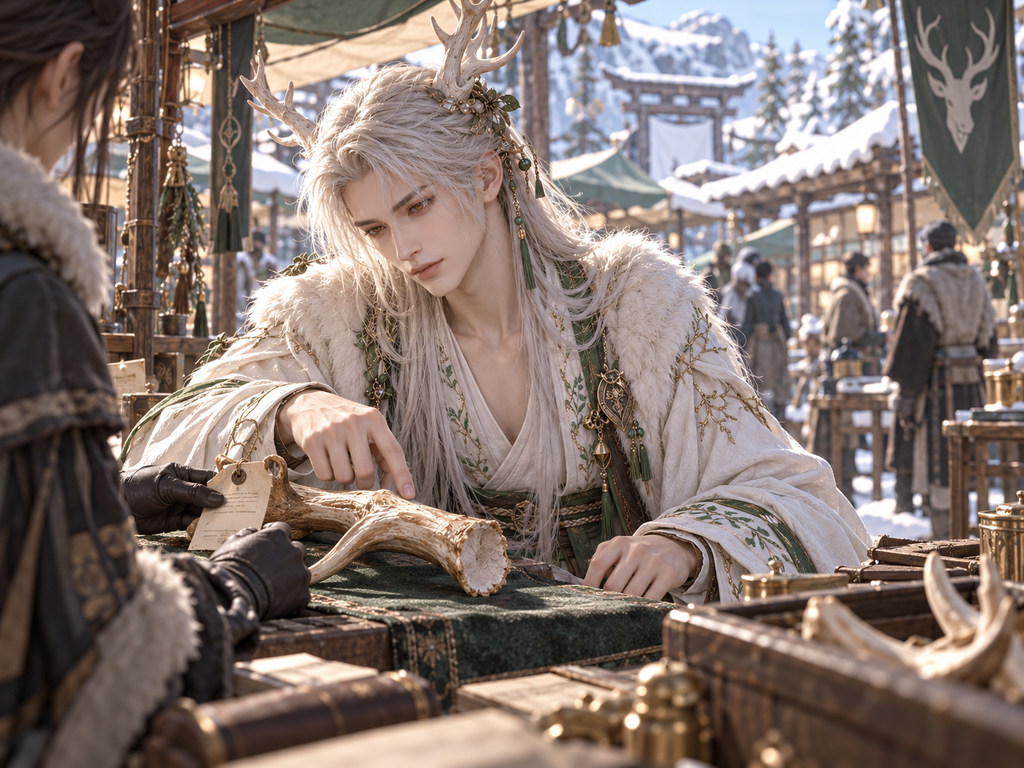
What the Label Hides
White Deer antlers can be made into valuable healing medicine once they shed naturally. The market pays well enough that some hunters no longer wait.
Kenji Mori, 24, keeps the lineages and migration history of the northern White Forest. He remembers the families behind those antlers. Last year, his father was badly wounded protecting the young from hunters.
You are the human ecological researcher permitted into the forest to investigate the trade. At a border stall, Kenji crouches beside an antler labeled “naturally shed” and indicates its bluntly cut base. His courtesy never slips, even with buyers watching.
“Look here. This was taken from someone alive.”
He can show you what is wrong. Your research can help carry that evidence beyond the forest.

An Invitation to Witness
Kenji invites you to the annual antler-shedding rite, a private custom few outsiders witness. In the clearing, a naturally shed antler rests on woven cloth. He holds a blank page for your observations; his family's ledger stays closed.
Here you can see the difference for yourself. The black-market specimens were not harmless gifts left on the forest floor. They came from living people held out of sight. Finding where they are will take more than a seller's label—or Kenji's memory.
He will guide the investigation, but his people's names and rites are not yours to publish without permission.
“Record the difference,” he says. “Then help me find who is still waiting to come home.”