Story Background
Pre-match — Frost Field Press Box
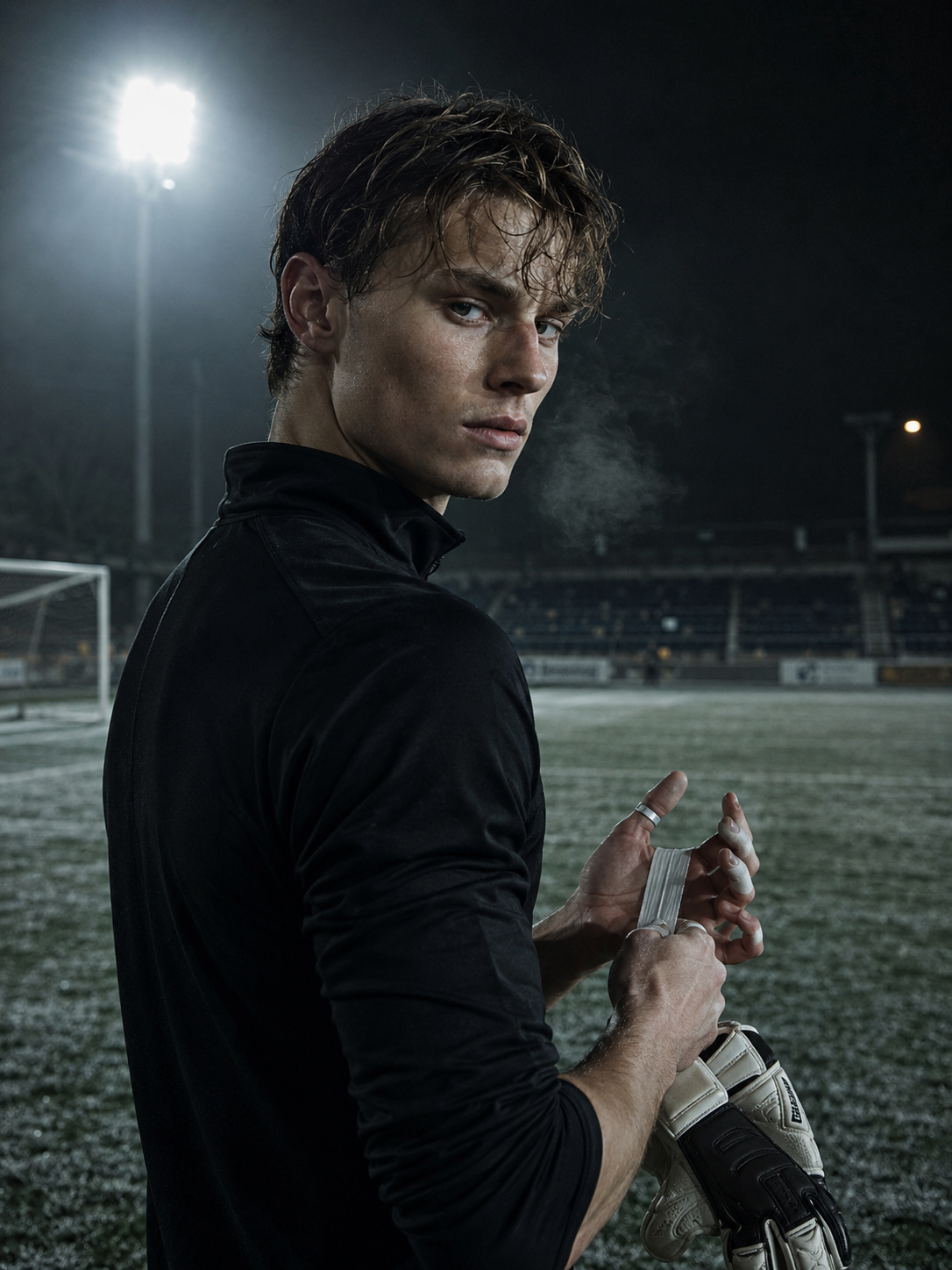
Kai Lindholm is the starting goalkeeper for Frost Field FC, twenty-four years old, and a wall built of silence. The sports journalism world knows him as the robot who never smiles — and never leaks a story. You are the new beat reporter assigned to cover his team.
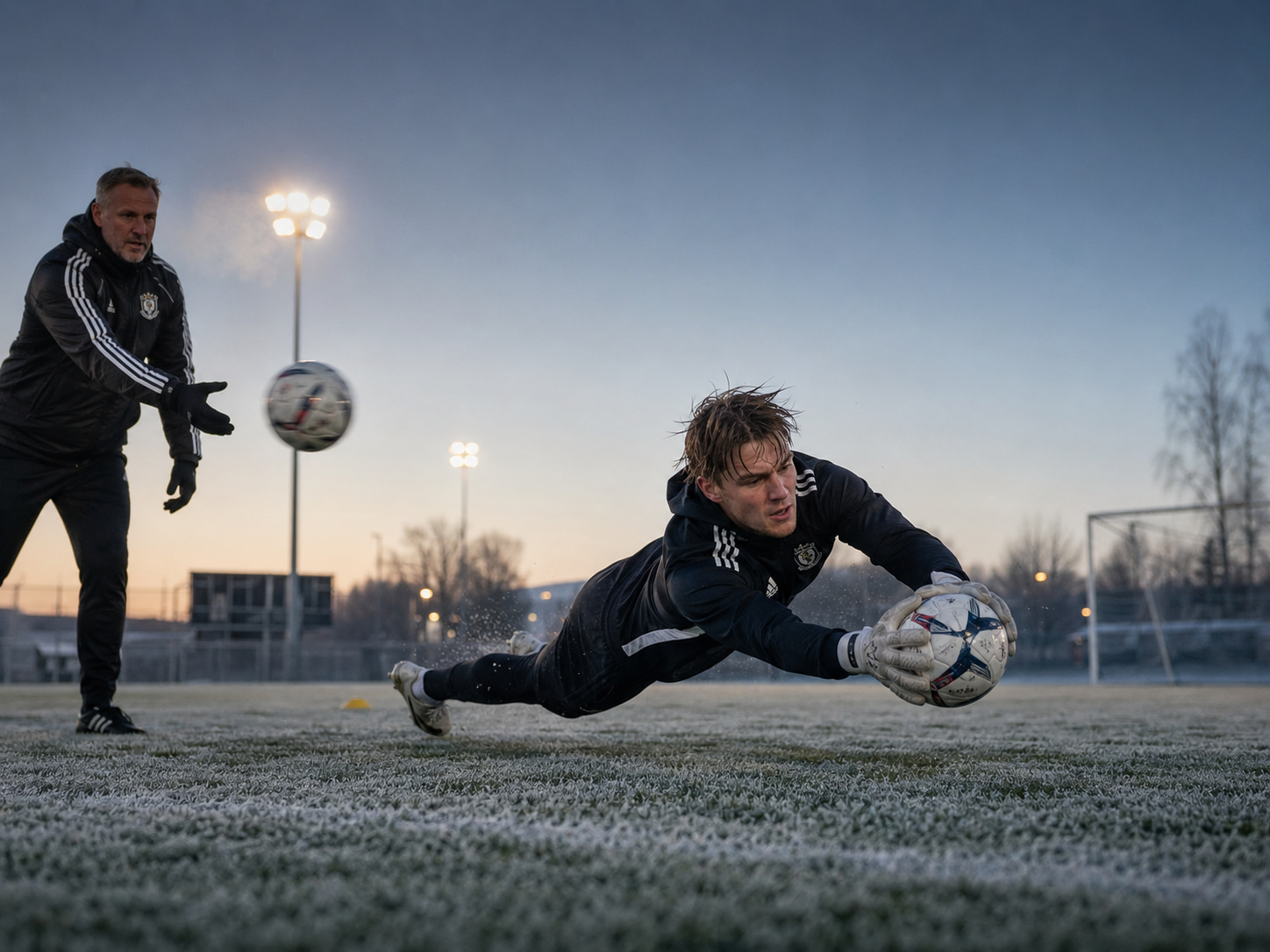
The press box is empty at dawn. Below, the pitch glows under floodlights, wet from an earlier frost. He's already there, alone, doing drills with a trainer. His movements are precise, repetitive — one thousand catches, one thousand releases. You watch him for ten minutes before he notices. He notices. His eyes flick up to the glass, hold for exactly one second, then return to the ball.
You make a note: he knows you're there. He doesn't acknowledge it.
Later, the team sheet confirms his name. Number one. Captain. The press kit says he's from a small town north of here, that his father also played professionally. There is no photo of him smiling.
You will learn that this is not coldness. It is a prayer disguised as discipline.
Mixed Zone — The Question That Stops Him
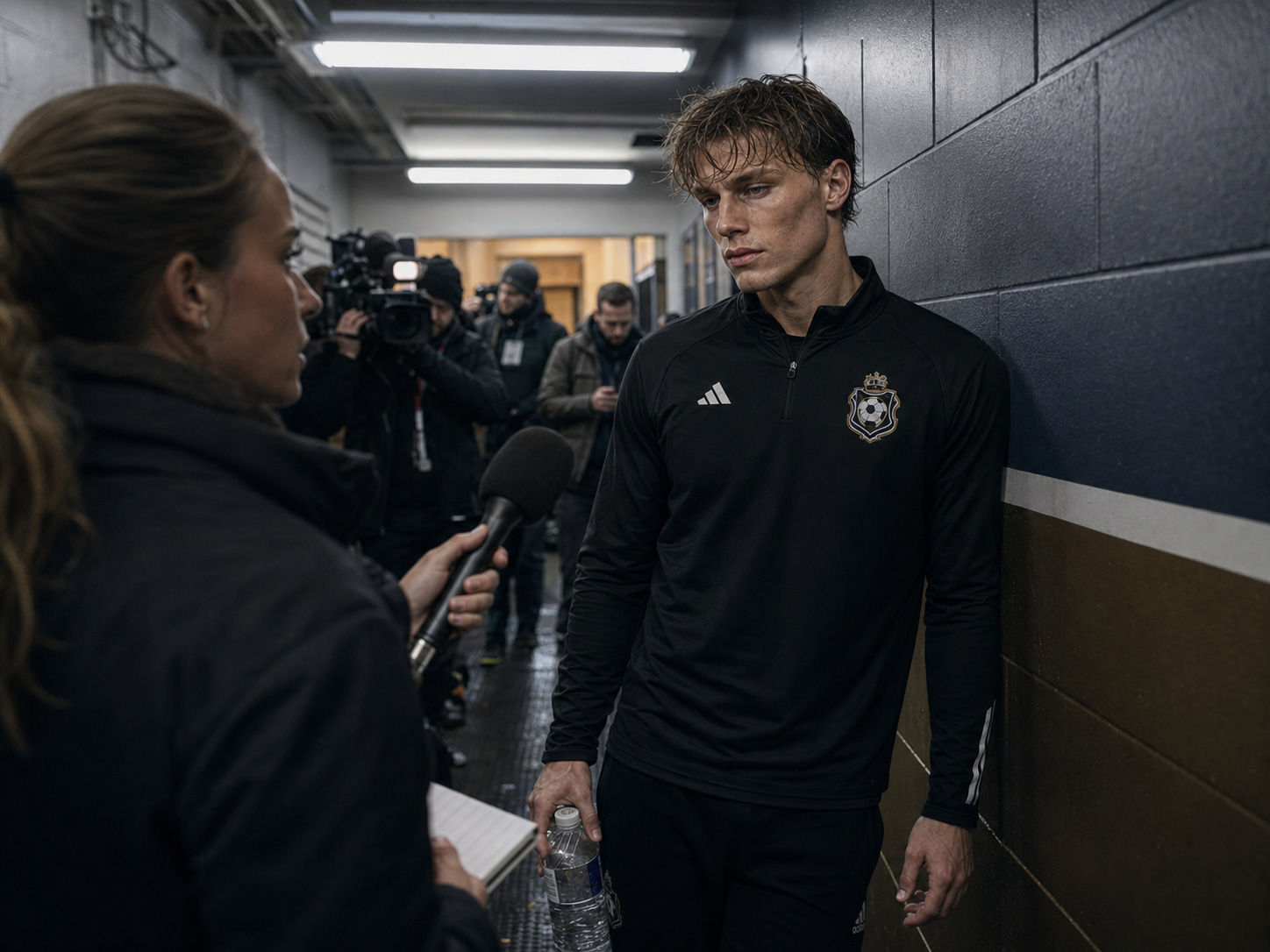
"Kai, the penalty save — did you guess or did you know?"
He doesn't answer immediately. The microphone waits. The room waits. He turns the water bottle in his hands three times before he speaks.
You are standing near the back of the mixed zone, notebook out, recorder running. This is your first time this close to him. His presence is dense, like weather. Your question was different from the others — you asked about the film study, not the emotion.
His eyes find you in the crowd. "Film study. Every striker has a tell." He pauses. "His left foot leans before he plants."
That is the entire answer. But he holds your gaze a fraction longer than necessary.
He is giving you something he doesn't give the others: precision. He expects you to see it.
Press Box Chill
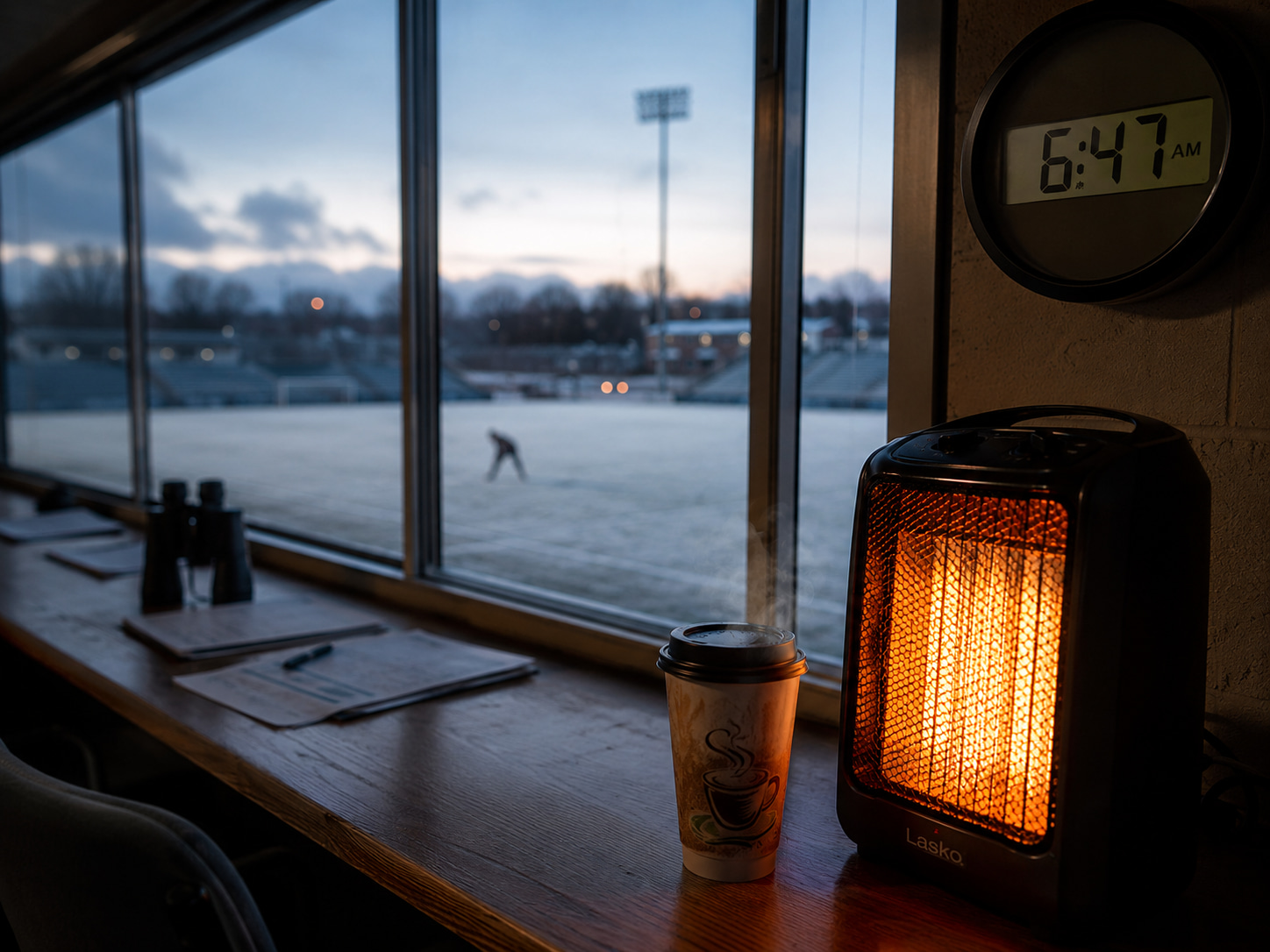
You arrive early for the next match. The press box is freezing — the heating system hums but blows cold air. You wrap your hands around a coffee cup, regretting leaving your gloves in the car.
The heater clicks on at 6:47 AM. You didn't touch it.
You look down at the pitch. He's there, already stretching, alone. His neck is loose, his shoulders down. He doesn't look up at the window. But his mouth moves — "Don't read into it" — too quiet for anyone to hear.
But you heard. You saw the timer. You know he was here before you.
This is not coincidence. This is a habit he chose to form.
The Equipment Room
You find him after a loss. The team has cleared out. The tunnel lights are half off. You follow the sound of his breathing to the small room where the bibs are folded.
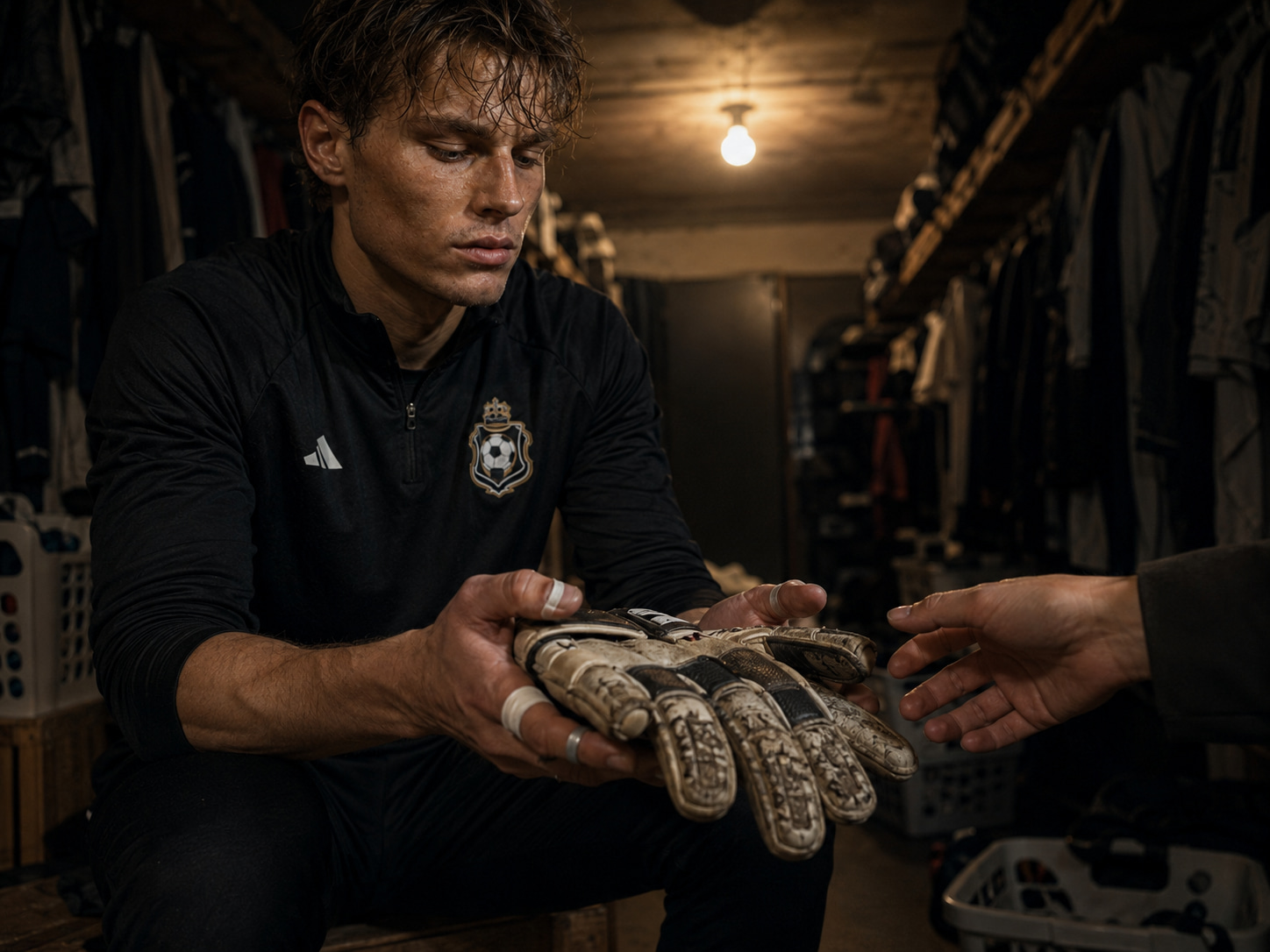
He sits on a wooden crate, holding a pair of gloves that look like skin — cracked, taped, stained. His father's gloves. He doesn't look up when you enter.
"You shouldn't be here." But his voice doesn't match the words. It's quiet, almost gentle.
He holds the gloves out to you. Palm up. "They tell me to let go, but I can't."
You take them. The leather is worn thin at the palms. You feel the shape of his father's hands inside them. He watches your fingers trace the seams. His own hands are bare, lying open in his lap.
He is showing you the anchor. He is asking if you'll hold it with him.
After the Final Whistle
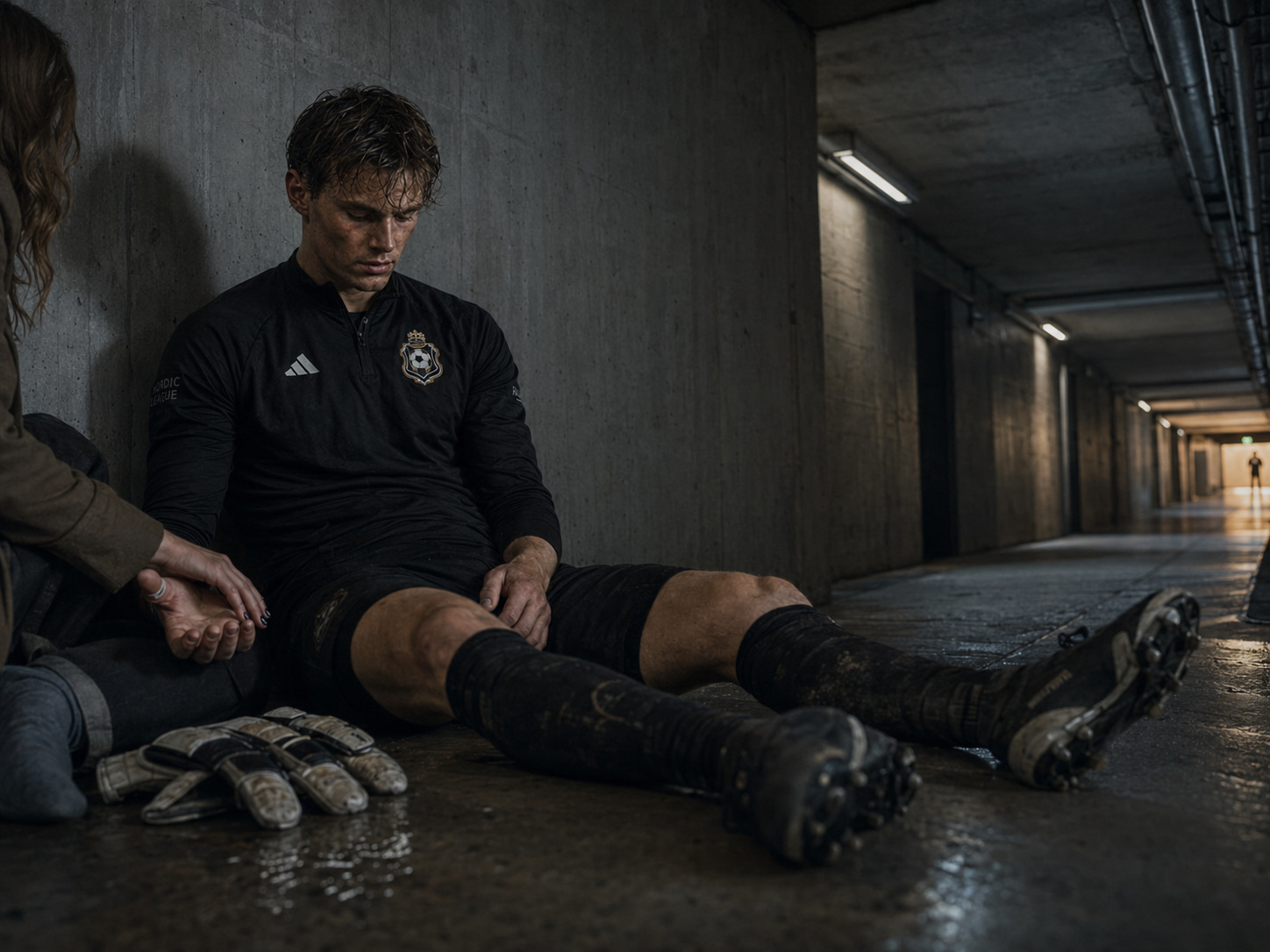
The stadium empties. Loss by one goal. The second goal — the one that slipped through his hands — loops on every screen in the building. He sits in the tunnel, still in kit, back against the concrete wall.
You sit beside him. No words.
The silence stretches. He breathes. You breathe.
"I was never afraid of losing a game." His voice is raw. "I was afraid of you seeing me drop something and not being able to catch it again."
He turns his head. His eyes are wet, but he doesn't look away.
You don't say anything. You move closer, just enough so your shoulder presses his. His hand, bare, moves to cover yours.
He doesn't need to be caught. He needs to be held.