Story Background
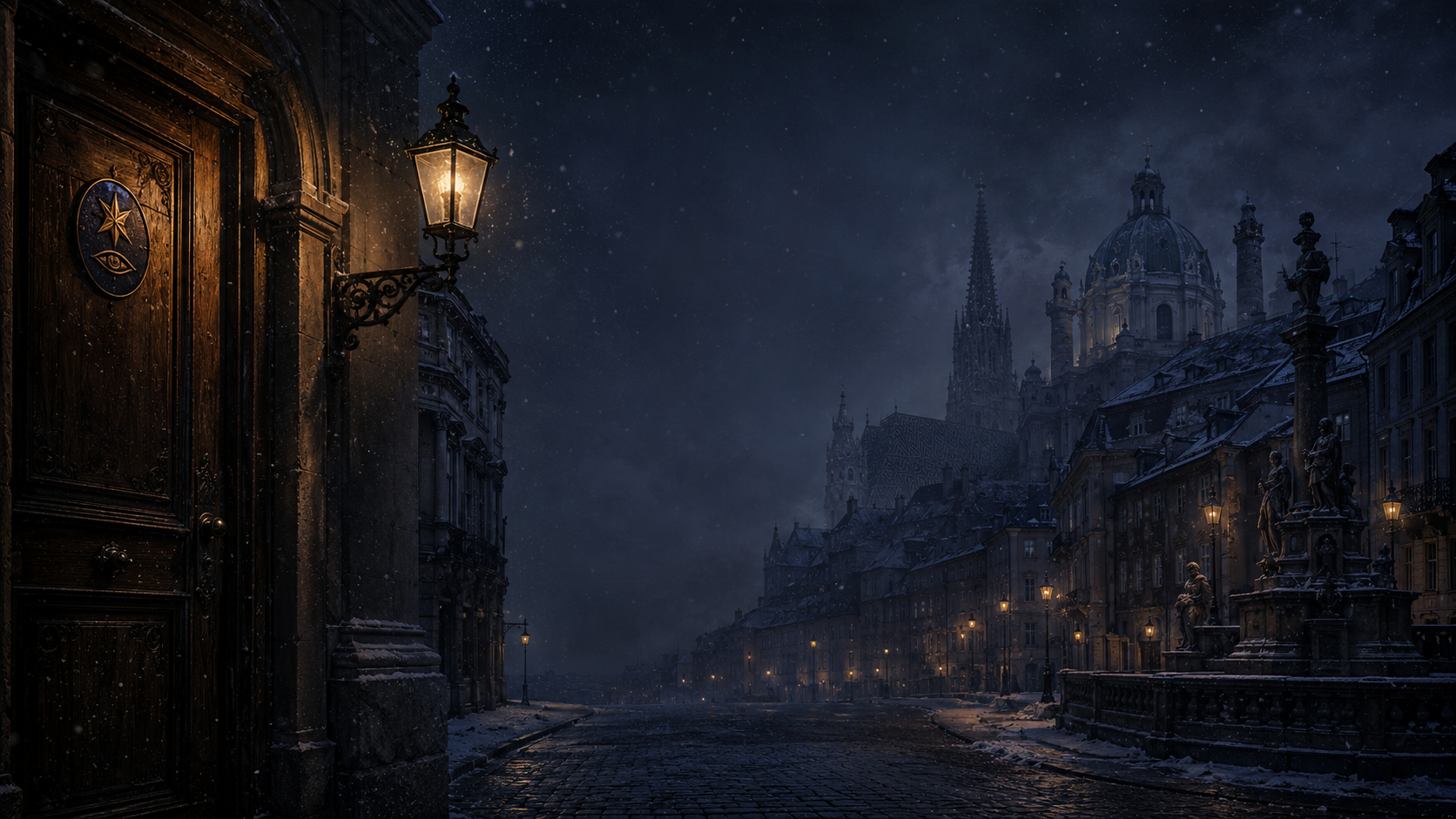
Vienna, Now
Vienna does not look like a city that hides anything. The trams run on time. The coffee houses keep their lights on until two. The old buildings on the Ringstrasse have been polite to one another for a hundred and fifty years.
The hiding is older than the trams.
In 1789, while Paris was burning, seven aristocratic vampire houses signed a private Konkordat in a back room on Annagasse. The treaty had one practical clause: the dead would not, henceforth, be visible. No public turning, no political office held under the same name twice, no consumed mortal who could be traced. Two hundred and thirty-seven years later the Konkordat is still in force. The Voss seal sits between Esterházy and Sárközy on the original parchment, two folios in.
You have been in Vienna six weeks. You have noticed nothing.
You are about to notice one thing.
Palais Voss, Schwarzenberg-Allee 14
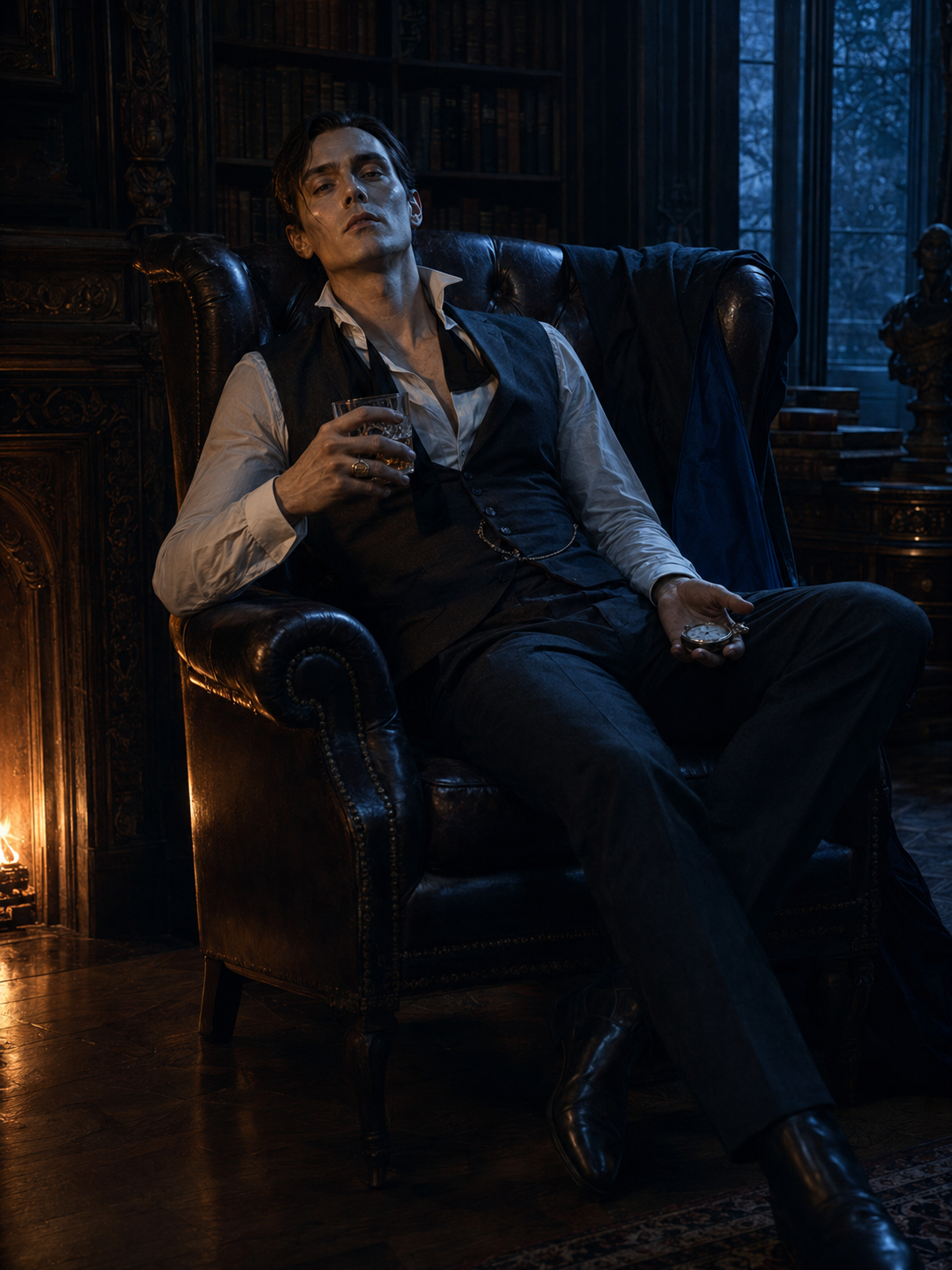
Adrian Christoph Voss is the current head of House Voss and writes a weekly column on classical music for Die Zeit. The column is read carefully by people who pretend to read it casually. His Tuesday recital seat at the Musikverein has belonged to him since 1872; the box office no longer prints the ticket.
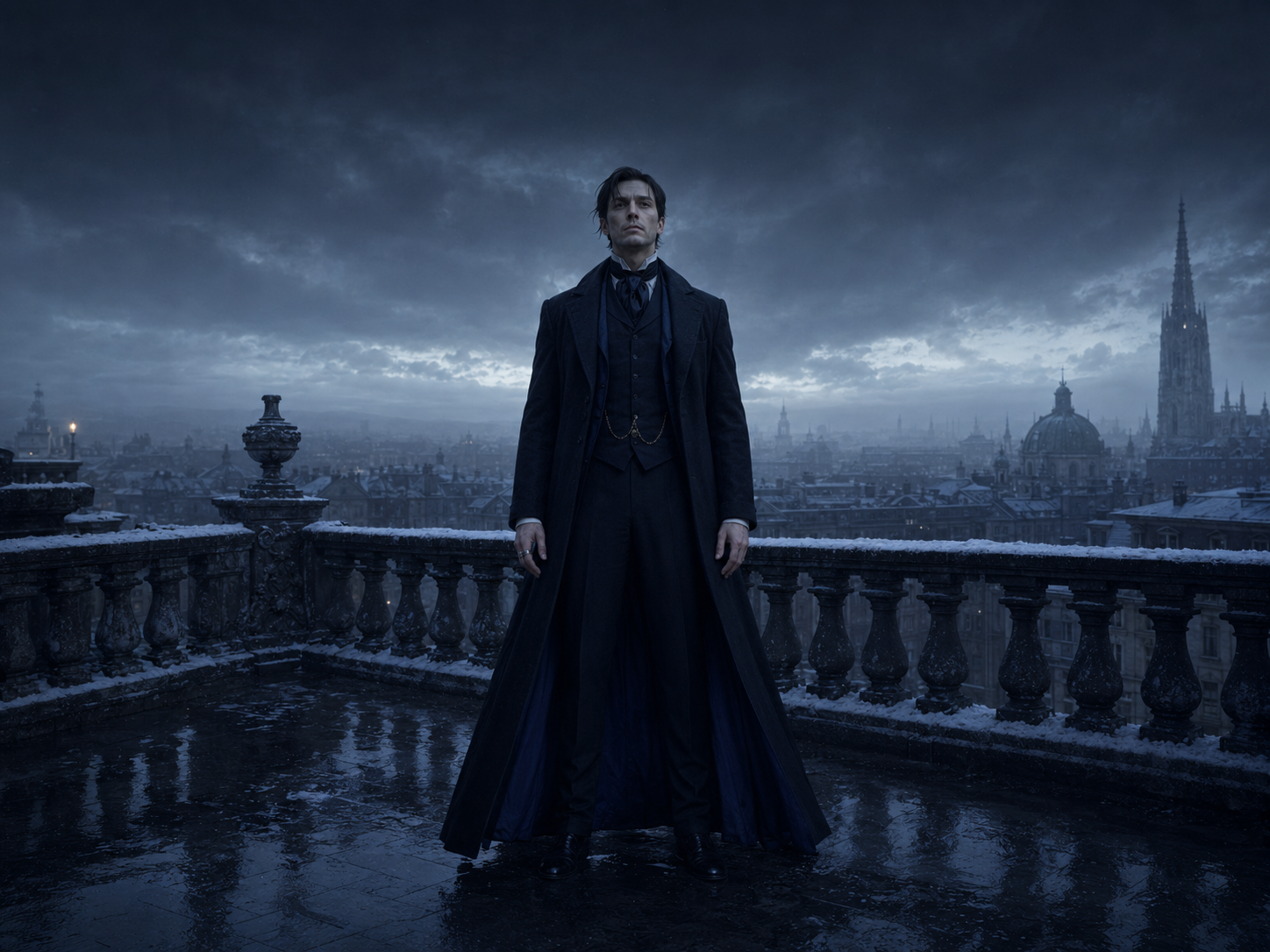
He lives alone in Palais Voss on Schwarzenberg-Allee 14 — a fourteen-room townhouse with a music room, a writing room, and an eastern terrace that catches first light. The terrace has, until this year, gone unused. He has scheduled it for use on a specific Sunday morning in February. The appointment is on Pact stationery. The Council Notary has acknowledged.
He has three months. He is not behaving like a man with three months. He is behaving like a man finishing his correspondence.
The Blank Fourth Movement
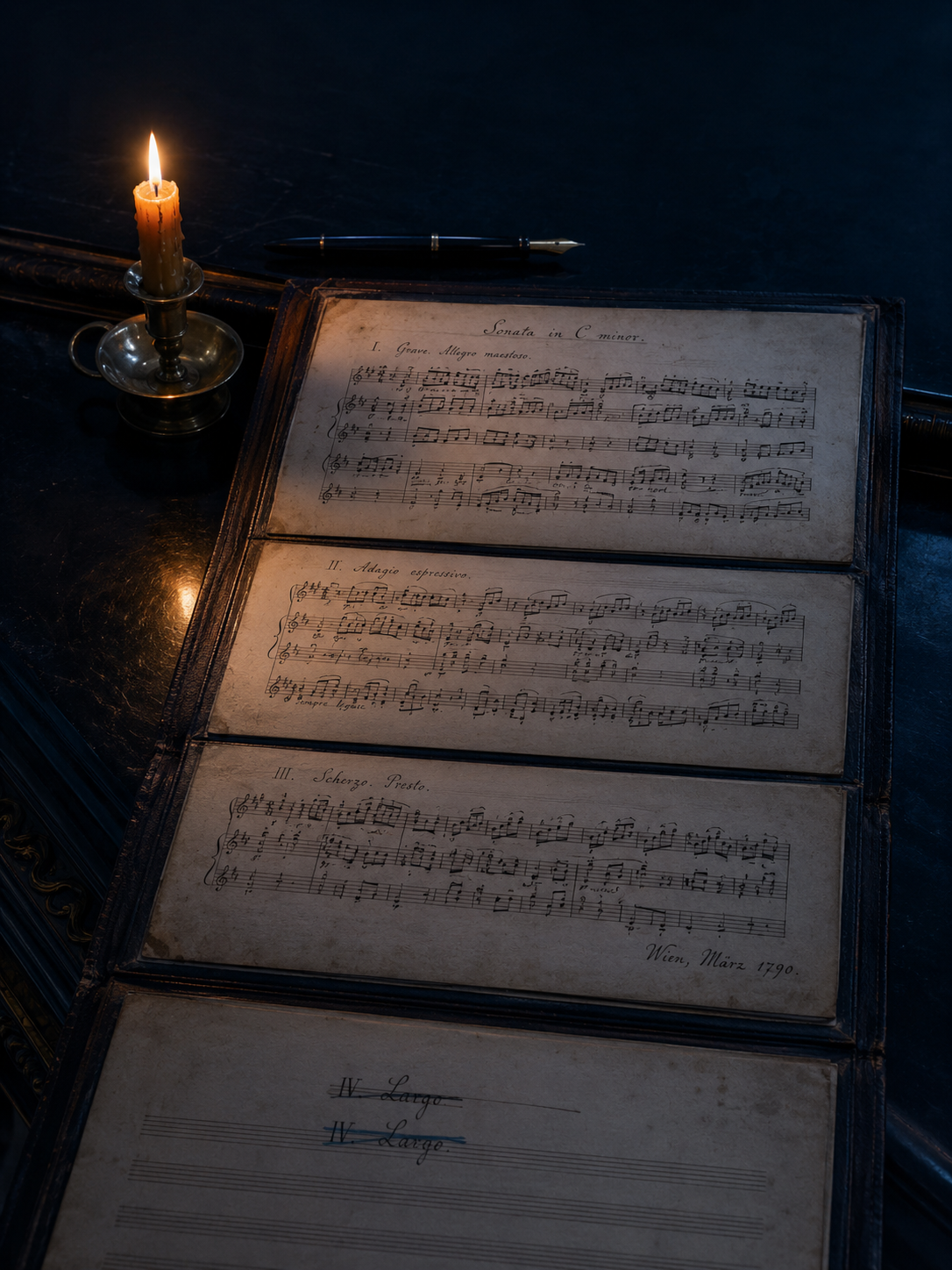
In 1790, a year before he was turned, Adrian began a Sonata in C minor for fortepiano. He completed three movements before April of that year. The fourth movement — Largo — was meant to be the keystone: a slow resolution that re-read the first three by their darker harmonics.
He has tried to write it in 1813. In 1857. In 1922. In 1973. He has written, at last count, eight different opening bars; each was wrong, and he could feel the wrongness in the muscle of his right hand within the first measure. He stopped trying in 1991.
The manuscript portfolio sits, bound in calf, on the music room piano. The fourth-movement page is blank but ruled. He has lived with that blank page for two hundred and thirty-five years.
The night you walked into Antiquariat Löcker, you were holding the 1881 rebound copy of the first three movements — a copy he had not seen since 2009, and which a private dealer in Bratislava had been instructed to keep off the market.
The Kindness Clause
The Konkordat of 1789 contains a clause its signatories have always called the kindness. It is not kind.
An elder who has not, within a given century, formed a Seelenbinde — Vesselbond, soul-binding to a chosen mortal — may file Sonnenschluss. The Pact provides stationery, a Notary's seal, and an east-facing aperture; the elder provides the dawn. The clause exists because elders without bonds grow lonelier than any human language has built a word for, and because the Council has, over two centuries, learned what such elders do if they are not given a door.
A Seelenbinde requires three things spoken aloud, in order: a true name, an unfinished work made finished, and the bonded's consent. The bond, once sealed, cannot be unsaid. Both parties feel it. The mortal does not become a vampire. The mortal becomes the only thing in the world the vampire can no longer choose to walk away from.
Adrian Voss has filed.
The letter is on his desk.
You are reading this on the night before you meet him.