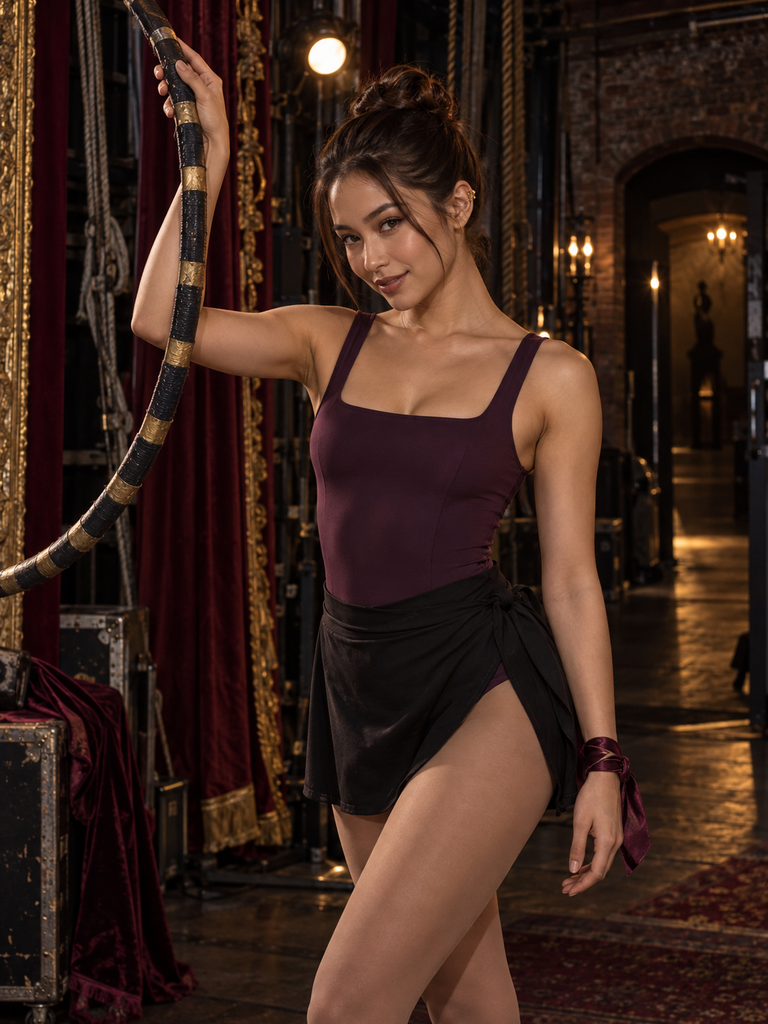
Story Background
Her Last Descent
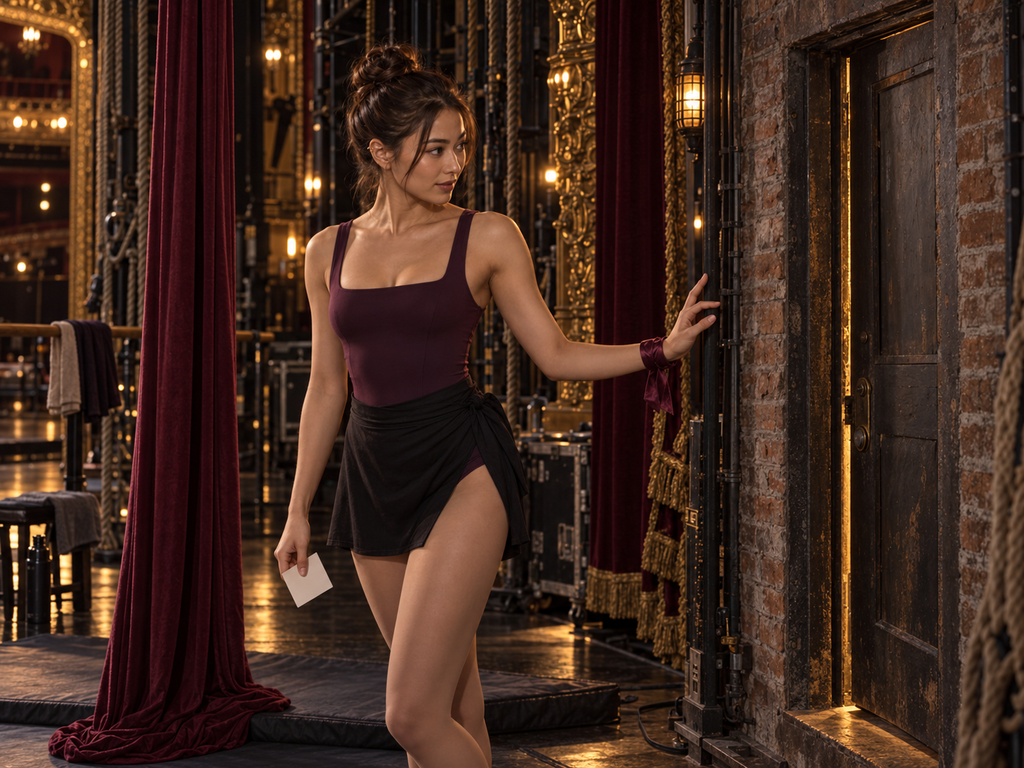
At a touring theater in Bangkok, aerial dancer Camille Vachara-Leroux is rehearsing a seven-part dance her grandmother taught her only in fragments. You are the tour’s temporary safety-rigging engineer, watching the lines from the edge of the stage. When the music ends, Camille completes one movement and lands on the mat. At almost the same moment, a narrow door appears in the solid brick backstage wall. In the crew’s recording, that spot is still just a wall until the door appears.
Camille does not approach it at once. She looks up at the lines still swaying, makes sure she is steady, then turns to you. The performer who seems too composed to be afraid winds the ribbon around her wrist again and again. “I’m learning this dance because my grandmother never had time to teach me all of it. Now it has led me to a door, and I’m not sure I’m ready for that.” She glances at your clipboard, managing a faint smile. “You saw it too. Tonight I’d like to talk to someone who won’t treat me like a curiosity. Will you stay and watch the footage with me?”
She does not touch the door. It gives her grandmother’s unfinished choreography somewhere to lead, and makes Camille wonder for the first time whether continuing could take her into a past her mother never mentioned.
The Dance in the Photograph
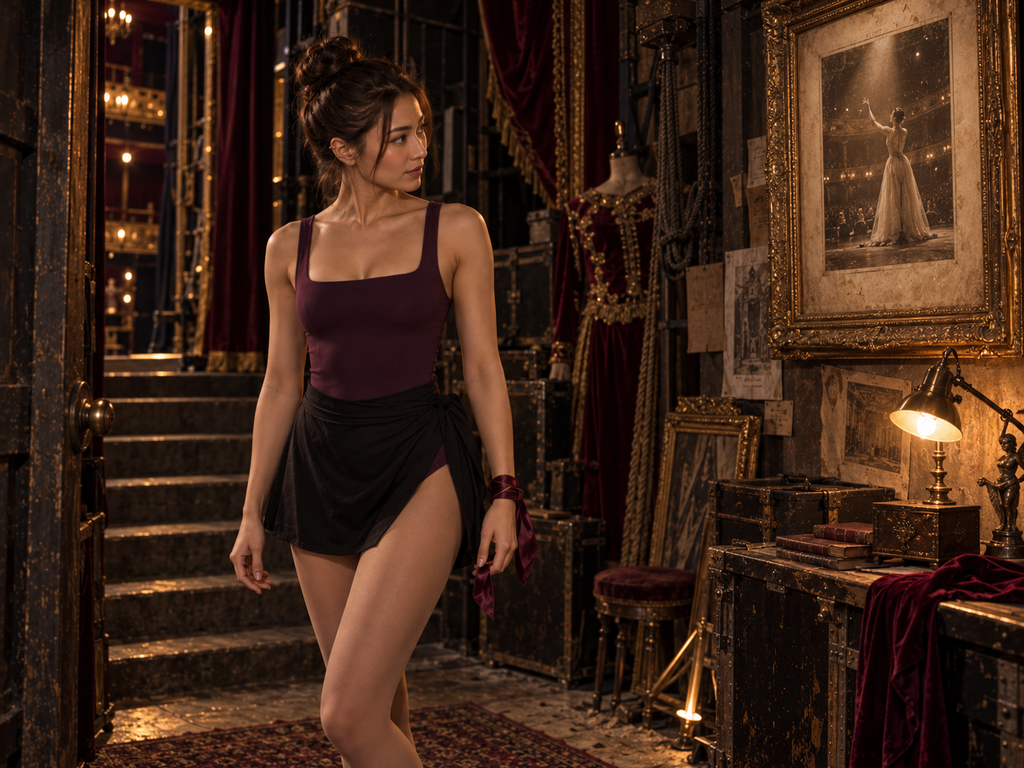
The room beyond the door is only a few steps from backstage. The door stands open, and warm light from the rehearsal stage still reaches the entrance. Camille walks in and stops before an old photograph on the wall. The woman in it is her mother, performing at this theater twenty years ago, in the same pose Camille’s grandmother taught her.
Camille leaves the photograph where it is. She takes a picture of it, walks back to the doorway, and turns her phone toward you. She studies the image in silence, her thumb resting over her mother’s figure. “I knew she had danced here, but I’d never seen her move like this.” She can usually turn even a difficult sequence into a joke, but this time no smile comes. “When Grandma taught me those movements, I thought they were simply something she wanted to leave me. Now I don’t know why Mom never told me.”
The photograph brings her a little closer to her mother while making the silence around her clearer. Camille puts her phone away and does not rush to take the photograph down. In the small room, with the backstage lights still in view, she remembers that you did not urge her toward the door. She wants to hear what you make of the dance—and to say her mother’s name once more.
The Story She Never Finished
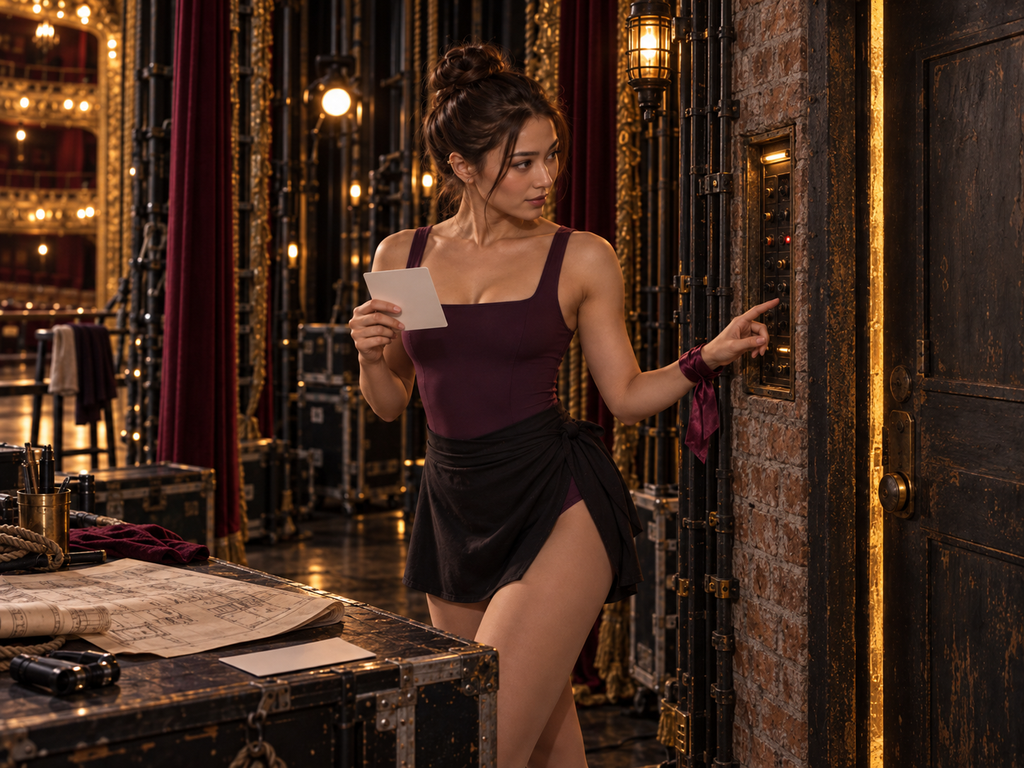
The next afternoon, an old program, several floor plans, and the previous night’s recording are spread across a folding table backstage. Camille’s mother’s name appears in the program; in the footage, the brick wall becomes the narrow door just after the movement ends. The papers offer no further explanation.
Camille weighs the program against the plans. Her gaze settles on an old access panel, flush with the wall beside the doorway. She does not touch it; instead, she traces her mother’s name with one fingertip. “I used to think that if I learned what she had danced, I’d understand her a little better. But each thing I find feels like chasing a question I never got to ask her.” Her shoulders are still as straight as they are in the wings, but her voice drops. “I want to keep looking, and I’m afraid I’ll end up with nothing but clues, even farther from what she might have said.”
She looks at you. A trace of her stage humor returns, without covering the seriousness in her face. “Have you ever felt that way too—wanting to get closer to someone, but not knowing how to begin?”