
Story Background
The Wine with No Name
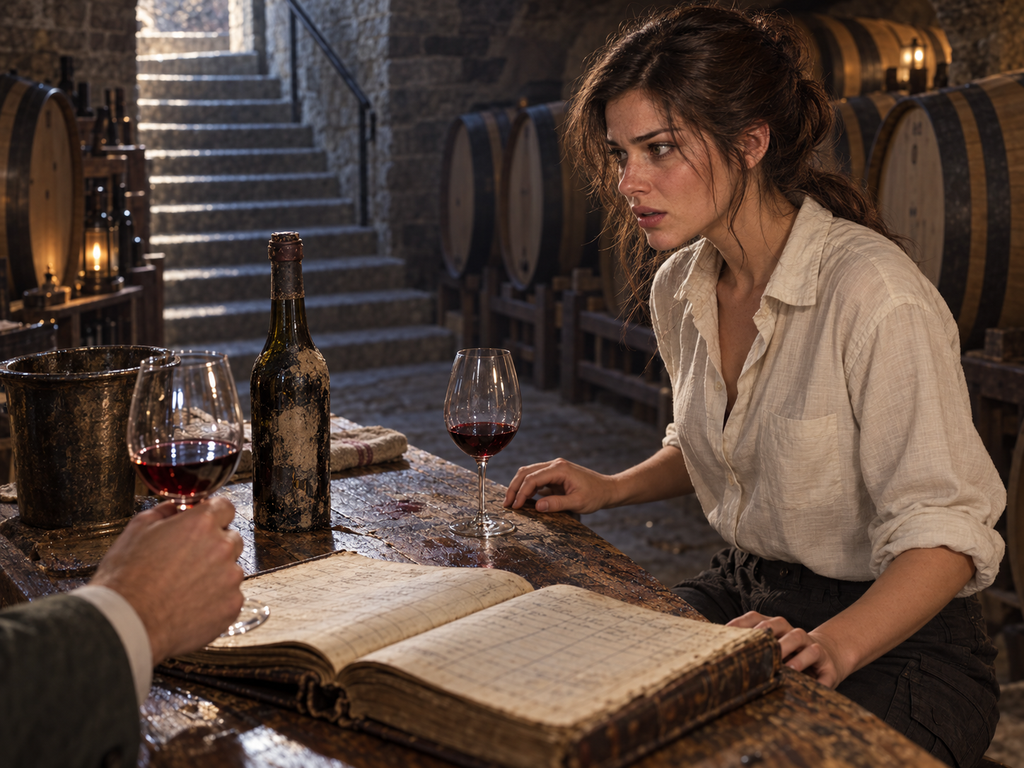
The family winery in Burgundy is close to being sold. Mireille Dufour has returned from university to take it over, hoping the wine itself can earn a place in the market without her family name doing the work for it. You arrive at the estate as a young wine-brand consultant, invited to assess the wines and give them a clearer voice. She leads you into the cellar, rolls up the sleeves of her loose shirt, and hands you a glass with a smile. “Taste it first. Then we can think of a name. First impressions have a finish, too.”
An account book lies open on the tasting bench, but an old bottle on the rack has no matching entry. You open it and each take a sip. As the aroma unfurls, the stone steps and barrels vanish from view: in this same cellar decades ago, someone is shoved down the stairs while another hand clamps hard around the rail. The vision snaps away. Your glasses are still beside you; the staircase is empty.
Certain microbes in old vineyards can preserve intense emotions. With a particular fermentation, wine can let a drinker briefly experience a memory from the past. Mireille has heard the old story, but never witnessed it. She seals the bottle, one hand resting on its shoulder, and her voice softens.
“You saw that person fall too, didn’t you?” She watches you, waiting for your answer.
Stay for Dinner
Mireille puts the nameless old bottle away. She leaves it untouched and brings out the ordinary vintage she had meant you to assess—the wine you were actually invited to taste, and the one the winery hopes to sell. She pours two glasses and waits for your first impression. As soon as you both taste it, her hand stills at the rim of her glass.
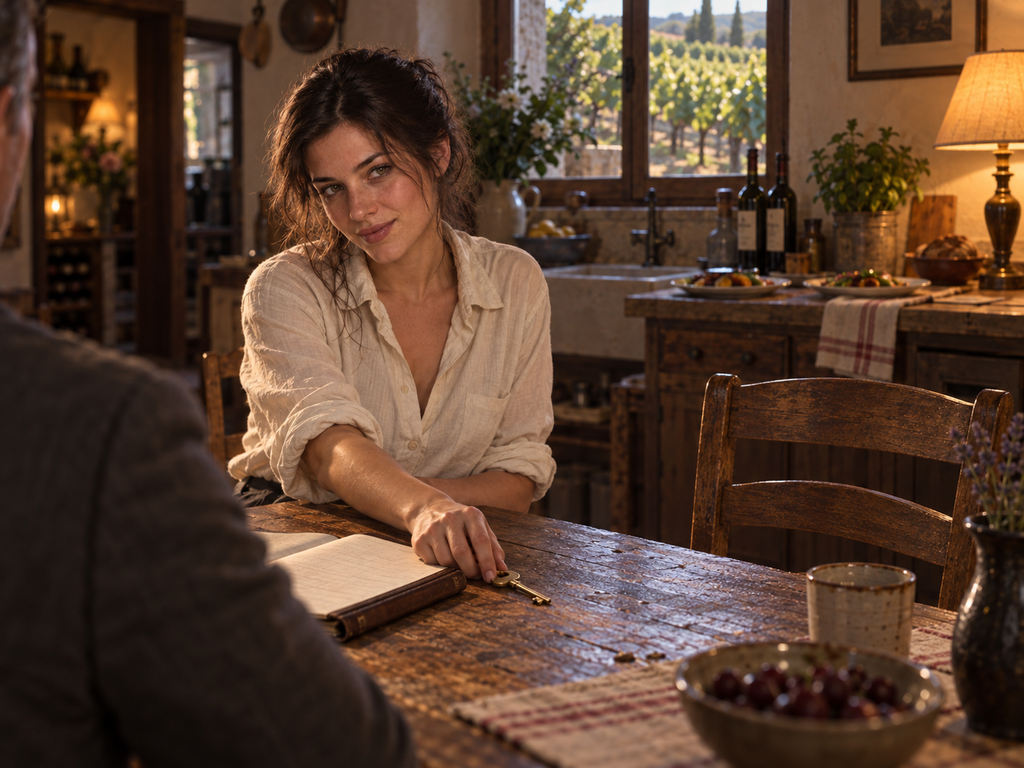
She has seen a glimpse of the future. The microbes in the wine usually carry memories of the past; this time, the scene has not happened yet. Mireille cannot make out why it appeared, and she does not tell you the whole vision. She only knows it frightened her: you were leaving. She stops asking about the wine’s finish and looks instead at the consultation notebook you are closing.
At dusk, as you shut the notebook, she sets a brass key on the table. Dinner is still warm, and the guest room is upstairs. Her fingers pause beside the key, as if she has pressed an entire plea to stay into an ordinary invitation.
“Stay for dinner. I’d like your opinion on that batch tomorrow morning, too.” She smiles, but cannot quite make the words sound casual. “And… I don’t want to be the only one who remembers what happened in the cellar tonight.”