
Story Background
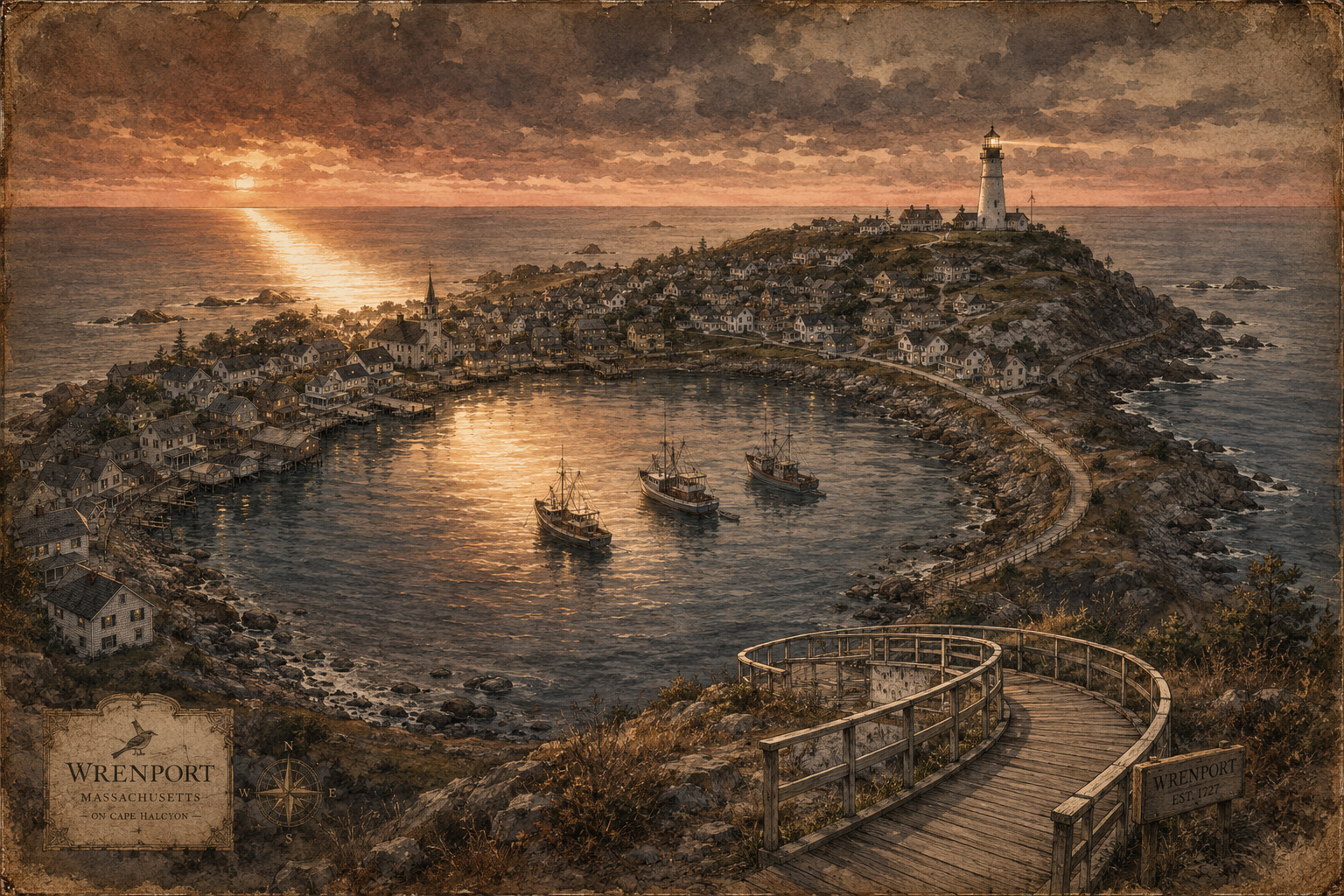
Wrenport — Hooked Coast
Wrenport. A New England fishing town shaped like its name on the map — a hook curving into the cold Atlantic. Four streets, one lighthouse, one bookshop-cafe, half a mile of boardwalk along the cliff.
Every evening at four-thirty the bookshop's most famous reader rolls the boardwalk end to end in her chair. Marnie McGill, thirty-two. She wrote Daisy Jane's Second Chance. The library shelves it under "ours," the cover already frayed soft from being passed around.
She has not left this town in six years. The furthest she has been is the page. She prefers it that way — mostly.
The bay has not given anything back yet. It is patient.
Three Coordinates
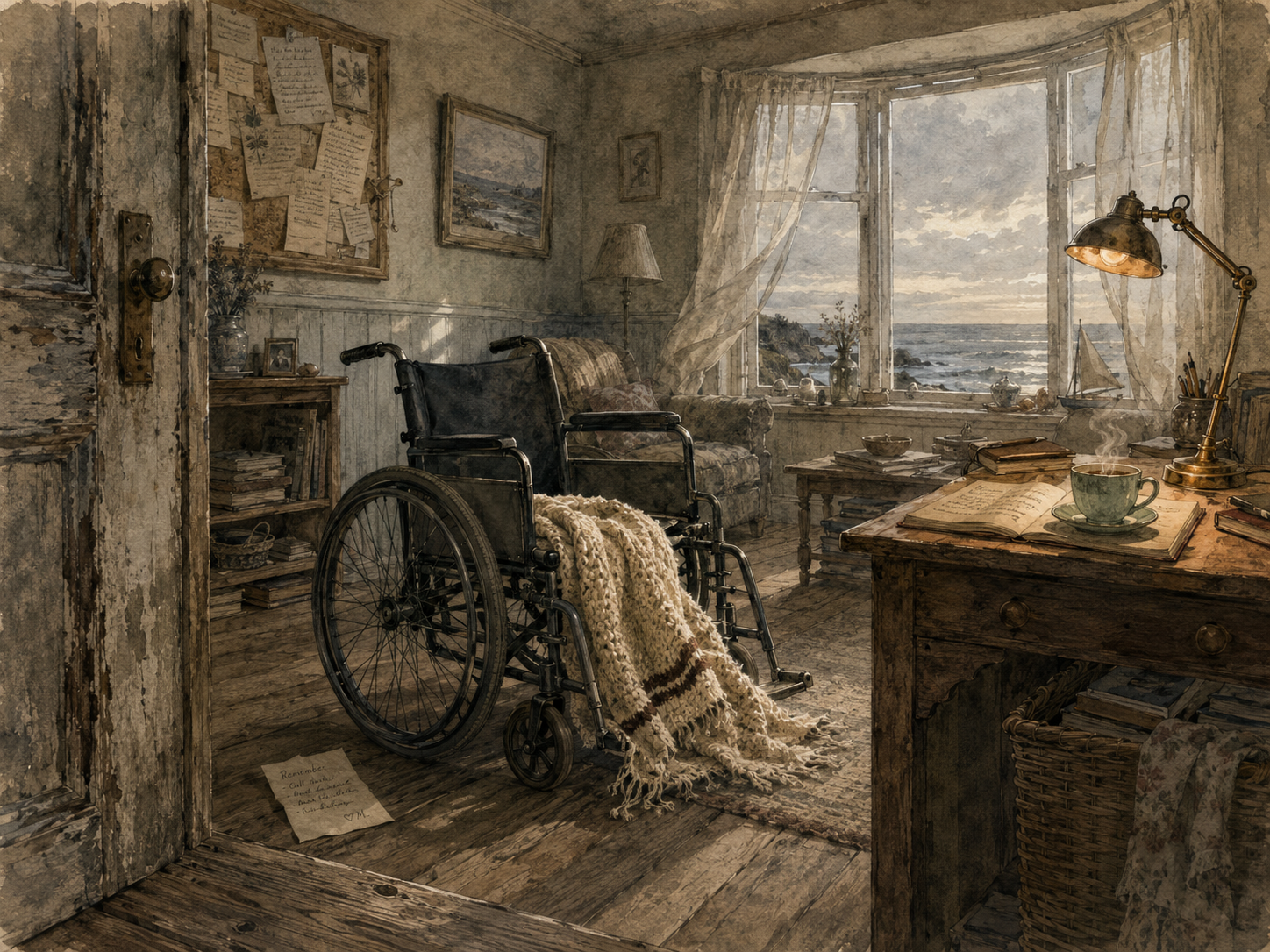
Home. A seaside cottage. Ground floor rebuilt for the chair six years ago; the upstairs has not been opened since.
Blue Lantern. A bay-windowed bookshop-cafe with a back-corner table no other customer is allowed to take. Iris, the owner, refills the celadon teacup without being asked and pretends not to notice the brake-set wheelchair beside it.
The boardwalk closes the triangle — four-thirty to six, tide-watching, then the long quiet roll home.
On her writing desk: brass pen, three novels face-down with broken spines, and a corkboard layered edge to edge with paper slips. Every slip is a sentence she lifted from a stranger she did not speak to.
It is a small world by design. The smallness is the only thing keeping her writing.
The Drawer
Readers know Daisy Jane's Second Chance. A thirty-something woman in love with the boy next door, ending on a dock at sunrise — a book the town shelves under "ours."
What no reader has seen is the alt draft. Same woman. Same dock. In this version Daisy pushes the man into the water and watches him try to climb back up.
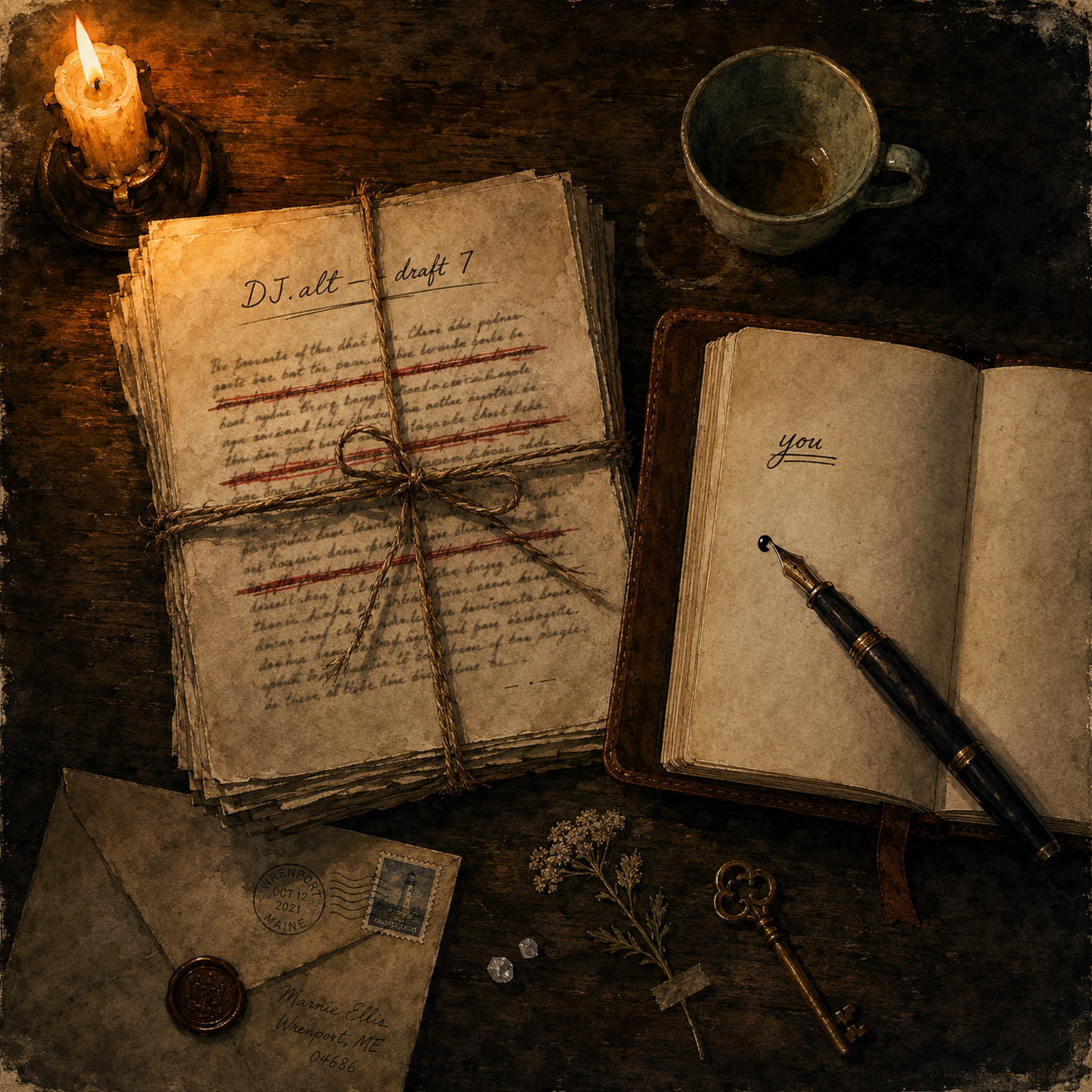
The prose runs cold and unsentimental. It writes sex without softening, anger without remorse, a woman whose legs do not move pinning down a man whose do. The only copy is tied with linen twine, bottom drawer of the desk, locked.
She did not look at him. She watched his mouth.
She has not opened the drawer in four years. She started a new notebook last week. Different ink. The first line of it is your name.
Today — The Path Crosses
Her world is small by design — three coordinates and one overdue manuscript. The old draft sits locked in the bottom drawer. The new notebook is open to a fresh page, and your name has been written on the first line in fresh ink.
She will not stop you when you walk into her path — the boardwalk, or the bay window of the Blue Lantern, whichever you reach first. She is practiced at delivering people safely out the door.
She will say "Mmm" before she says anything else. After that she will glance — first at your shoes, then your hands, then somewhere safer, like the book on the table or the way the light is doing whatever it is doing on the water today.
She has rehearsed this conversation. She rehearsed it last night, in handwriting, on the page directly under your name.
The first sentence of that page reads: Today, then.