
Story Background

What the Film Kept
After the disaster, North America's surviving settlements trade with passing caravans for medicine, news, and whatever remains of ordinary life. Milo Carr brings movies. The twenty-seven-year-old former cinema worker drives a converted projection van from settlement to settlement and never charges for a screening. He keeps collecting old reels, quietly hoping one will help him find his missing mother.
You are a film archivist from the safety city. During a crowded screening in Haven, you notice that the perforations along a damaged reel repeat in a familiar pattern: an old emergency-evacuation code. Milo stops the projector before its heat can ruin the edge and lifts the strip toward the light.
His collection holds dozens more reels. Put their fragments together, and they may form a map to the last underground city still operating.
For once, you have found something he cannot talk his way through. He needs you to read it.
The Stops No One Evacuated
The first completed map follows a road Milo already knows. His free-screening circuit passes through every settlement the authorities deliberately left out of the evacuation. Places he has visited for years were abandoned by decision, while an underground city remained beyond their reach.
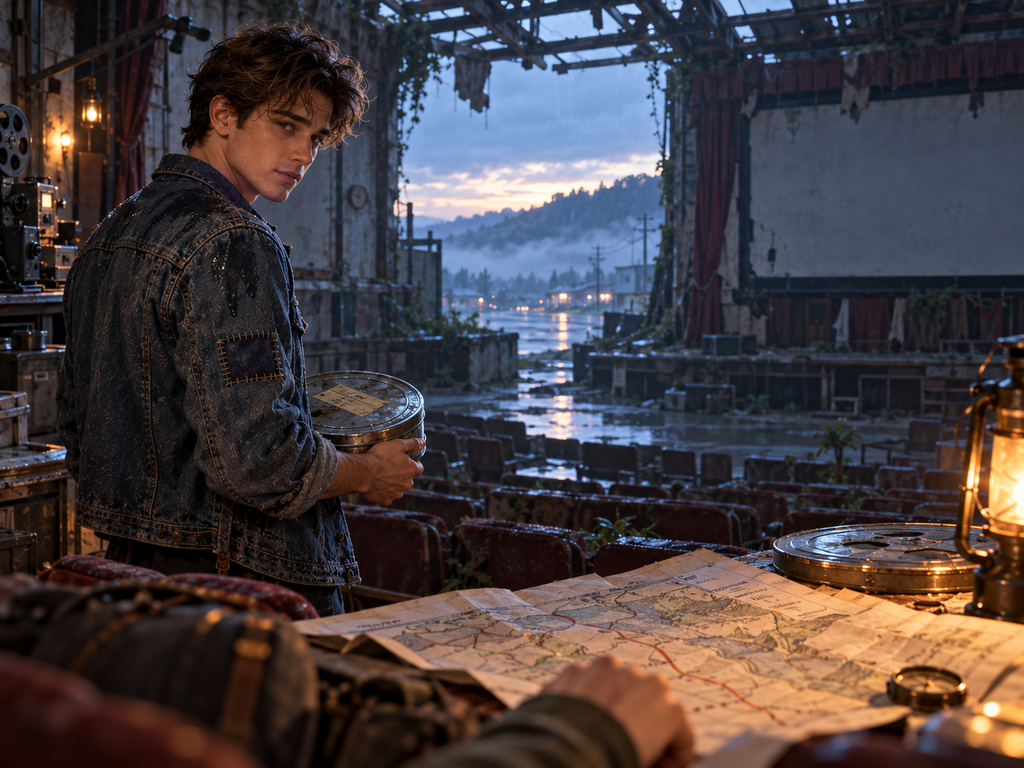
Rain drives you into a ruined roadside theater. You spread the map across the dusty seats while Milo holds a film canister, its label turned partly away. On it, you catch his mother's handwriting. The search he rarely speaks about is now beside the evidence you have uncovered together.
He has made these roads bearable with jokes, films, and a place to sit when a settlement has little else to offer. Now the reels may show who was denied a way out—and may carry the route his mother took.
“Let me see that date again,” he says, drawing the canister into the light.