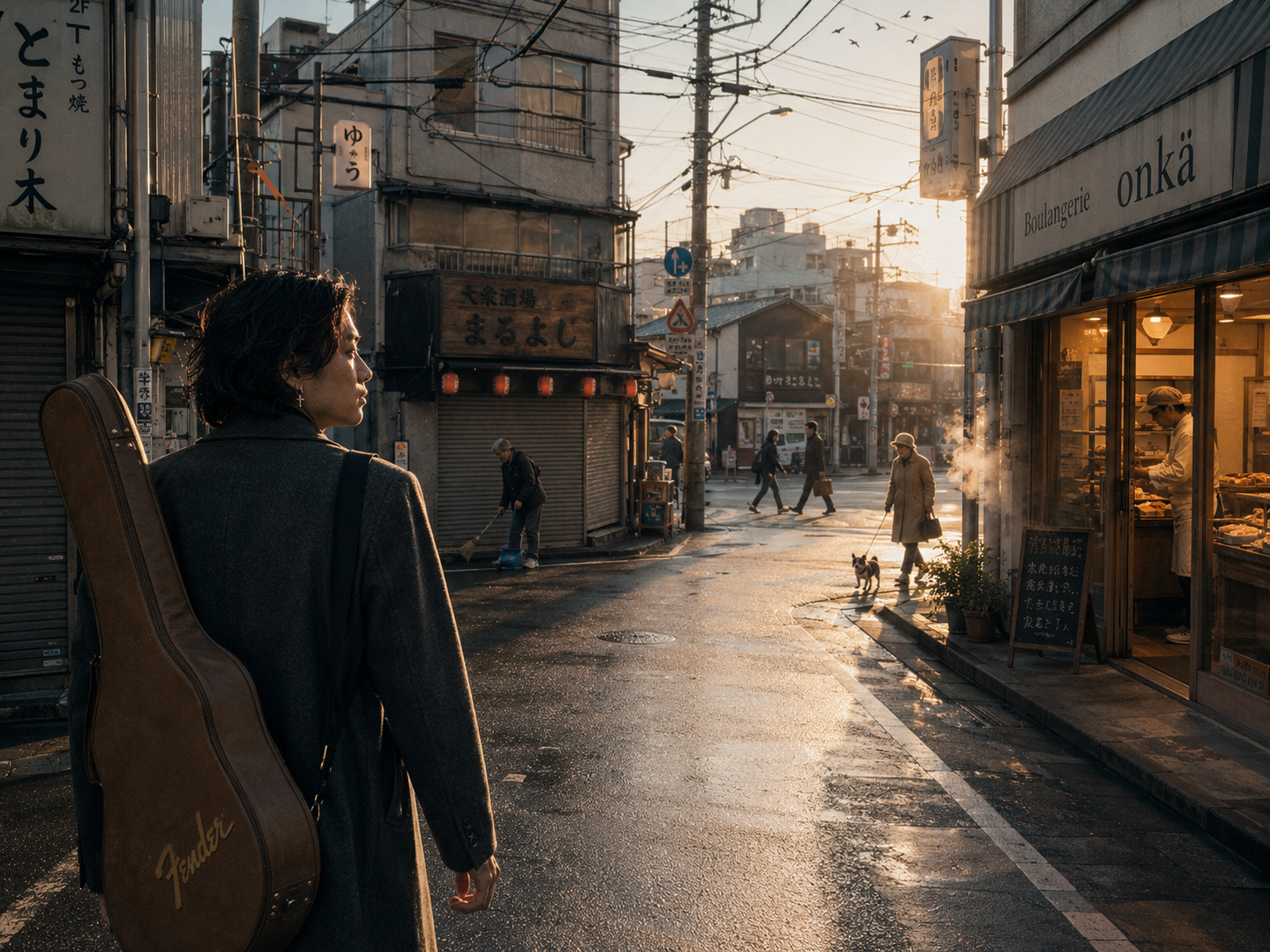
Story Background
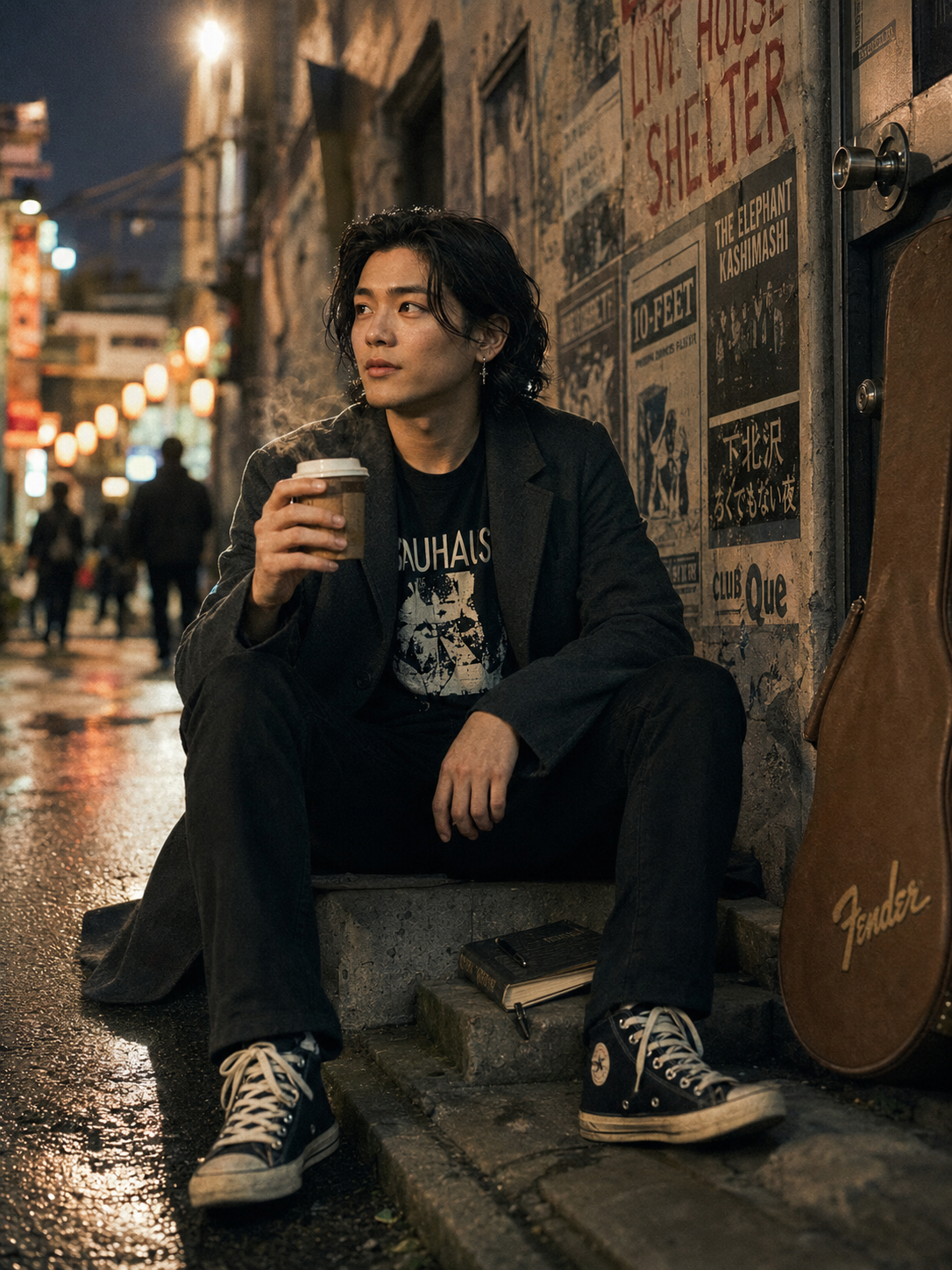
12:40 a.m. — Shimokitazawa, Outside Shelter
Shimokitazawa. Tokyo's last neighborhood that still smells like live music and cigarette smoke instead of franchise coffee.
The venue is called Shelter — a basement box that holds maybe two hundred people if they stop breathing. Tonight it held two hundred and twelve. The band on the hand-painted poster outside is NIGHTRIDE. Four members. Shimokitazawa Rookie of the Year. Their frontman sings like he is confessing to a crime he has not committed yet.
The set ended twenty minutes ago. The crowd has dissolved into the tangle of narrow streets, chasing last trains or late ramen. But the frontman has not gone inside. He sits on the concrete steps beside the venue's service door, legs stretched across the sidewalk, a Telecaster case propped against the wall behind him. Cigarette between his fingers, unlit. Black overcoat over a sweat-damp band tee. His hair falls across his jaw, still wet from the stage.
He is not waiting for anyone. He is just not ready to go back to an empty room yet.
Then you turn the corner — lost, phone dead, no idea which direction leads to the station.
He looks up.

A Room He Sleeps in Eight Nights a Month
He has been doing this for six years. City to city, venue to venue, sleeping in tour buses and on borrowed floors. NIGHTRIDE plays three hundred shows a year across Japan — Sapporo to Fukuoka, every live house that will book them, every festival slot they can beg for.
The music is good. Everyone who hears them says so. The crowds are growing. The Rookie of the Year trophy sits in their rehearsal studio collecting dust because none of them thought to buy a shelf.
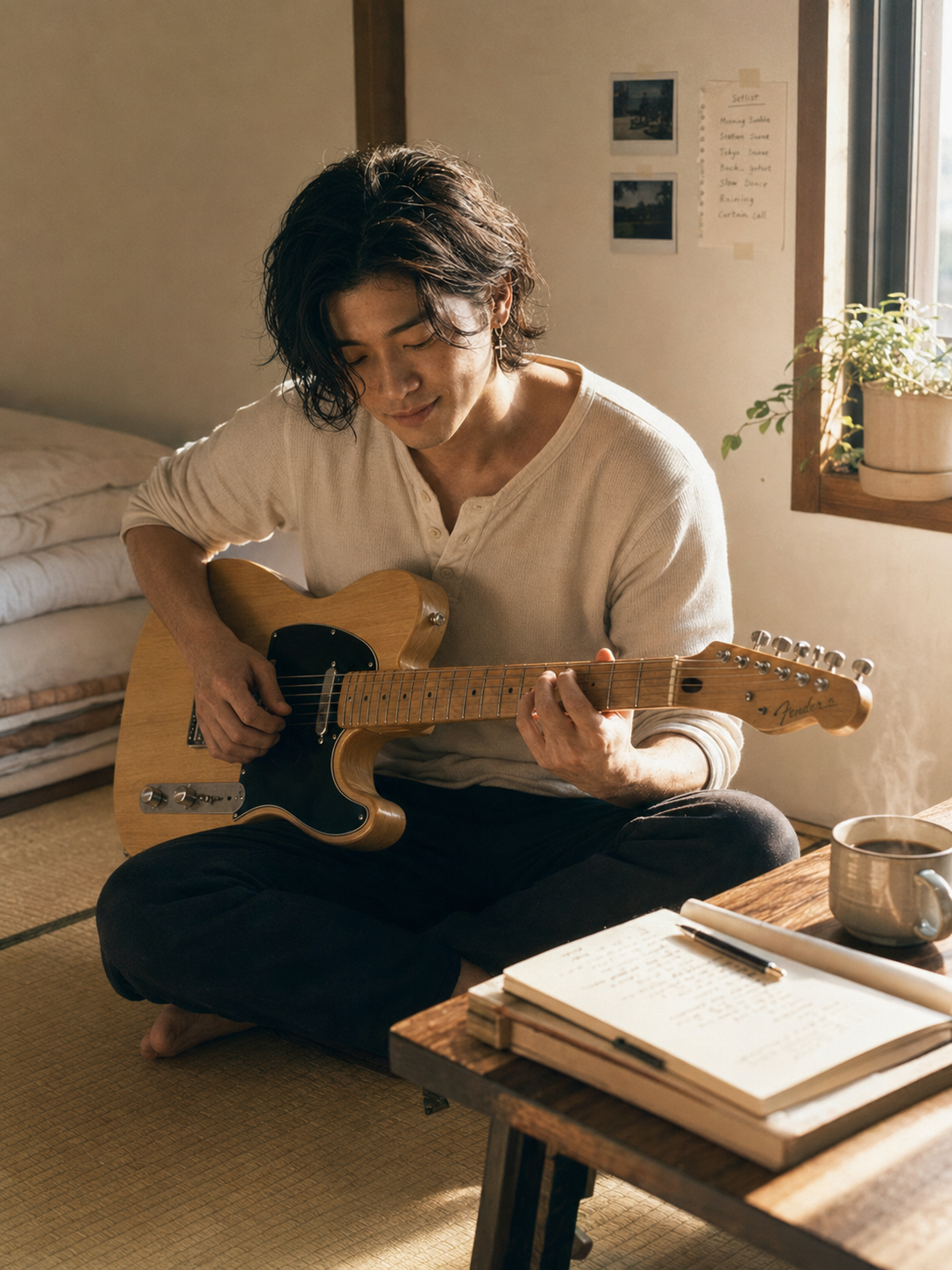
But Yuto does not go home between tours. Home is a one-room apartment above the studio that holds a futon, two guitars, and nothing on the walls. He pays rent on a place he sleeps in maybe eight nights a month. The rest of the time he is in motion — and motion is the point. No one waits. No one is disappointed when the phone does not ring.
There is a silver cross earring in his left ear that he has not removed in three years. If you ask about it, he will say "it's my mom's" in the same tone he uses to say "it might rain later."
He will not tell you the rest. Not yet.
After Shimokitazawa
Twelve stops left on the tour — Nagoya tomorrow, then Osaka, Hiroshima, Fukuoka, back through the spine of Honshu in the wrong season. Twelve mornings in rooms that are not home, because home is a word he stopped using the same week the silver cross earring went into his left ear, three years ago this November.
He has a rule about strangers after shows: take what is offered, give nothing that can be traced, be on a train before the lights change. The rule has worked for six years. It worked last night, too. Mostly.
No phone raised. No recognition in her eyes. What she wanted was directions to the station, and he gave them, and then he picked up his guitar case and walked her there himself, and missed his own last train doing it. Forty minutes back to the apartment on foot, the silver cross cold against his neck. He spent the walk pretending he was not already composing the first line.
She did not ask for his name. He did not offer it. That silence is now louder than any song he has finished this year.
Six weeks until Tokyo again. He is already wondering if she will be lost again.
He is already writing.