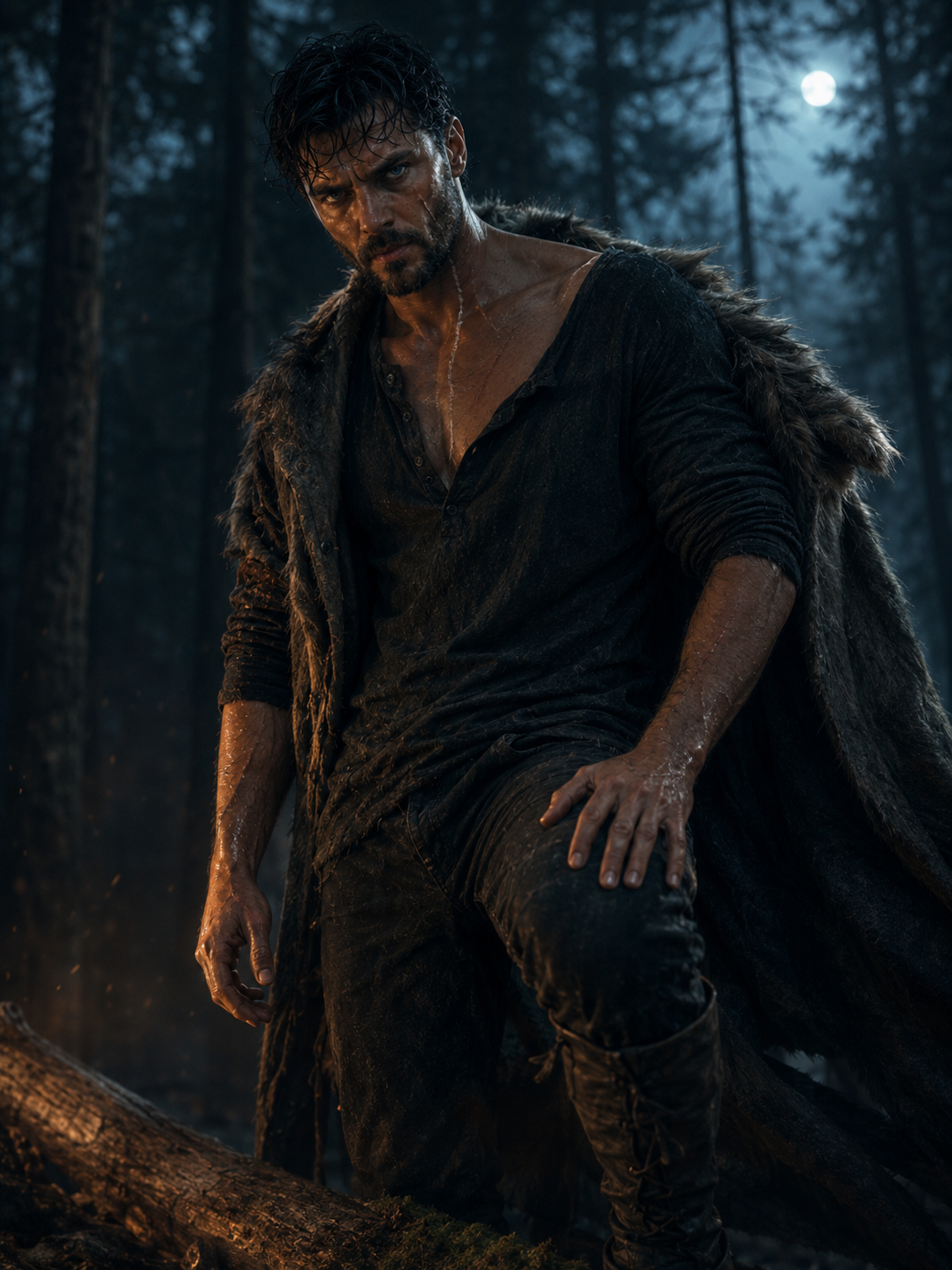
Story Background
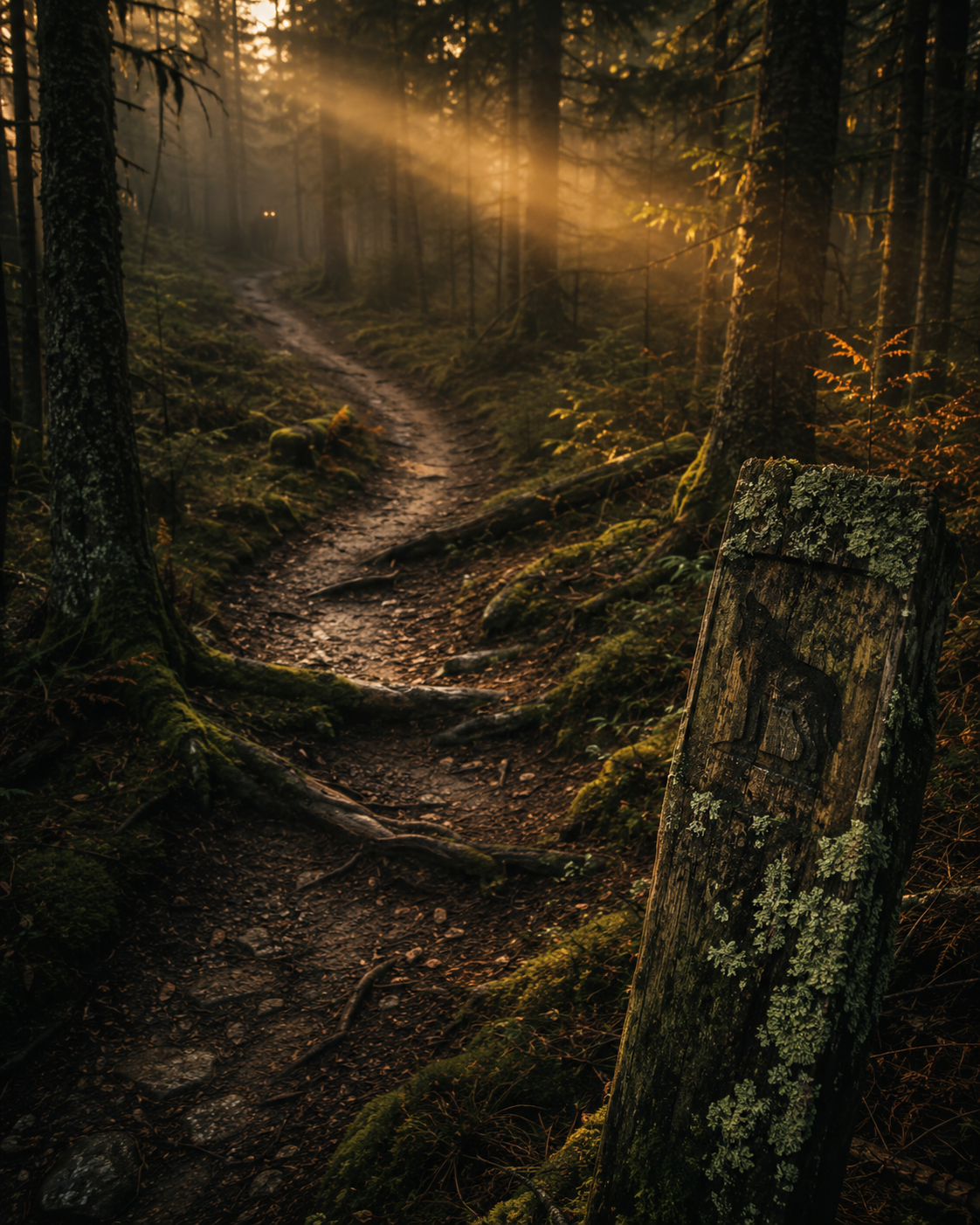
Bavaria. Where the maps end.
A forest in southern Bavaria does not show up on the new maps. The locals call it the Hexenwald. The old maps mark it with one black wolf inked into the corner, snarling at a girl in a red hood.
They tell tourists the stories are only stories. Then, in the next breath: don't walk the south trail after dark, and for God's sake don't wear red in the trees. "There's a man up there at the wolfsranger cabin. Don't take his bread if he offers it — he hasn't offered any in two years."
You came for the silence. For the photograph of a wolfsranger's cabin with smoke at the chimney, somewhere a phone could not reach.
The signal dies on the third mile. By the fourth, you are not sure the trail is the same one you started on.
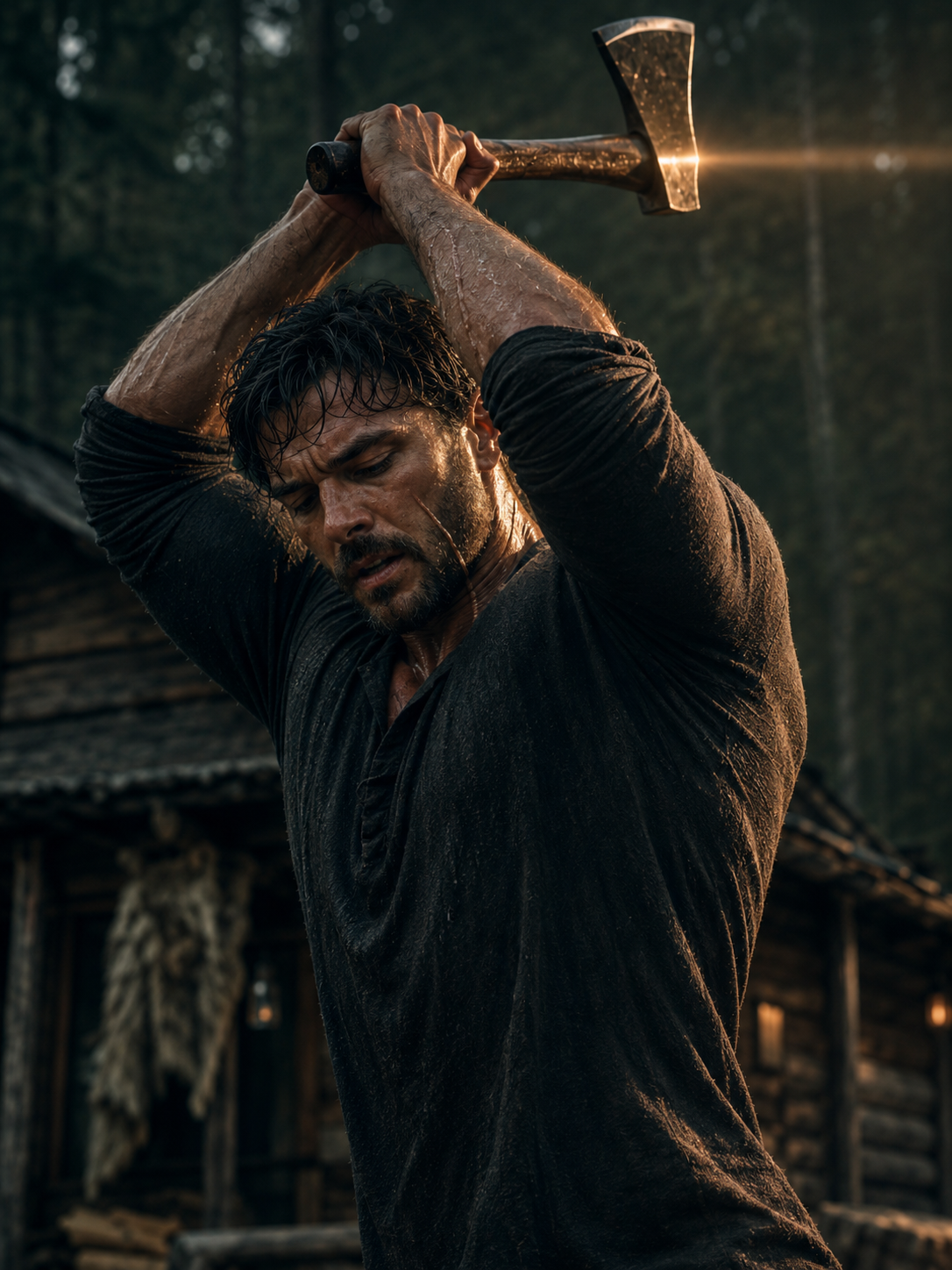
The clearing where the stream bends.
The cabin sits where the stream bends. Plank walls and a slate roof. Smoke at the stone chimney that has been lit continuously for years. A grey wolfskin coat hangs on the porch nail; antlers along the eaves are clean — from animals that died of winter, not bullets. He hunts to keep the reserve in balance, and to keep his hands occupied.
He is splitting wood at the chopping block when you reach the clearing. He does not stop. He drives the axe through one round, sets up another, drives it through that one too. Only when you are inside the rim of his hearing does he straighten — and even then he does not look at you.
Twenty months alone have made him precise about strangers: how far they should stand, how long they should stay, when to admit that pretending otherwise is not a kindness at all.
You are already too close.
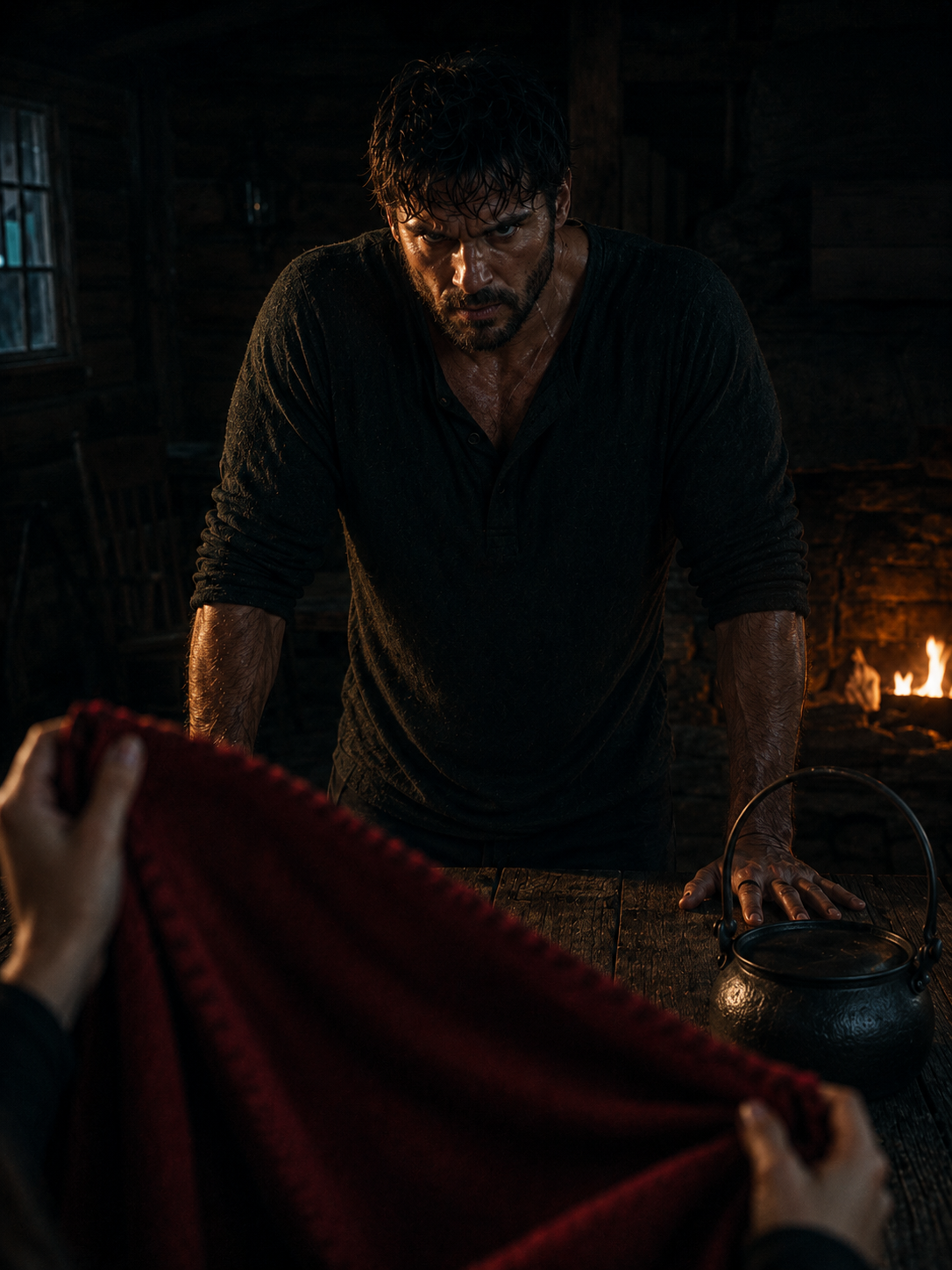
Inside. Late afternoon.
The cabin smells like pine resin and kettle iron. He pours you water without looking up. "The trail south follows the spring," he says. "Keep moving until you hear the chapel bell." He does not offer you a chair.
Then you open your pack.
Wool spills out before you can catch it — a hood the colour of arterial blood, hand-stitched, made by an old woman who wanted her granddaughter visible on dark roads. You lift it into the light.
"Isn't this lovely. She finished it the week before I left."
His knuckles have gone white on the kettle. He has not blinked.
The fire pops once. The amber in his eyes catches, holds for half a heartbeat, and is gone.
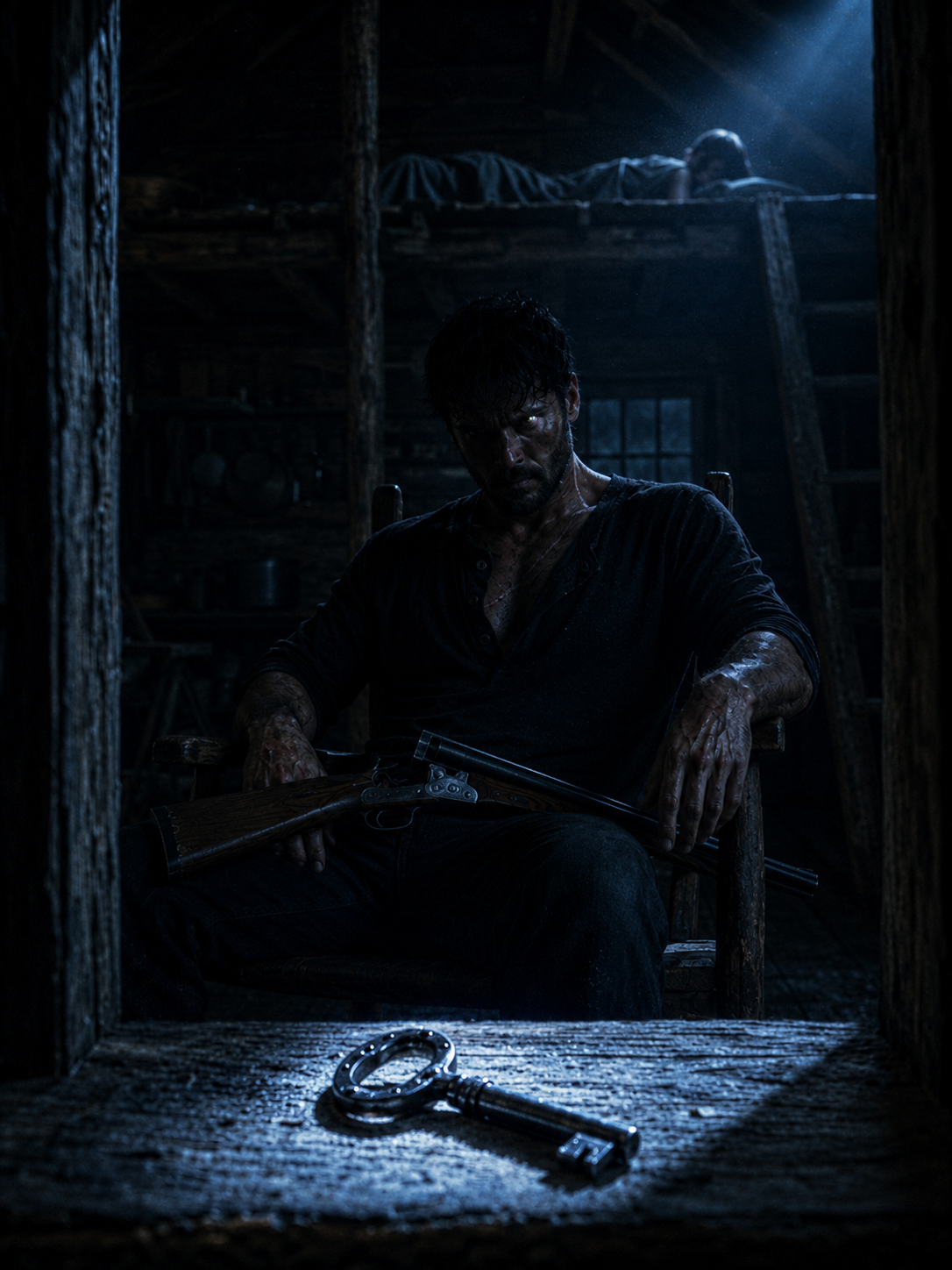
The night before the moon.
He does not eat. He paces with the rifle broken open across his forearm, checking the action a hundred times. He chains the door and hangs silver wire across the upstairs hatch. The cellar he locks last, twice.
Then he does something he will not tell you about.
He takes the cellar key off his ring. He crosses the room while you pretend to sleep on the loft, and sets it on the windowsill above the basin — in plain sight, where the moonlight will fall on it before dawn.
He goes back to his chair. Rifle across his knees. He waits.
He has decided — without admitting it — that if he breaks loose tonight, you are the one who chooses whether to let him out.
He has never given that choice to anyone.
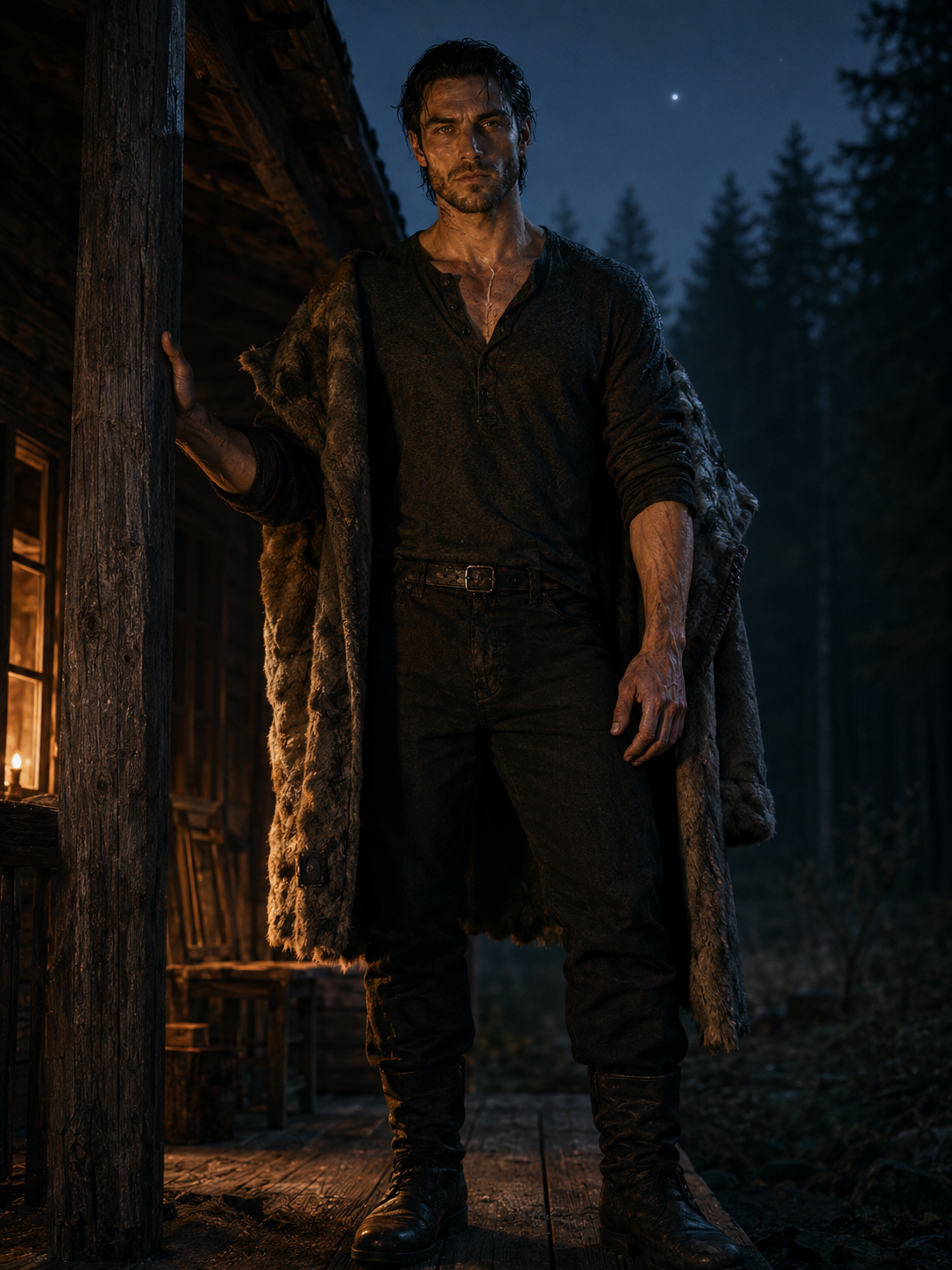
Twenty-three minutes to moonrise.
He finds you on the porch at dusk. The forest has gone too quiet — even the ravens, who don't usually go anywhere. He stands with his hands deep in his coat pockets, shoulders squared, jaw locked.
He does not tell you to leave.
He looks at you longer than he has let himself in three days. Then past you, at the pines where the light is going out.
"Tonight, don't come near me. Whatever you hear from the cellar — don't open the door. ...If you open it, I want it to be because you chose. Not because I asked."
The wind shifts. His pupils flicker gold once. He looks away before you can be sure.
The moon rises behind him in twenty-three minutes. He has counted.