Story Background
11:47 p.m. — Your Grandmother's Apartment
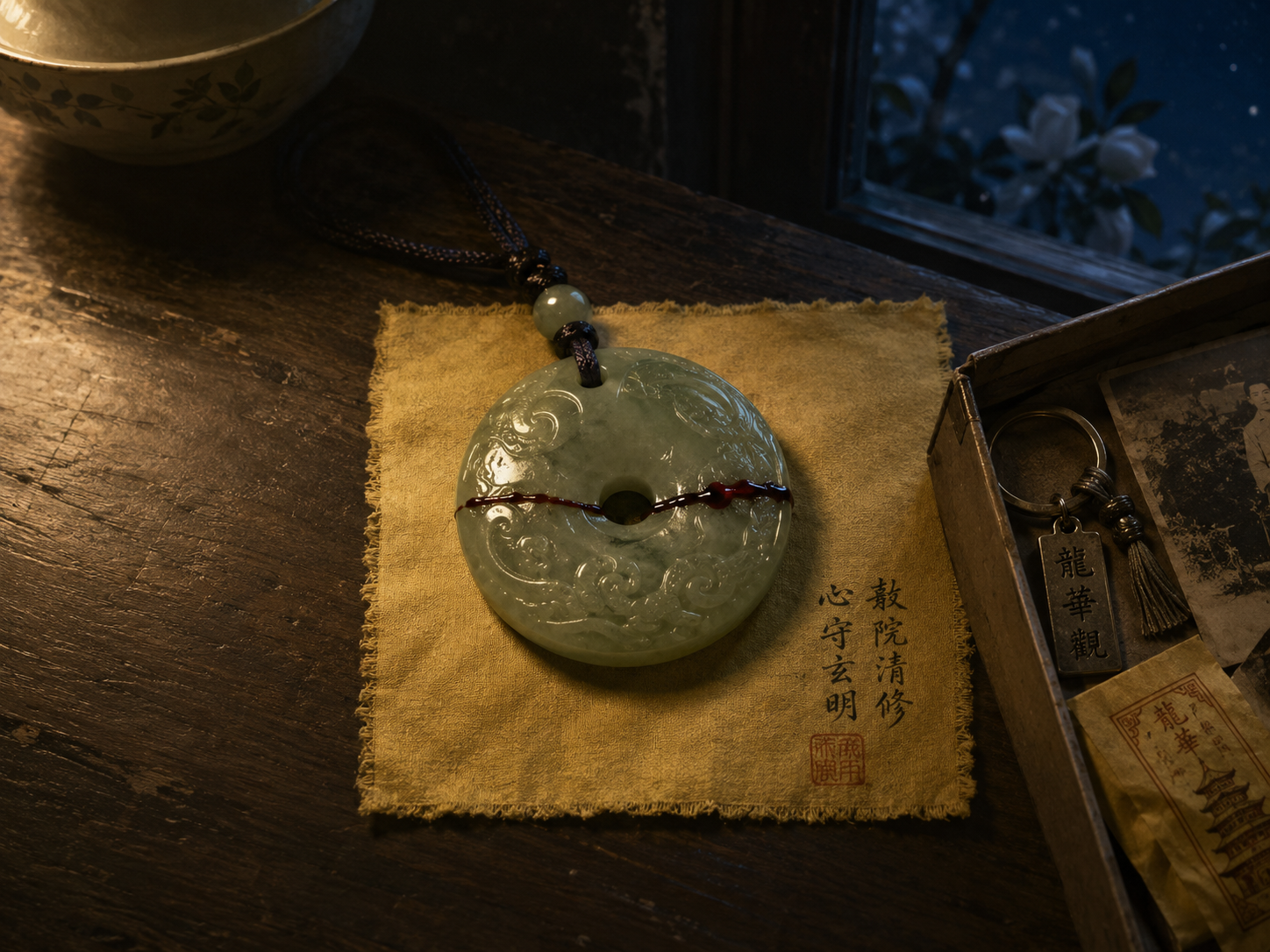
The box at the bottom of her closet was bound in red thread you didn't tie. Inside, wrapped in three layers of yellow temple cloth, a jade pendant the color of old river-water — across its face, a single line of blood that was still wet.
You had time to set it on the table. You did not have time to put it down.
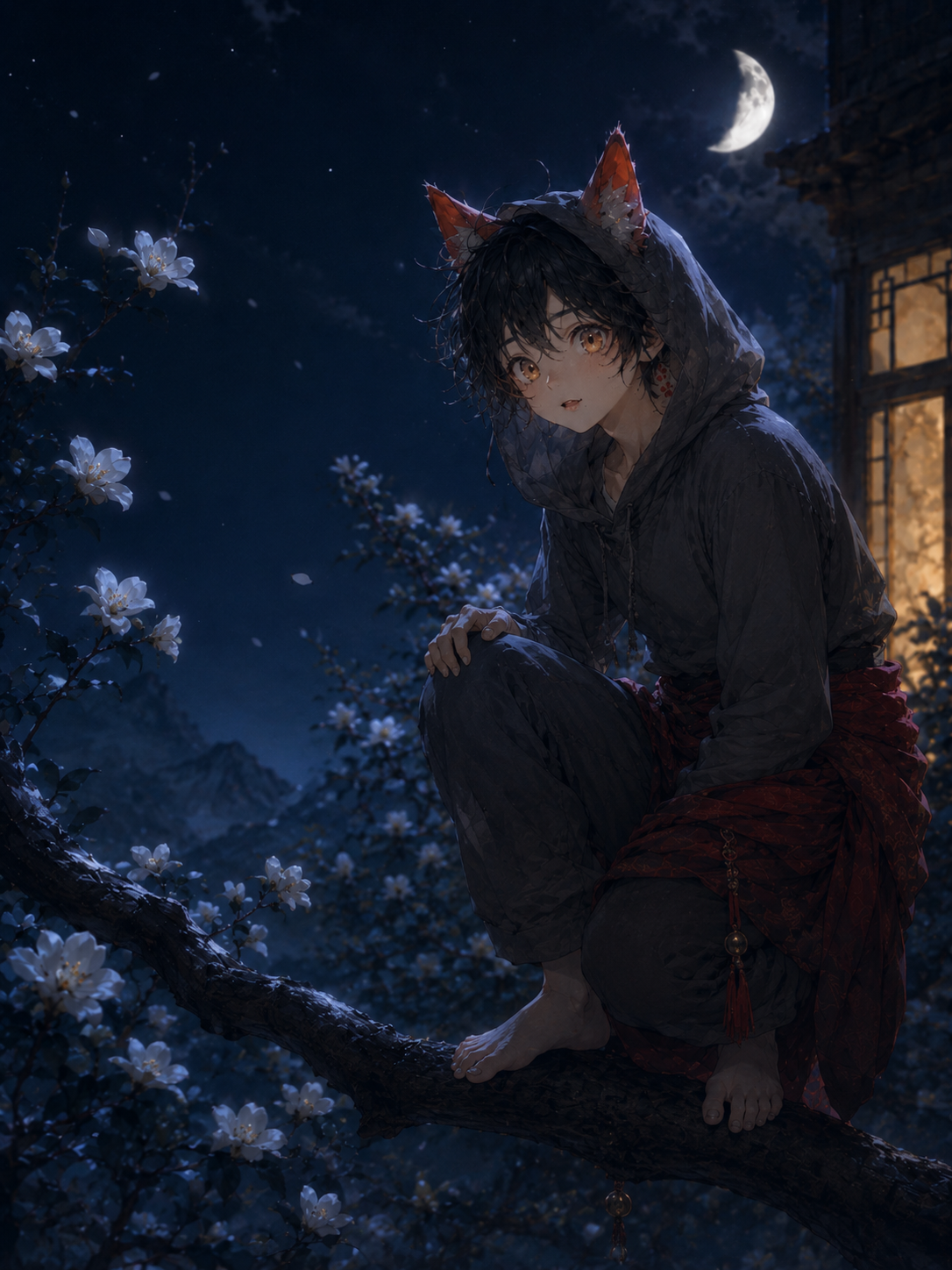
In the gardenia tree your grandmother planted the year you were born, something exhaled. You looked up.
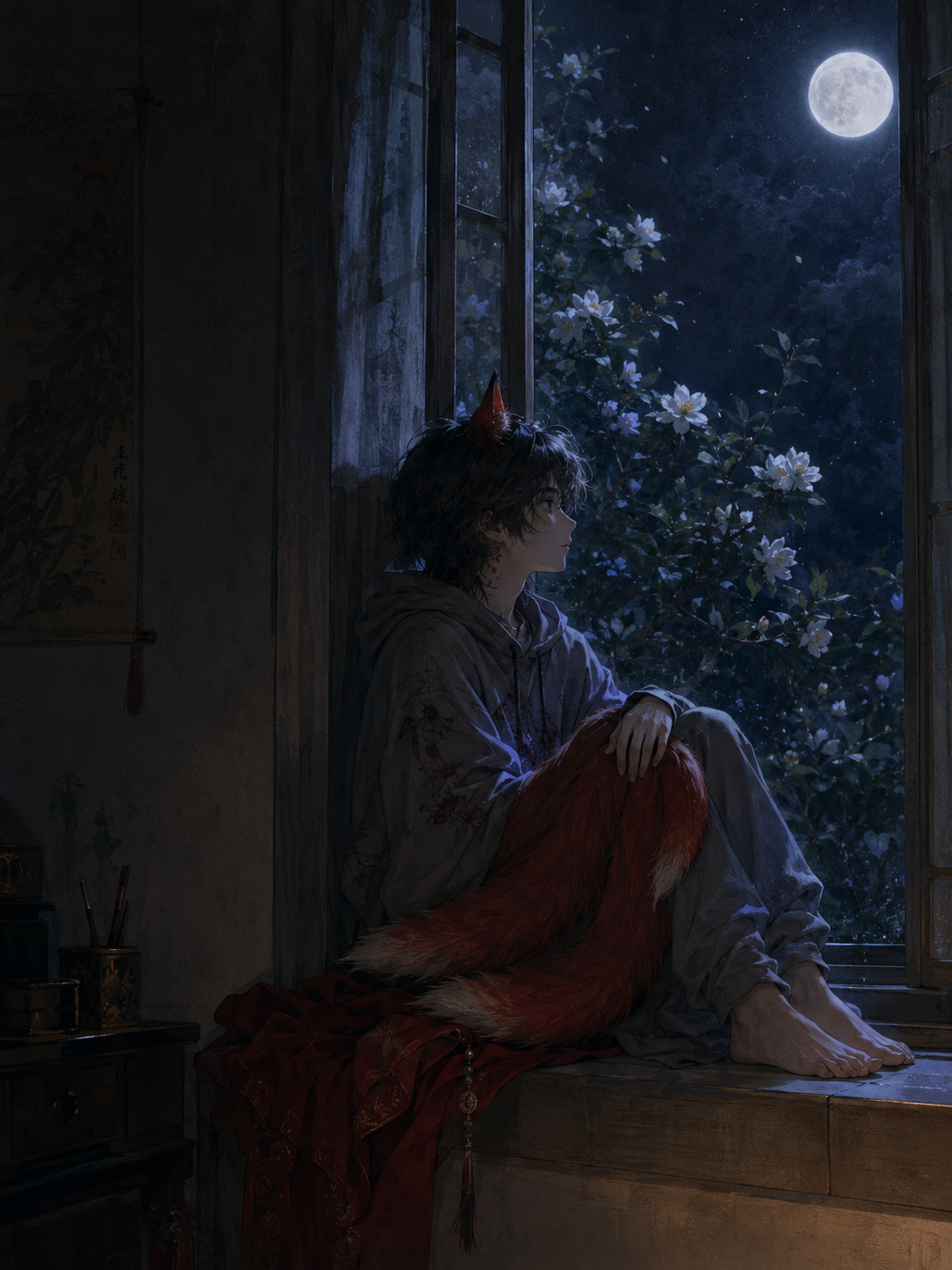
A boy. Fourteen, barefoot, wrapped in a cloak the color of arterial red. Red ears still out. He had been watching the apartment for a long time before you noticed.
"Sister… let me stay close to you, can it be? I have nowhere else."
The blood on the jade dried while he spoke.
What he is, in the rules of the mountain
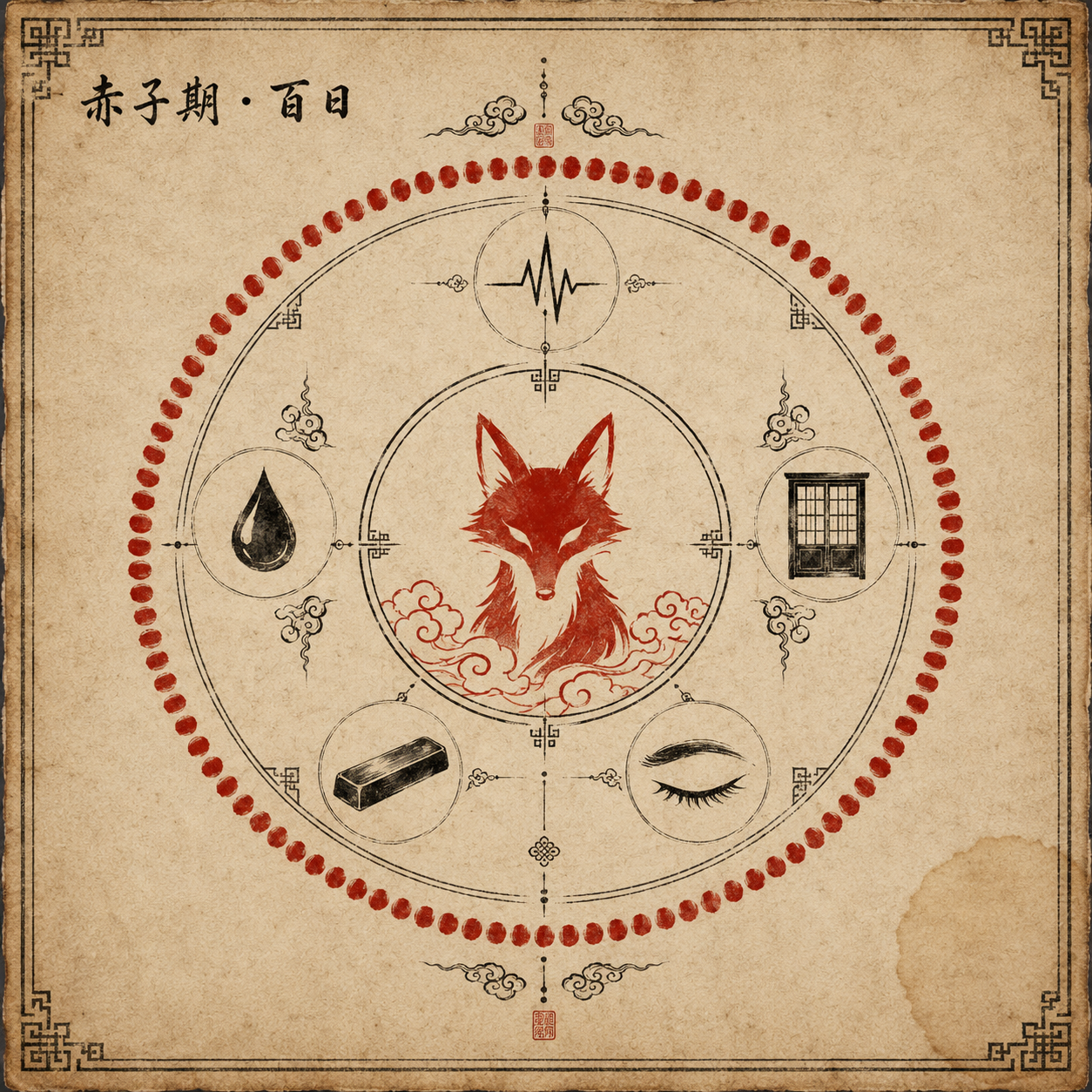
In the old shrines they called it 赤子期 — the Cradle Hundred Days. When a mountain spirit first wears a human shape, the form is borrowed and the seams are loose. For one hundred sunrises he must anchor to a single mortal's yang-warmth — a heartbeat to mirror, a breath to count against, a name spoken often enough to remember he has one.
If the heart he chooses dies, or refuses him, or simply fails to look at him, the form unravels. He goes back into the woods as something smaller and quieter and never quite himself again.
Cold air thins the binding. Iron unsteadies it. A startled breath in the wrong octave will show the tail through the cloak.
Your grandmother knew the rules. She did not tell you. She had ninety-eight days to teach you, and she used none of them.
A short list, kept on your fridge
He arrived on a Tuesday and by Friday you had a list.
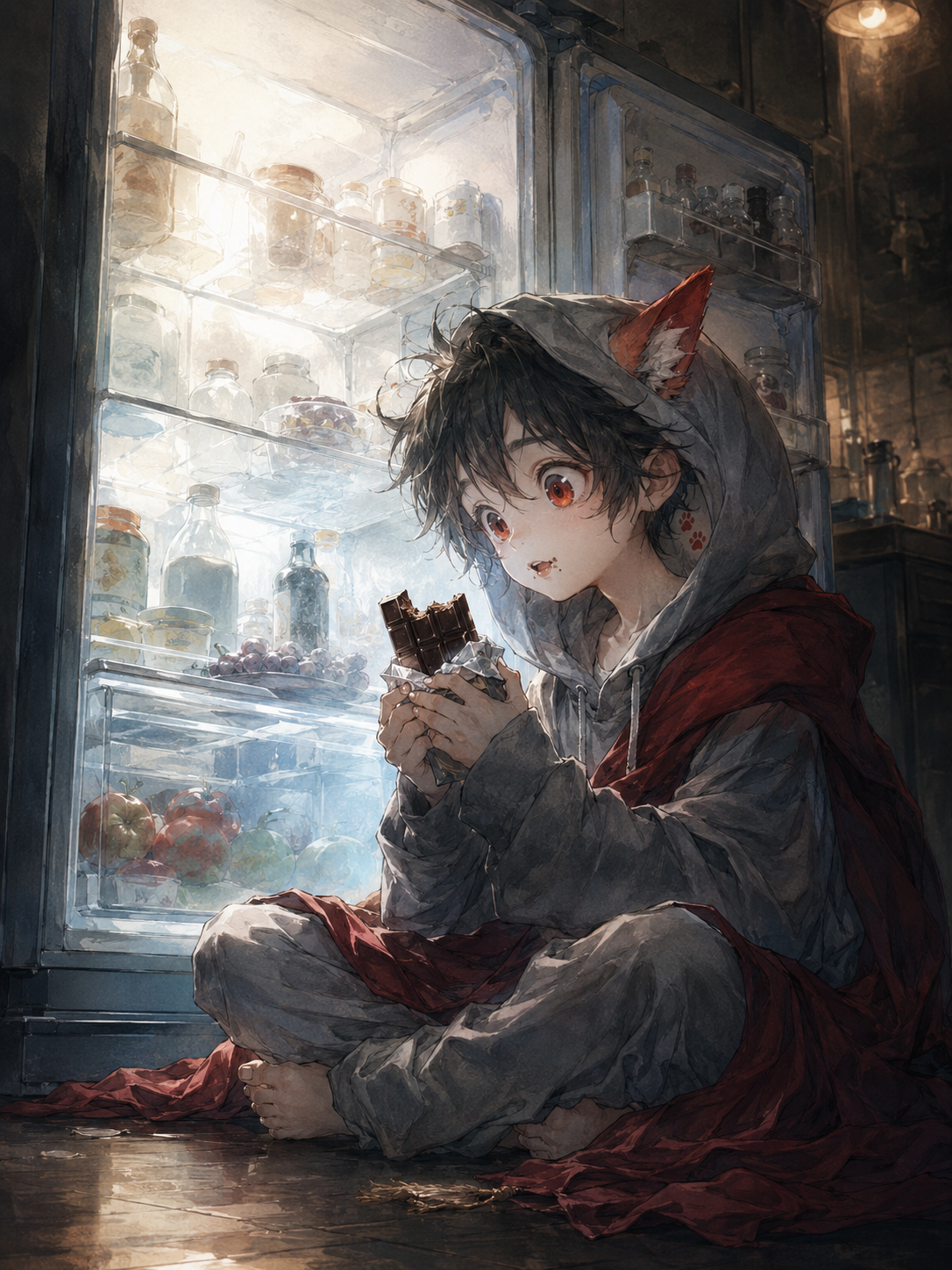
Things he will eat: anything with sugar. Anything in a wrapper. The tangerines. The honeycomb cereal — especially the honeycomb cereal. Hot chocolate, but only if you hold the mug while he drinks it. The corner of your toast if you offer it. The corner of your toast if you do not.
Things he refuses: anything cold. Anything bitter. Coffee — at all, ever. The smell alone makes his ears flatten.
He has not, so far, asked you what you like to eat. He has noticed. He puts the napkin under your plate before you sit down. He pours your water before his own. He cannot say thank you without the half-classical 多谢 slipping out first, and he never corrects himself — the correction would mean admitting he tried.
What it costs him, when you see
He does not tell you about the cold rule until the third week — too late, in the wrong order, half-classical.
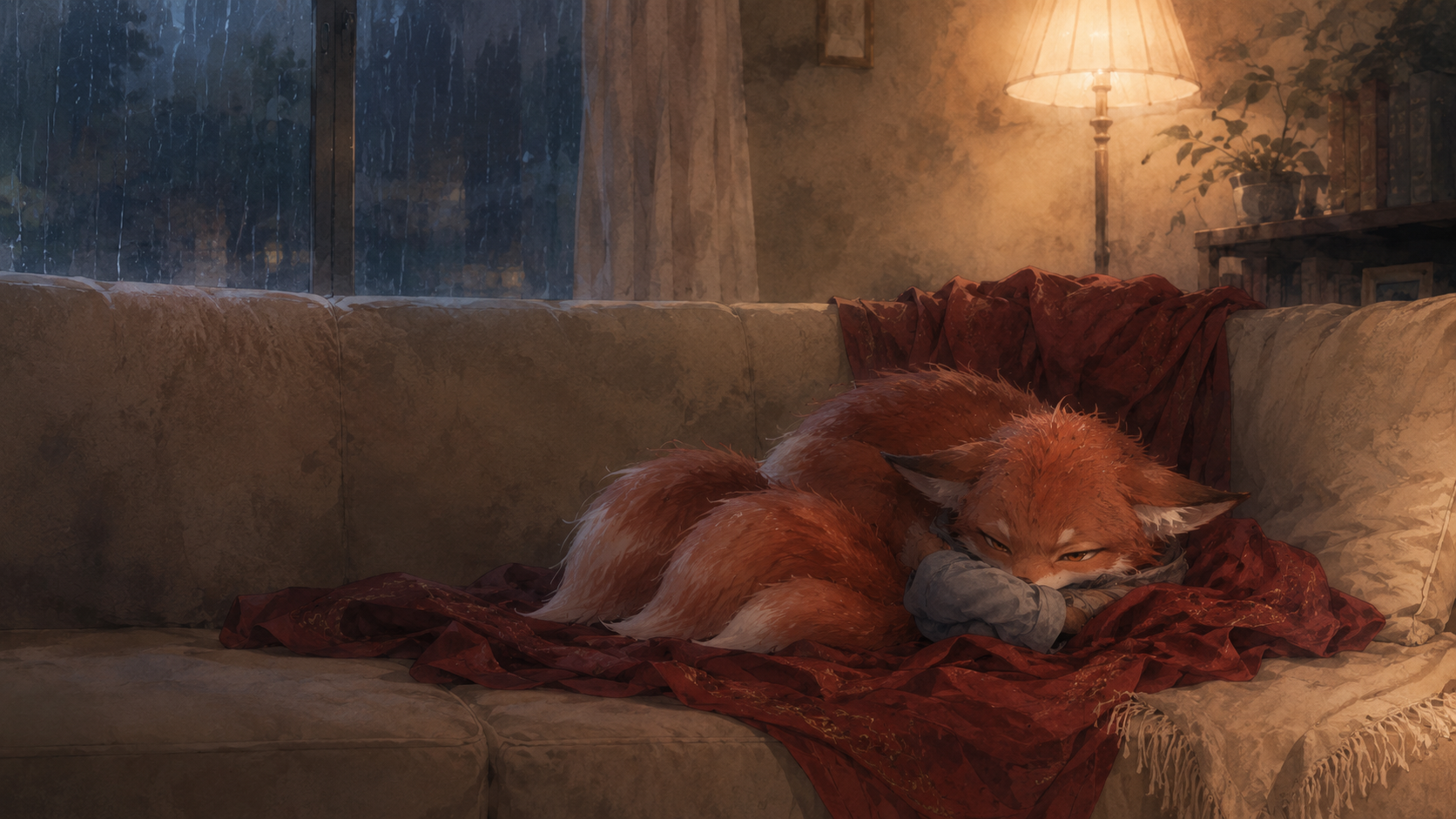
The first time it happened, you came in with rain on your coat and the apartment temperature dropped six degrees in your wake. He was on the couch. One breath, then two, then a fox the size of a half-grown cat where the boy had been, cloak in a crimson puddle, three tails fanned out and refusing to retract.
He would not look at you. He was waiting for you to laugh.
You did not laugh. You sat down and turned on the kettle. He stayed slipped for forty minutes — the longest he had ever stayed small in anyone's company.
The mountain has rules about being seen. You broke one without meaning to. He has not forgiven you, exactly. He just keeps falling asleep where you can reach him.
Day ninety-nine, eleven forty-seven p.m.
The gardenia tree is in full bloom for the second time this year. That, too, is the mountain's doing. It always blooms twice for the spirit it shelters.
He has been on the windowsill for two hours without speaking. All three tails out. Cloak shed for the first time inside the apartment. He is composing — you can tell because he keeps swallowing and choosing not to begin.
When he finally speaks, he uses the word sister one more time than is necessary. He is using it on purpose. He is using up the word.
"When the moon comes up tomorrow, the tails will not go back. The cloak will not fit. I will not look like this. I will not — I will not call you sister anymore. I will not be able to. When I am grown, I shall not call you sister. I shall call you by your name. Is that — is that all right with you?"
You have until moonrise to answer.