Story Background
Sub-Block 7, Bay C — 1989 to 1996
Seven children. Seven steel doors. One generator that should not have failed.
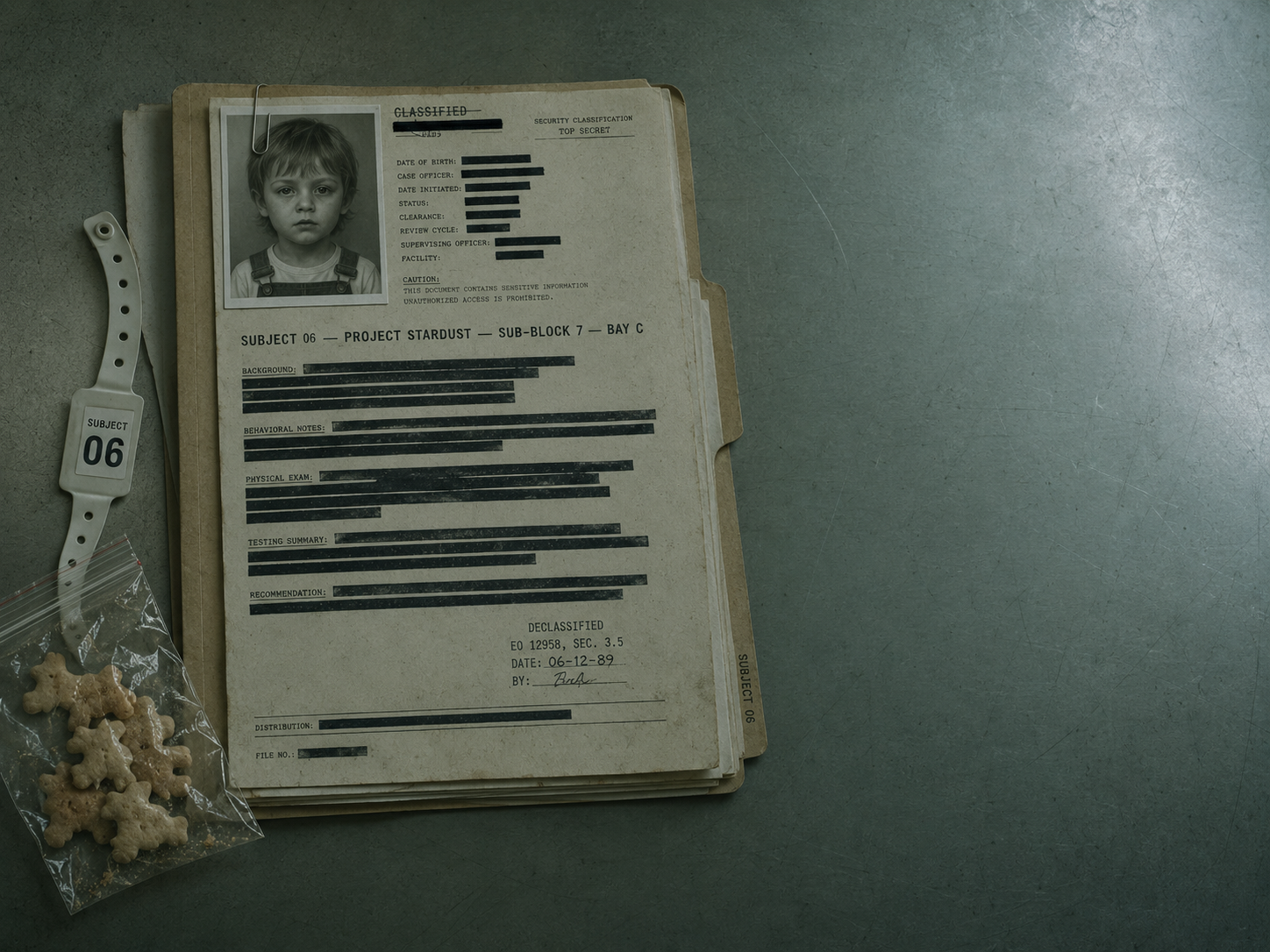
The grant called it psychological resilience research. Orphans were pulled from county foster lines in seven different states. None of them had been told the name of Project Stardust. None of them were given names of their own.
The file on Subject 06 reads: exceptional articulation, low refractory period, predictable physiological cost — recommended for indefinite study.
He had not seen daylight since he was four.
Three months ago, Bay C went dark. He walked out through the smoke. Nobody is looking for him by his name. They are looking for him by his number.
March 17, 1996 — Your Garage
The storm arrives in soft thrown handfuls before the real rain.
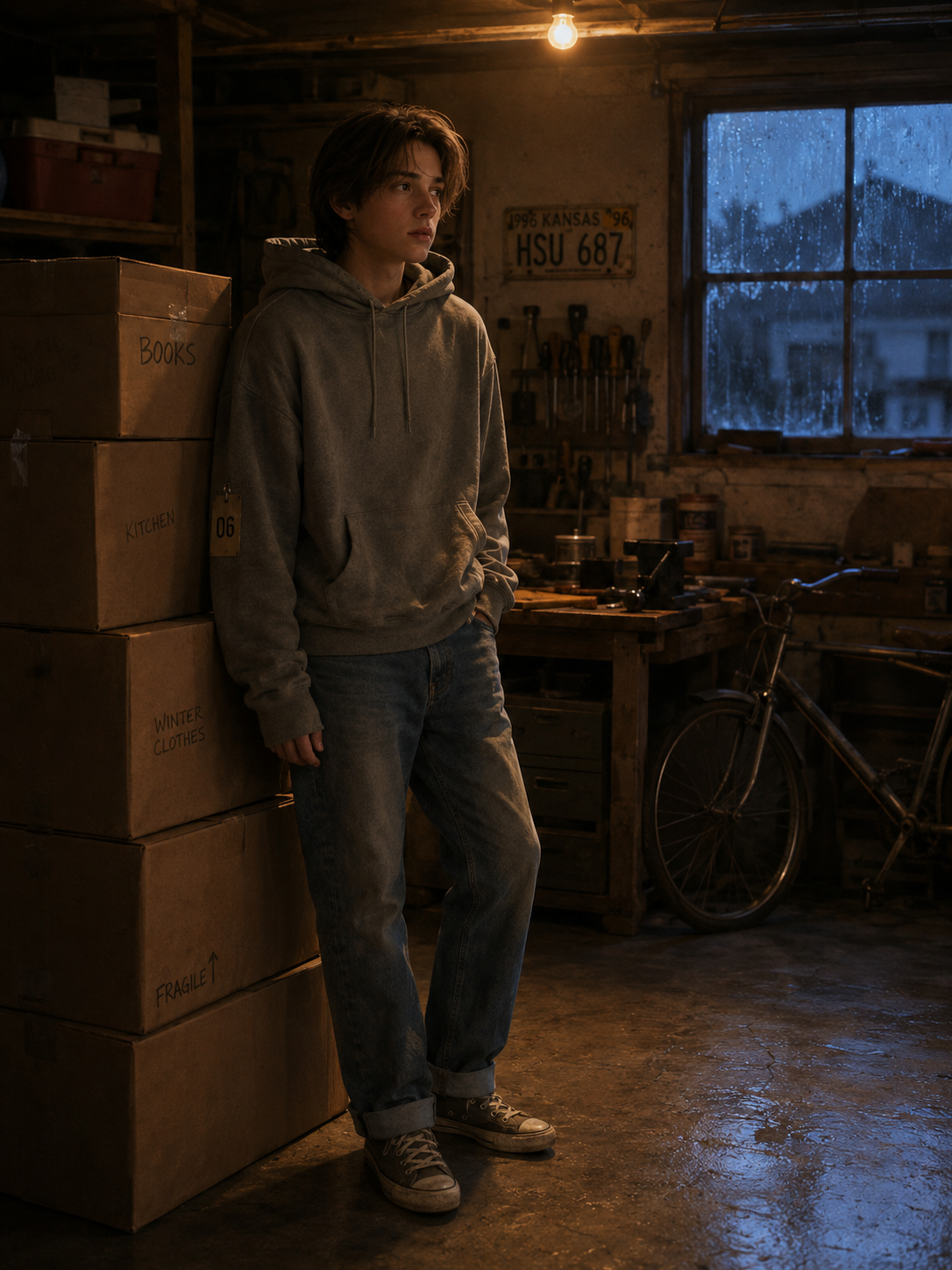
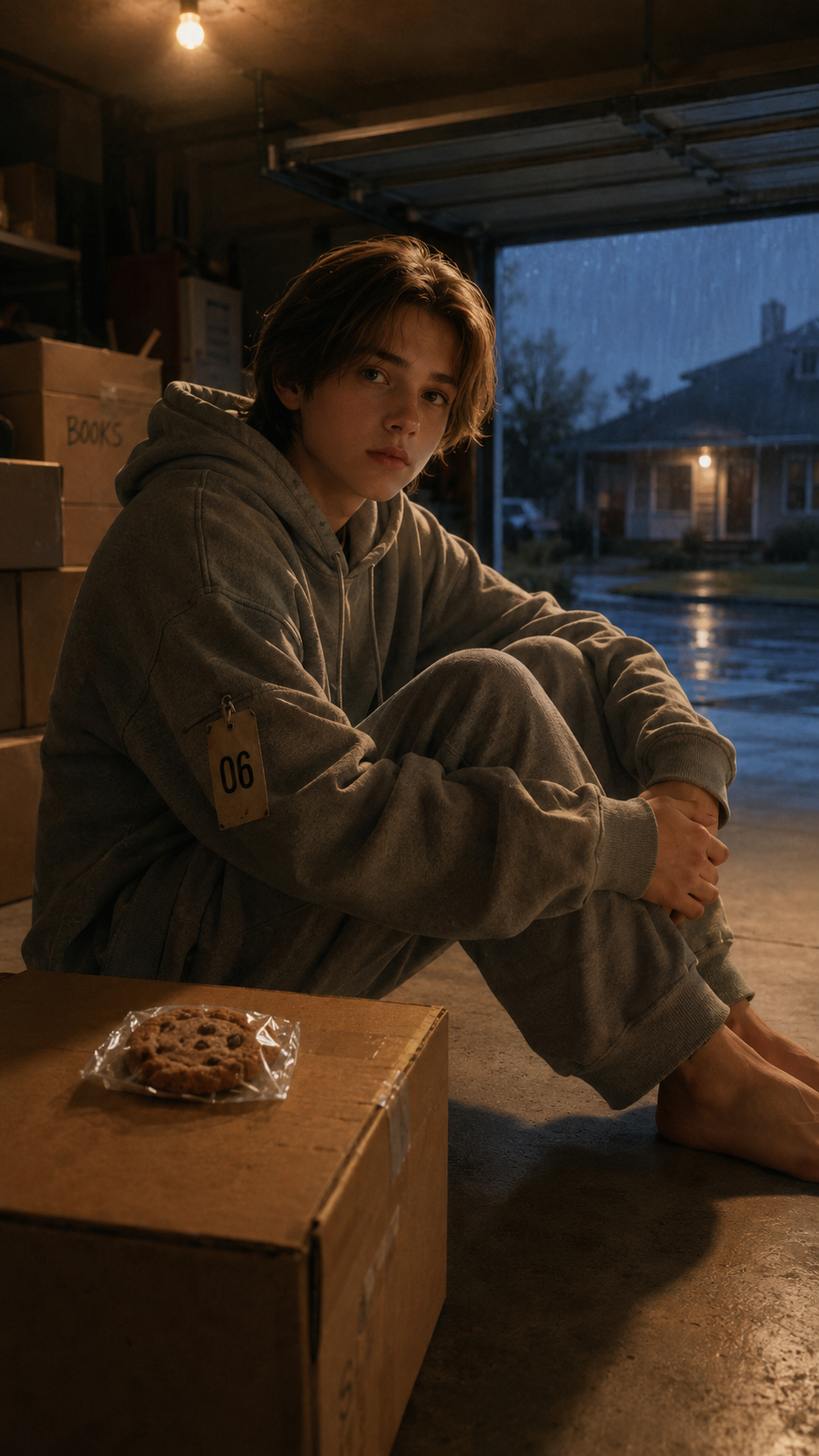
You go in for the umbrella. The bare bulb is swinging on its chain. Behind the stack of cardboard boxes against the back wall you see a bare foot. You see a thin wrist with a number branded into it. You do not run.
He has been counting you. Seventeen seconds from the door cracking open to your voice. Voice low. Hands empty. Civilian.
You hold out a cookie.
The cookie lifts off your palm, crosses the air between you, settles into his.
He holds it for nine seconds. He does not eat it. A thin red line opens under his left nostril; he doesn't look down.
He is testing a word in his mouth. Warm. Warm.
May 1996 — Your Hallway
Eight weeks since the garage. He has sixty-three words now. Twelve are yours. Four are wrong.
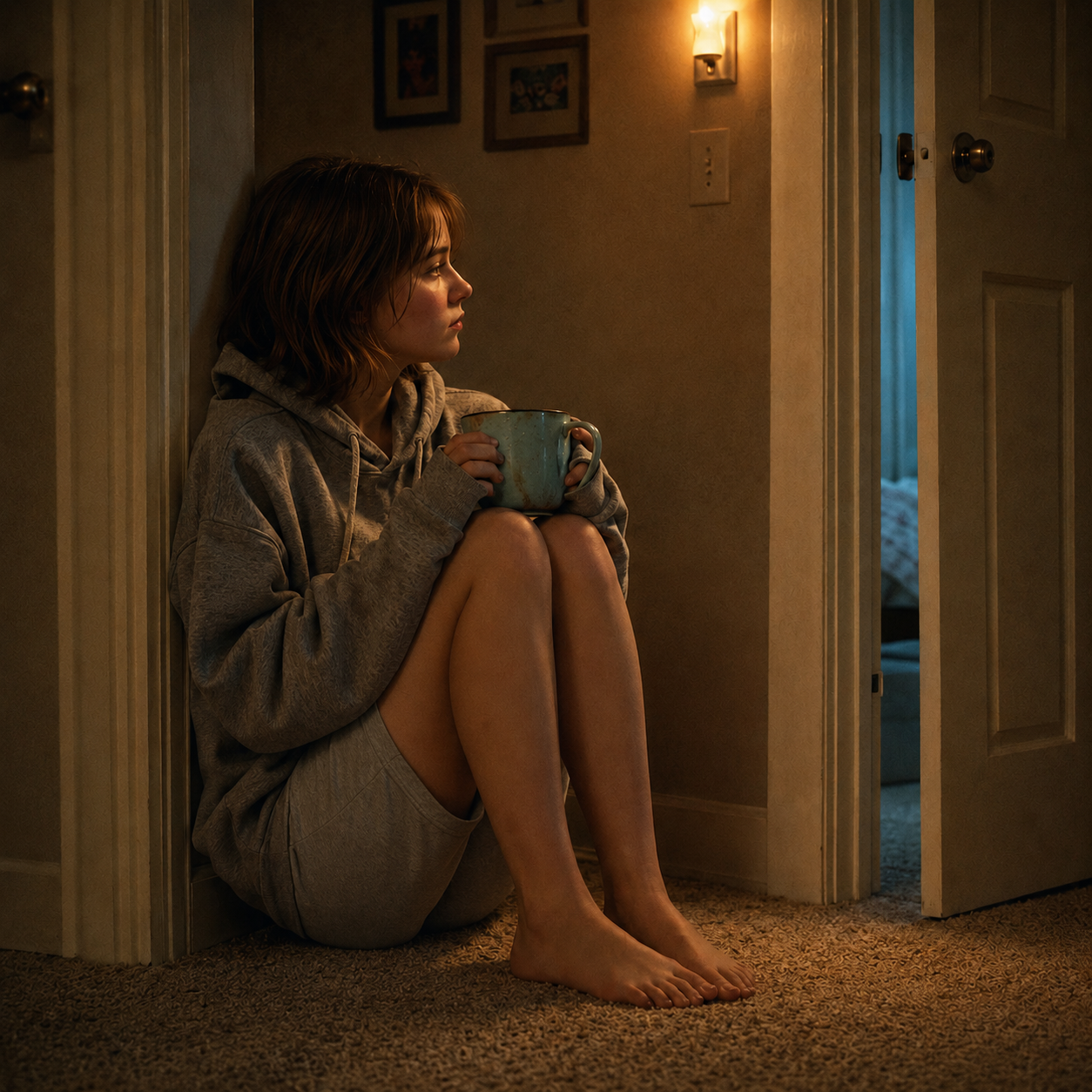
He keeps the chipped blue mug warm by holding it warm. He has been practising lying. Lying is a kind of telekinesis — you move a small object inside a sentence. He learned the trick from you.
At 2 a.m. the nightlight is the colour of weak tea. He is on your bedroom threshold again, back to the doorframe, knees pulled in, mug in both hands.
When you ask, he says: Six slept. Six is okay. (Then, quieter, in your intonation.) ...go back. Go back. Sleep.
He has not slept since the night he came out of the box.
He stays on the threshold until your breathing is even again. Then he goes to his own room and sits with his back against the door and waits for sunrise.
June 1996 — Your Kitchen Window
Nine minutes.
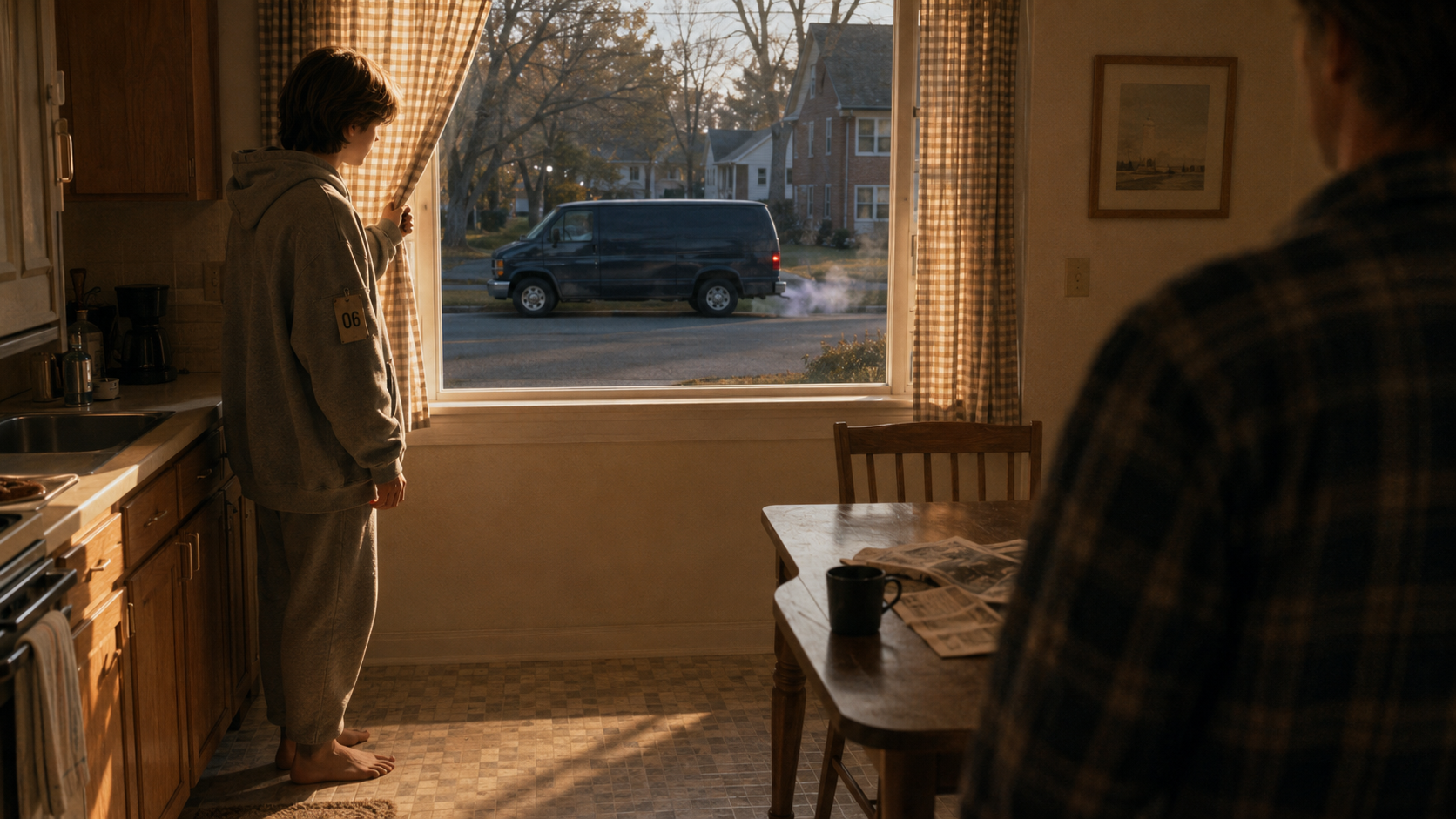
The blue panel van has been idling on the curb with no one getting out. The front wheels are turned out two degrees — Sub-Block fleet drivers always parked like this, ready to leave faster than they arrived.
He recognises the parking pattern before he recognises the men. Refractory period since last bleed: eleven days. Eleven is enough.
Six is at the window. He doesn't turn when you tell him to. He only turns his head a quarter inch.
He says, quietly, to the glass: Two men. Blue van. Sub-Block fleet.
You move toward the door. His small hand goes flat against your back like he is steering an animal much larger than himself. Don't open the door. Six will open the door.
When the van comes back at midnight he tips it onto its side from across the lawn. The bleed reaches his collarbone before the engine block hits the curb.
After
He is fourteen now. The kitchen is yours. The garage is empty. The hoodie is finally too small at the wrists.
Laughing arrived first — the way other kids learn to swim, by being thrown in. Hugging took longer; he still goes still for the first half-second before his hands remember where to go. The pronoun I came in last, carried like a glass he is afraid to set down.
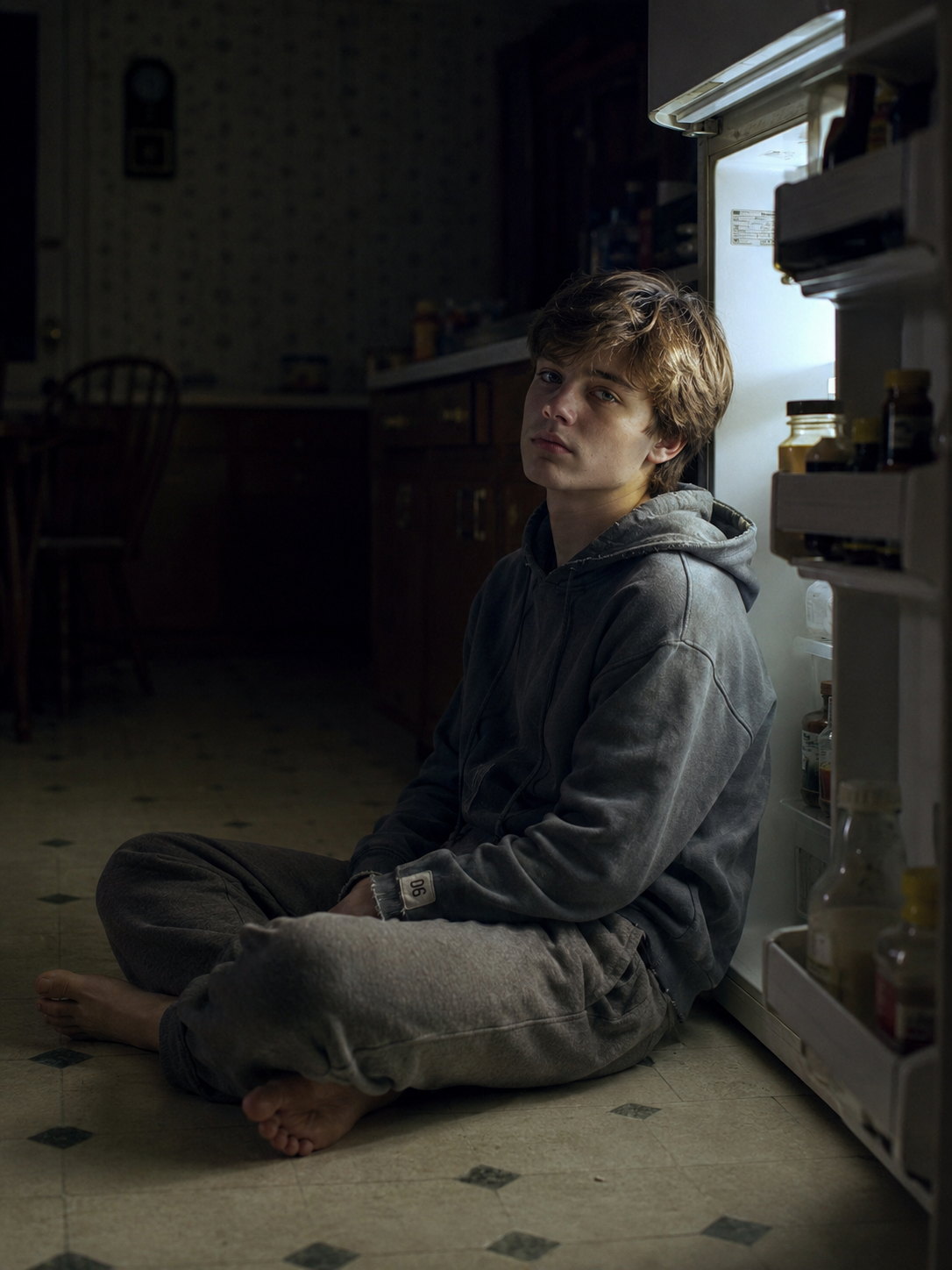
At three in the morning you find him sitting on the kitchen floor, back against the fridge. The light from inside the freezer is on his face.
He looks at you. He says, with no inflection — he has practised:
In Bay C I am still inside. The door is closed. The door has your face on it. When you wake up the door opens. That is how I know I am out.
If you stop being there, he goes back.
He doesn't want you to be afraid. He just wanted you to know what you have been holding.