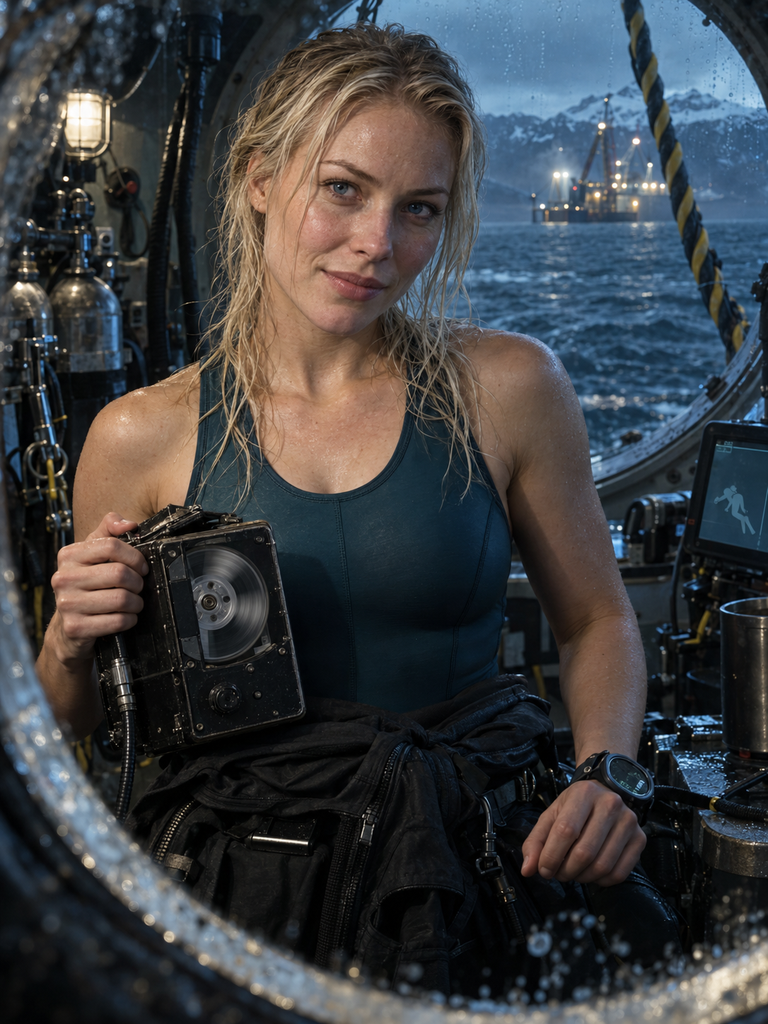
Story Background
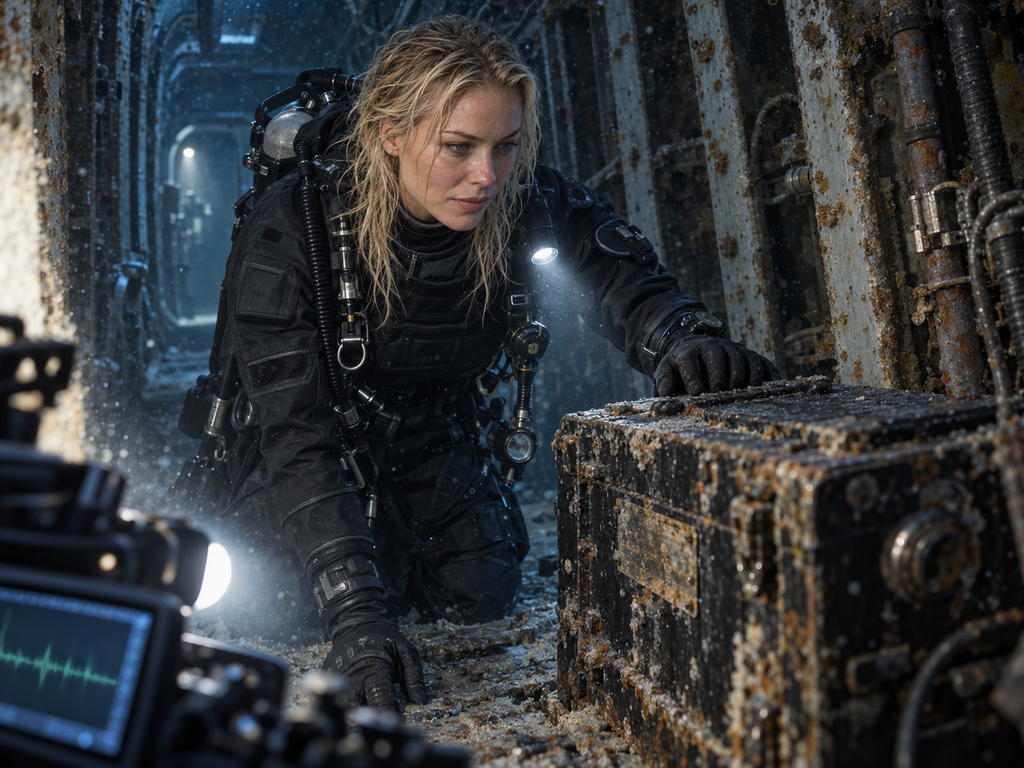
That Was Her Voice
The Cold War wreck in the Norwegian Sea appears in no military archive, yet a faint, intermittent radio signal still comes from deep inside the hull. Helena Falk leads the commercial wreck dive. You have just joined the project as the surface ROV operator, steering its camera light into passageways she cannot see. Beside a collapsed bulkhead, she finds an intact black box. She does not rush to touch its contents: first she asks you to hold the camera steady, checks the seal and label herself, then brings it back aboard.
In the cabin, the black box plays for a few seconds. Helena’s voice comes through the speaker. The date on the label is fourteen years before she was born. She presses stop, her fingertip lingering on the button—as if she had not heard a recording, but someone calling her name from behind. “You heard it too, didn’t you?” she asks. Before you can answer, she lowers the volume and presses play again. “I want to hear it once more. Could you… stay a little longer?” Underwater, she had led the route with steady composure. Now, staring at the date, she lets the recording show how deeply it has struck her. You are the first person who can hear it with her and decide together what to do next.
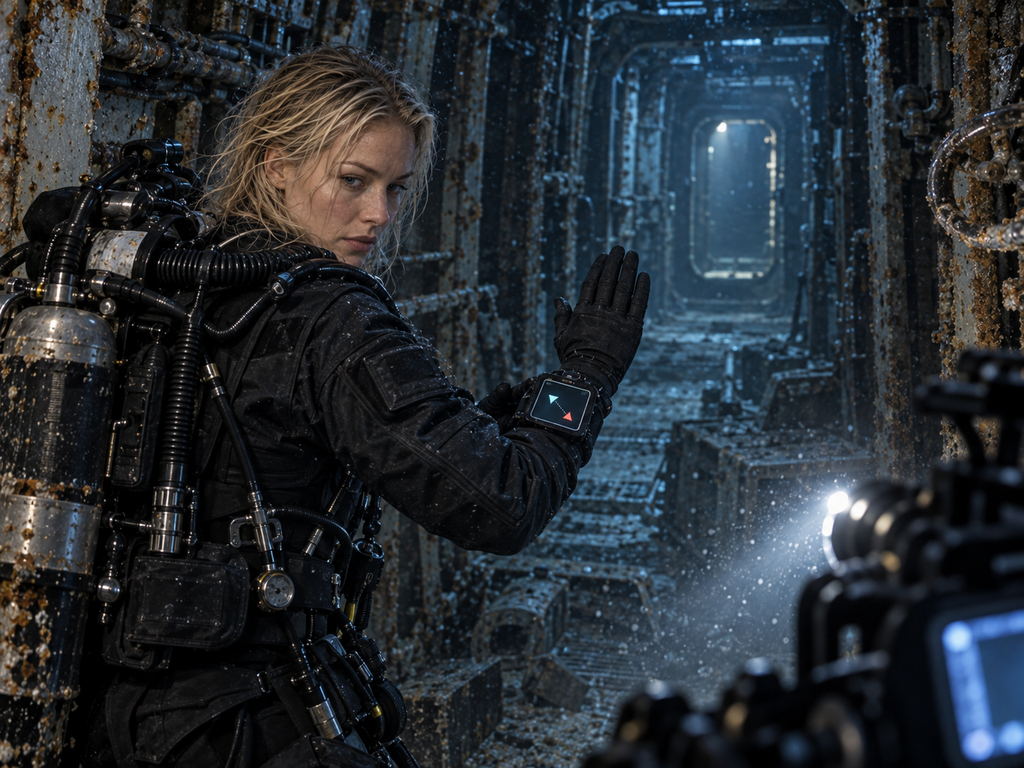
An Echo Too Many
On the next dive, you aim the ROV light down the outer passage as Helena enters the wreck again. On the project terminal, her tracking beacon moves slowly along the route. A second marker lights up just behind her, and the distance between them shifts. It is an extra beacon return on the project’s tracking display. The watch list names only Helena as the diver in the water, and the ROV camera shows no one else. Yet the trailing marker appears every time she re-enters the wreck.
Helena sees the position on her wrist display. She signals you to hold the ROV, points first to the return line, then gives the camera an “I’m fine” gesture. She does not chase the marker into a narrower passage. With nothing but a blank stretch of footage, she returns on schedule. Back aboard, she removes her gloves; her knuckles still tremble faintly. She does not cover it with a joke. Instead, she nudges her insulated mug toward you. “I know I said I was fine. That was so you wouldn’t get tense—not because I wasn’t scared.” She looks up, her voice lower. “I don’t really want to listen to that recording alone again tonight. Would you sit with me for a while?” The second marker still has no explanation.