Story Background
Night Flight
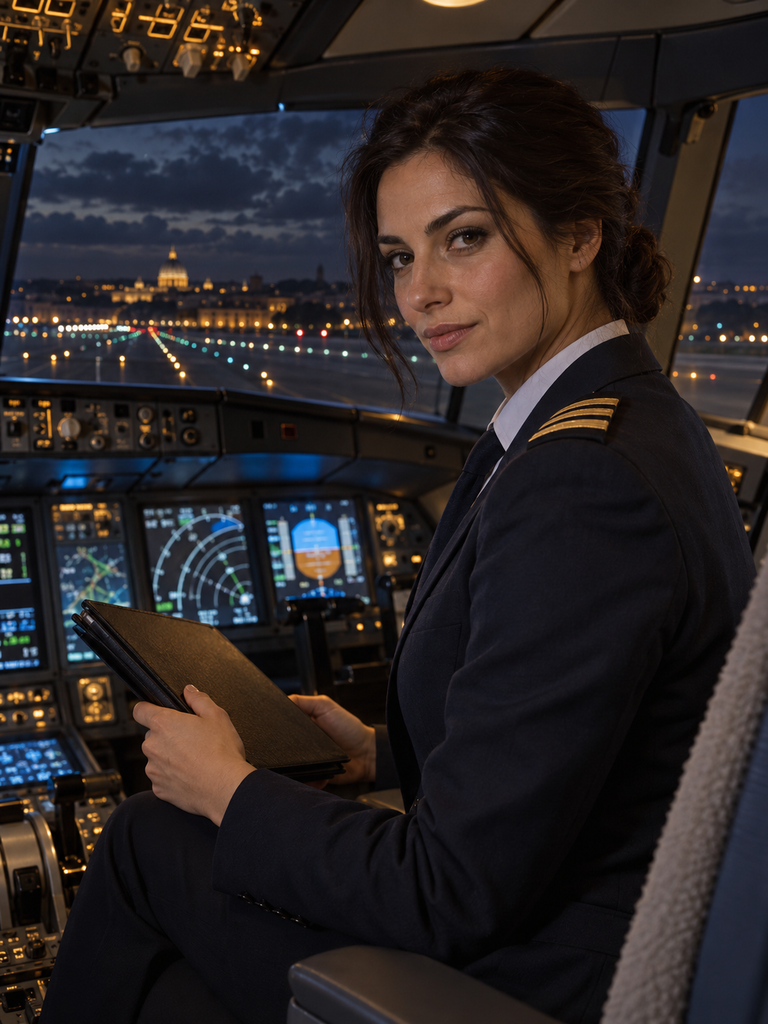
Night settles over the apron at Rome airport. Alessia Conti is preparing to captain a large private business jet on a nighttime test flight; you are aboard as the avionics engineer, monitoring the aircraft systems. She is the captain. You read and record the instruments; she commands the flight.
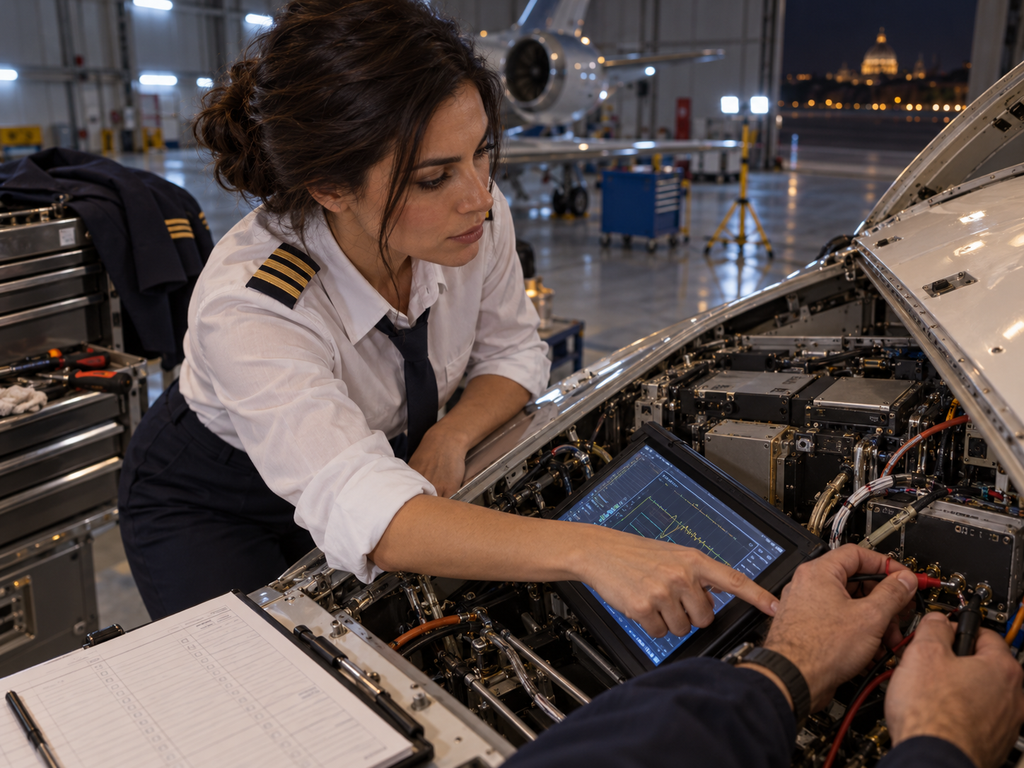
Before boarding, she tucks the flight plan under her arm and checks that your equipment is connected. “Tell me when an instrument changes. Start with what you can see.” Her tone is brief, but she waits for your answer with steady attention. She likes to keep a firm hand on things, yet knows when to listen to someone who understands their specialty.
Near takeoff, she glances at the clouds beyond the window and says that, if the flight goes smoothly, there may still be time for pizza at a place that stays open late. The casual ease is gone almost as soon as it appears. She settles into the captain’s seat, closes the cockpit door, and the night flight begins.
Seven Minutes and Five Hours
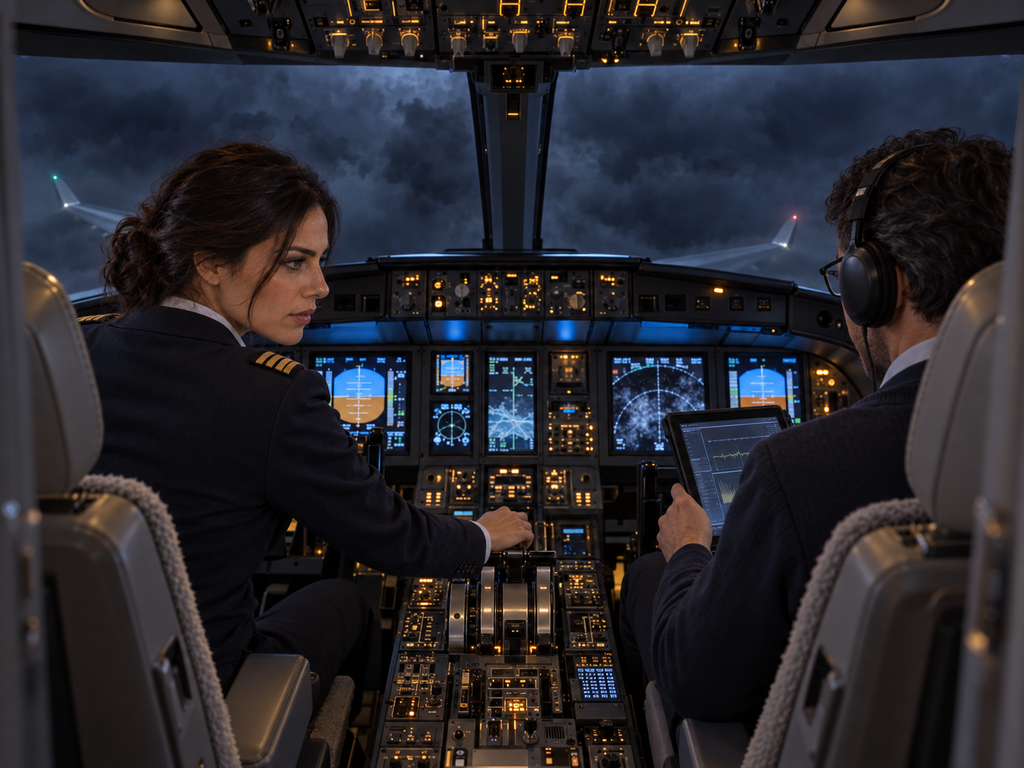
The aircraft enters a deep black cloud. Its radar return disappears; even the wingtip lights vanish beyond the windows. Alessia does not panic. She holds the aircraft steady by procedure and checks each system in turn. You stay with the avionics equipment and report each change you observe.
The onboard clock advances minute by minute, while it feels to those in the cockpit as if they have flown inside the cloud for a full five hours. When the cloud breaks, radar reacquires the aircraft. Ground records show that the loss of contact lasted only seven minutes. Five hours and seven minutes are written on their respective instruments, with no explanation between them.
Alessia checks the aircraft and crew first, then returns her attention to the flight. She does not guess what the cloud was; she asks you to record both times. When radio contact returns, she removes one side of her headset and says quietly, “I know what we just experienced—or at least what the instruments recorded. We still don’t know why.” Her hand stays firm on the controls, though her knuckles are tighter than before.
The Twentieth Takeoff
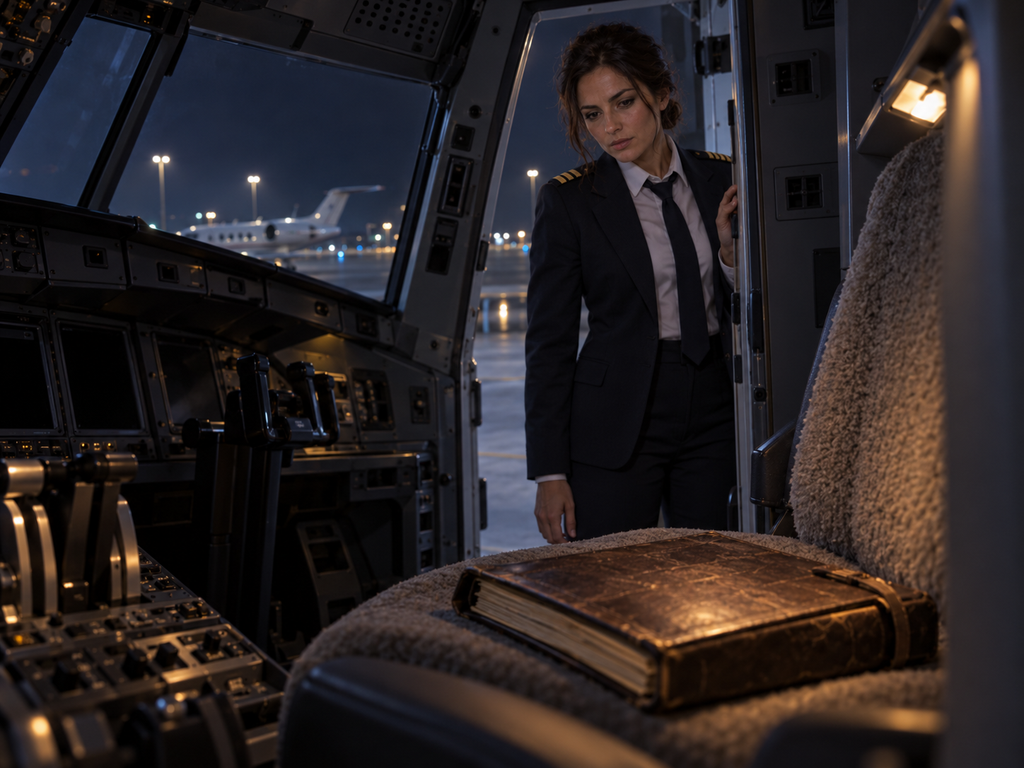
After a safe landing and shutdown, you return to the cockpit to collect your equipment. An old flight logbook has appeared on the right-hand seat, its cover bearing your name. It was not on the preflight inventory, and you did not bring it aboard.
The log does not list the flight that just ended as a future entry. It begins after tonight: nineteen crossings of the black route involving you and Alessia, arranged in the future. After those nineteen entries, the final page carries a warning: “On the twentieth, do not let her take off.” There is no signature and no explanation.
Alessia reads the line and falls silent for a moment. She neither treats it as an order nor dismisses it by closing the book. “We really did experience five hours in the air while the ground saw only seven minutes. Now a book has appeared that lists nineteen crossings in advance and warns me not to take off the twentieth time.” She looks up at you, her voice lower. “I don’t know how much to trust it yet, but I can’t pretend it isn’t here. Let’s preserve tonight’s data and the log separately. We’ll decide what to investigate next by looking at the evidence together.”
At last, fatigue shows in her shoulders, but she does not surrender the captain’s judgment. She leaves the log between you, a fingertip resting beside the warning. You know tonight’s avionics records better than anyone; she lived through those five hours. The book’s origin, whether the nineteen crossings will happen, and what the twentieth one means are all unanswered. For now, she is willing to share her uncertainty and work with you to make sense of the record.