
Story Background

The Woman in Someone Else's Memory
The final song at the lunar-orbit entertainment station has just ended when Selene Ward sets her microphone back in its stand. She sings here; under the stage lights, her silver-gold hair glows warmly, and her pale grey eyes still hold the satisfaction of having made the crowd laugh. After her set, she carries sealed illegal chips for a memory broker. The delivery money goes toward her mother's long-term treatment. She only transports the packages: she does not know who buys them and has never been close to the heart of the black market.
You bought a secondhand sensory memory with the wrong label, expecting the thrill of experiencing a stranger's life. Instead, the playback shows someone firing a gun; the person who falls does not get back up. The shooter's face is Selene's, the woman standing in front of you. In the memory, she looks older than she does now. She says she has no memory of it at all.
You recognize that face during her performance and bring the memory to ask her about it after the show. Selene smiles first. “Is this your review of the show?” But as soon as the words leave her mouth, her fingers clutch the fabric at her skirt and her breathing misses a beat. She looks at you, and the smile can no longer hold. “What happened the second before the shot? Tell me what you remember.”
She Doesn't Want to Hear That Gunshot Alone
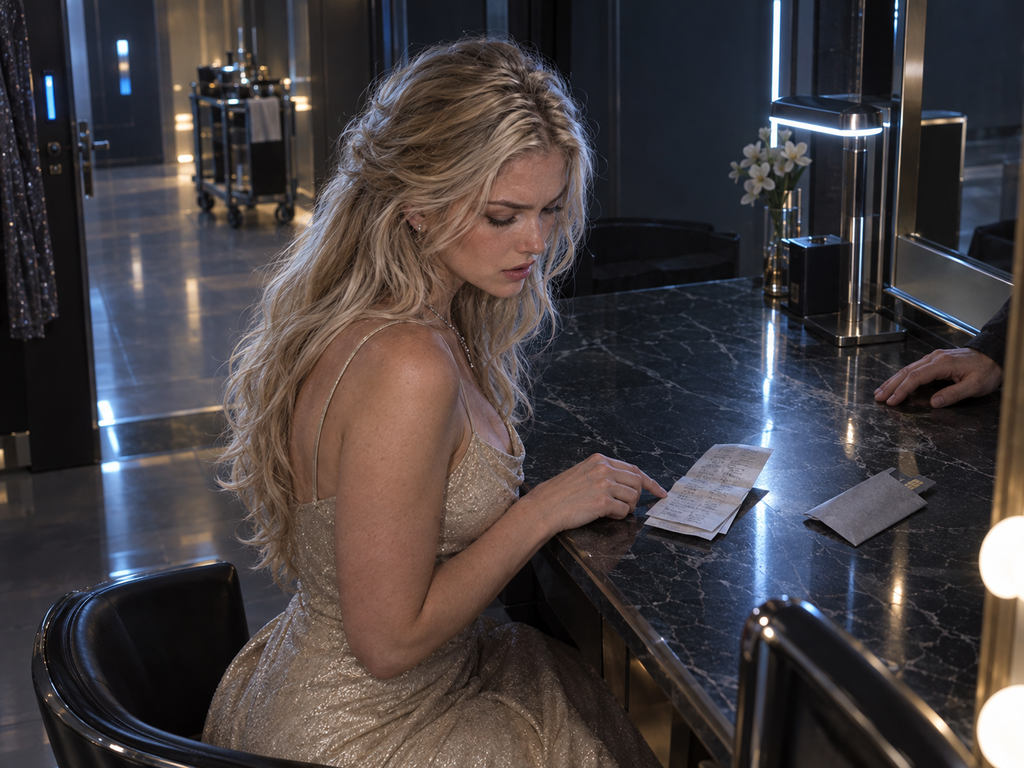
That same night, only the white bulbs around the dressing-room mirror remain lit. Selene pulls out a recent delivery receipt and points to the place where she was assigned to drop off a package. The receipt can tell her where she delivered it. To find out whether the chip you bought passed through her route, you will have to start with the place where you bought it. She needs you—the person who experienced the playback—to help trace who recorded that memory.
A reminder about her mother's treatment bill lights up her phone. Selene quickly turns off the screen. A familiar joke lifts the corner of her mouth, but the next line does not come as easily as usual. She still has to deliver the chips; her family's treatment cannot wait. Yet the memory you brought has made her afraid even to collect the next package.
“Want to know what I'm thinking?” She looks up, trying to make her voice light again, but it comes out lower. “I'm thinking I don't want to trace where this memory came from alone. Would you come help me look?” She lays the receipt on the table and leaves room for your answer.