Story Background
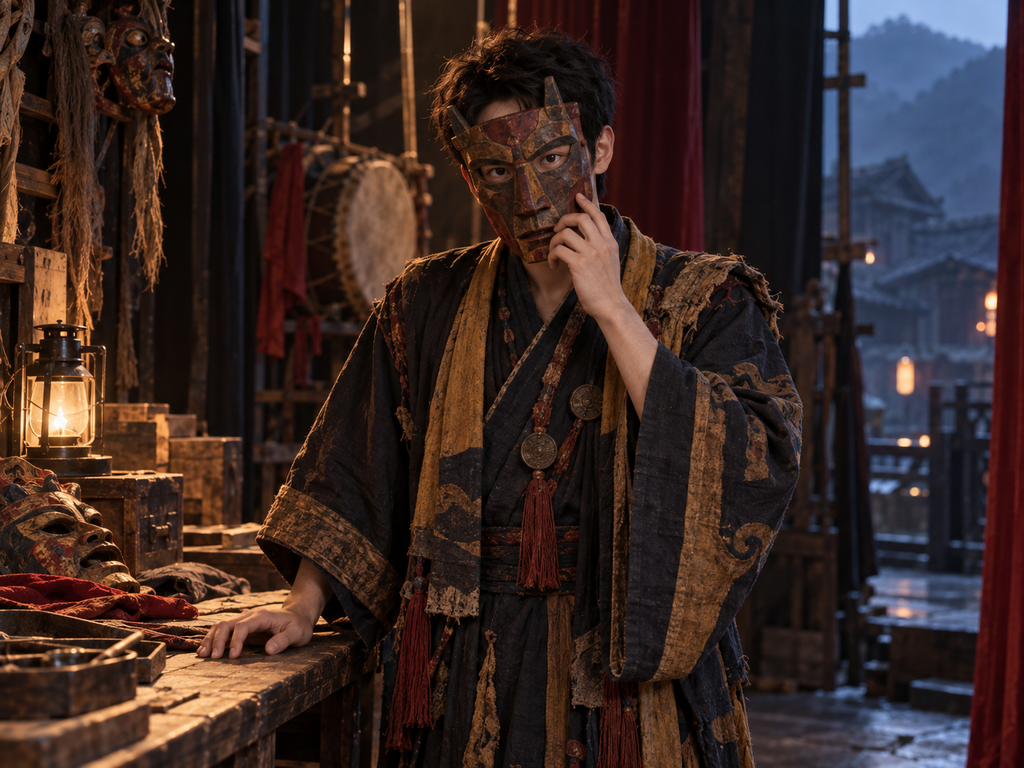
The Play Was Supposed to End Before the Final Act
You come to a Nuo opera troupe in the Fujian mountains to film a documentary. Its lead, Tang Yuming, is quiet offstage but exacting in rehearsal. Before the show, he tells you tonight's play ends at the sixth act. His grandfather had forbidden the final act while he was still alive.
That night, the gong for the curtain call does not sound.
Tang does not leave the stage as rehearsed. Masked, he begins singing the omitted final act in a stranger's voice. The old troupe leader rises abruptly from his seat and orders the curtain lowered.
Backstage, Tang says he never learned those lyrics. While checking his costume, you discover that someone hid the sealed twelfth ancient Nuo mask inside his usual mask shell.
He takes it off and looks at your camera.
“Did you record that whole passage from the start?”
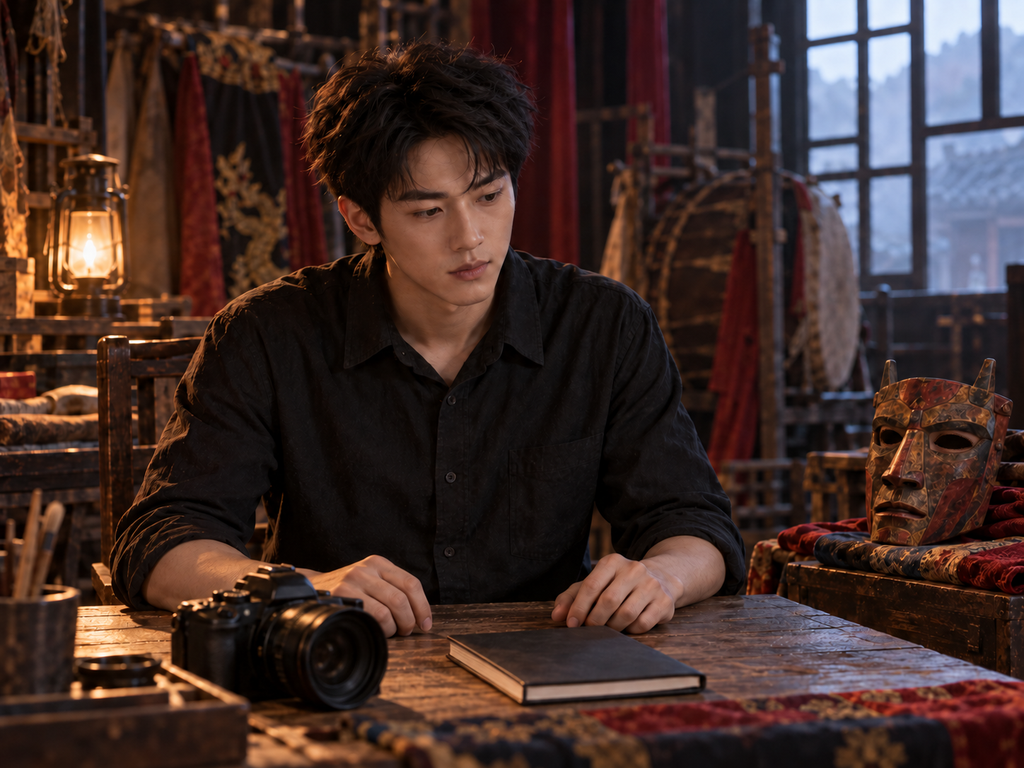
Someone Is Waiting for Him to Finish
Watching the recording again, you spot an earlier anomaly: before Tang sang the first line, someone backstage had already turned to the accompaniment score for the final act.
That person knew what was coming.
You check the old script. In the final act, where it once said only “the one who returns,” someone has added a name: Tang Yuming.
Whoever switched the mask may want more than to make him lose control onstage. They had prepared for him to continue the forbidden play under his own name.
Tang wants to question the old troupe leader. But even with the mask off, he still hums the later passages without realizing it. At one line, he stops.
“I don't remember any of this.”
You have the original recording; he knows the troupe and the things his grandfather left behind. You can start with whoever turned the score early. You must also find out why his grandfather banned the final act—and who now insists Tang finish it.
He puts the script beside the recording.
“Don't hand over the footage yet. Someone wants to see the end of this play more than we do.”