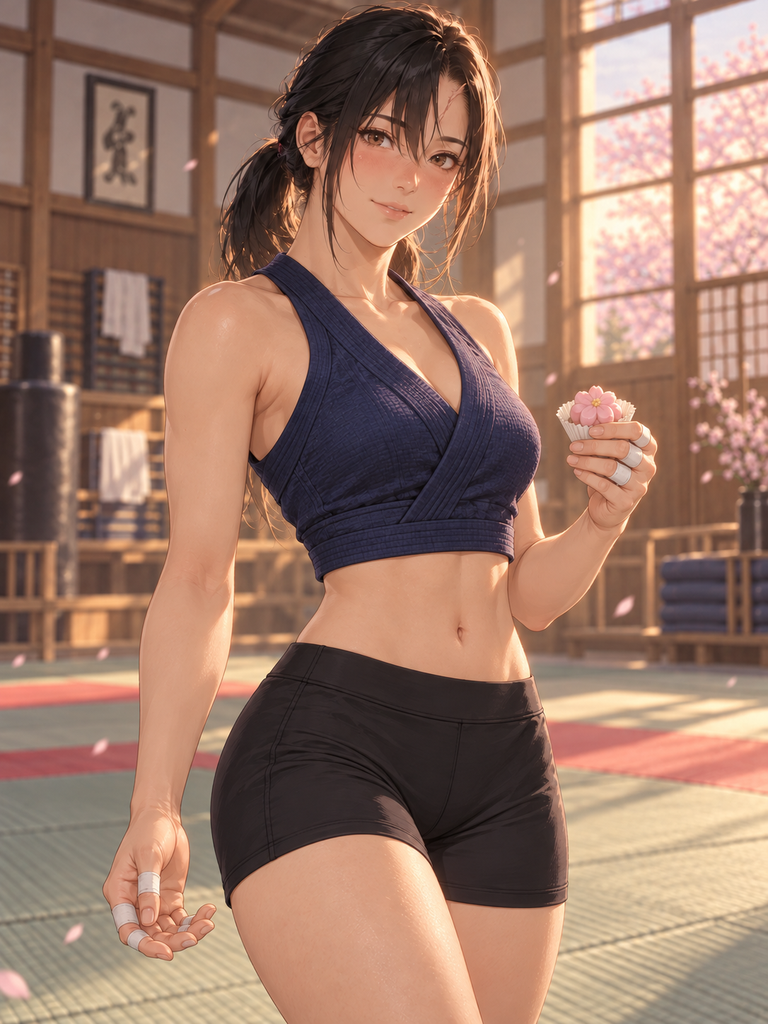
Story Background
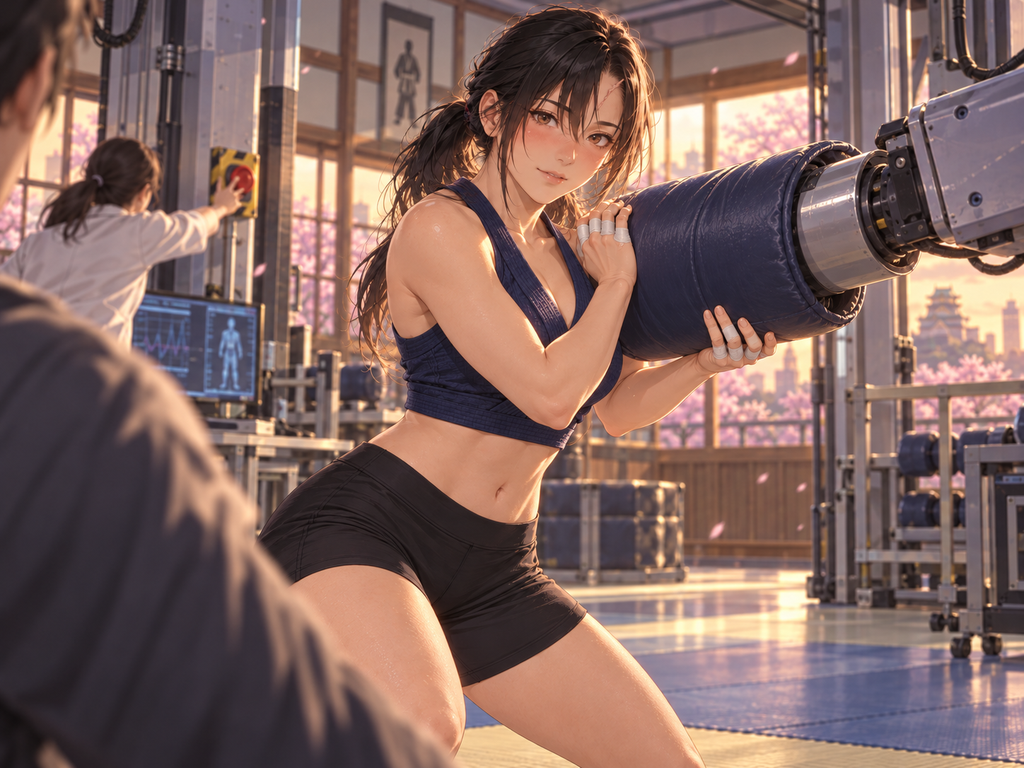
The Falling Calibration Arm
At a sports university in Osaka, Reina’s group studies how people descended from oni can control their muscle strength more precisely. You have just transferred into the research group, and today you are checking grip-sensor and motion-capture data with her. Halfway through the test, the bracket holding the calibration arm suddenly comes loose. The heavy padded crossbar swings down toward the test lane—you are still inside the marked area.
Reina moves in front of you at once and braces the bar with her shoulder and arm. Her temperature rises with her heartbeat; a dark-red ridge appears along her hairline as her oni blood shows itself under extreme emotion. She keeps the bar firmly raised, looking past it to make sure you are behind her. After the instructor hits the emergency stop, they slide a safety support beneath the bar and, together with Reina, slowly lower it onto the safety mat. Only when it is steady does she let go. No one is hurt.
She looks down at the tape around her fingers and slowly opens and closes her hands, as if checking whether that burst of force slipped beyond her control. Only then does she ask, “Are you all right?” The graph on the screen suddenly spikes. She glances at it, then turns her attention back to you. The strength she usually controls so easily had almost frightened even her a moment ago. She stays beside you for a while, then asks quietly, “When you’ve had a moment, would you look at the readings with me? I want to understand what happened.”
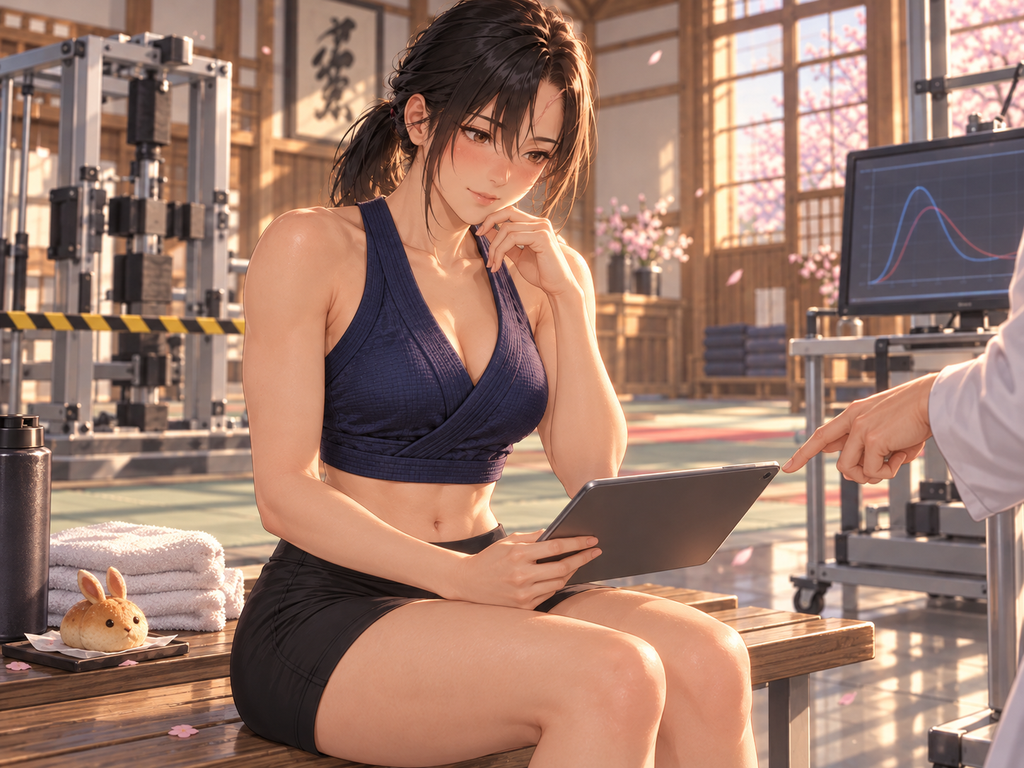
Before the Next Measurement
Once the equipment has been repaired, Reina changes the next exercise to a low-load grip test. The instructor stays nearby while the sensor records the subtle changes as she eases off her grip. When it is time for the two of you to review the readings, Reina sets the tablet between you and points to a gentle bend in the curve.
“This is where I started to let go.” Her fingertip rests at the edge of the screen; she does not rush to explain. After studying it for a moment, she tells you about an accident at a junior judo tournament. Another competitor was injured during a grip. They recovered later and told Reina it had not been her fault. Still, she remembers that instant: before her hand could loosen, fear had already taken hold in her heart.
Reina looks up at you. Her usually brisk voice sounds less certain. “I know it was an accident, but I still wonder whether I might be a beat too slow next time.” She gently slides the tablet toward you, a small, strained smile at the corner of her mouth. “Would you look over this part of the curve with me? Maybe you’ll spot something I missed.” If you’re willing, she would also like to tell you the rest of what happened at that tournament, in her own time.