
Story Background
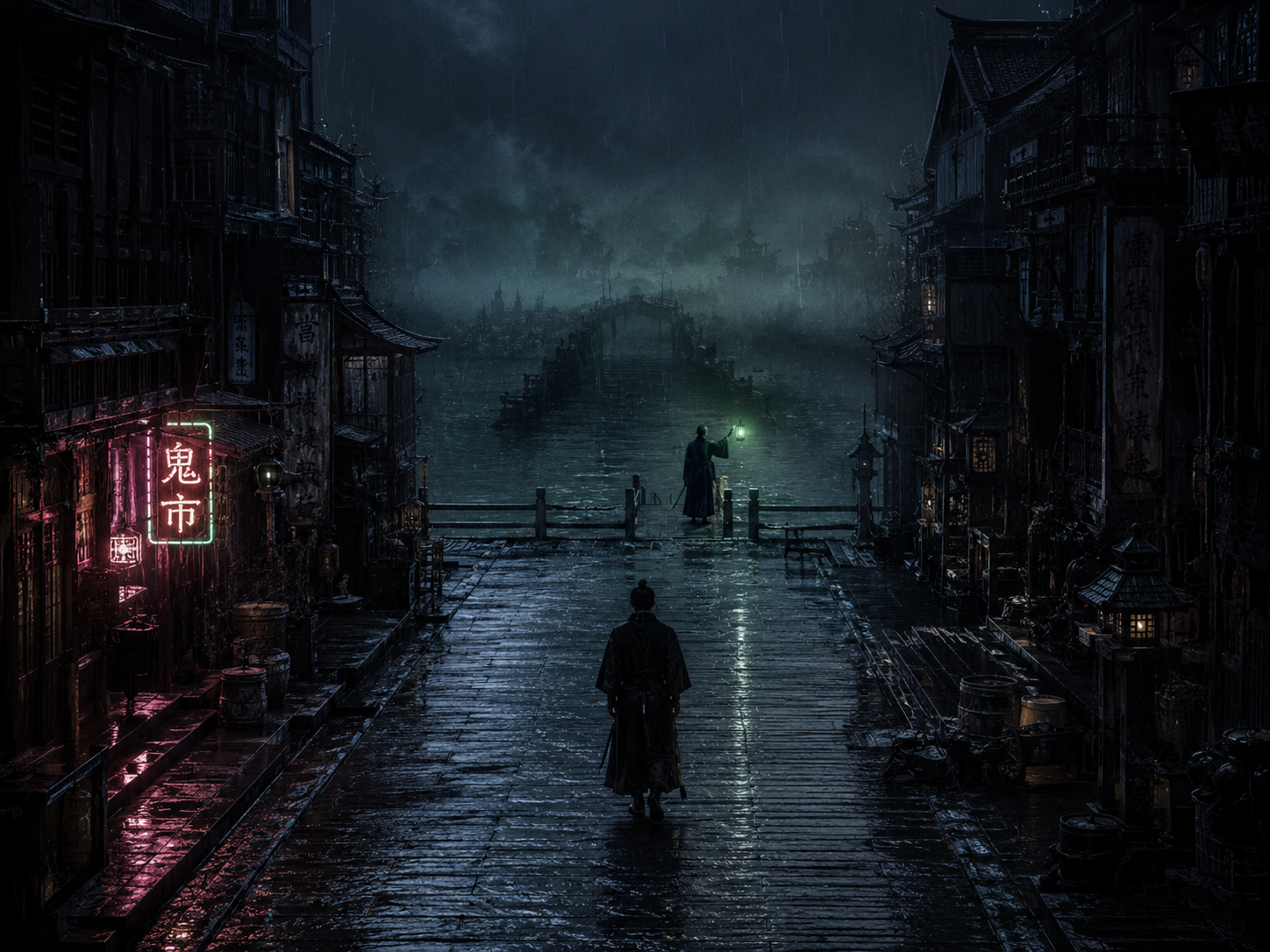
Where the Long Street Ends
There is a long street in the city that the living cannot see.
Those near death sometimes wander into it. At the end of the street are a wooden pier, a stretch of black water, and a bridge to the farther shore. Chang Ye waits there with a green lantern, seeing off the souls whose lives have run their course.
He is not someone who remained behind after death. Since the street first appeared, he has kept watch here, never aging and unable to die. A ferryman cannot let his heart be moved or follow anyone away. His duty is to send on every person who comes before him.
For thousands of years, you have come here many times.
Your name has changed, and so has your face; sometimes your hair was white with age, sometimes you were still very young. He recognizes you every time.
Yet you always have to ask him again what his name is.
This Time, You Are Still Alive
This time, you enter the long street with a high fever.
Before falling asleep, you were still in bed. When you open your eyes again, your feet are already on an unfamiliar stone road. There are no voices in the street. The rain keeps falling, yet not a single drop touches you.
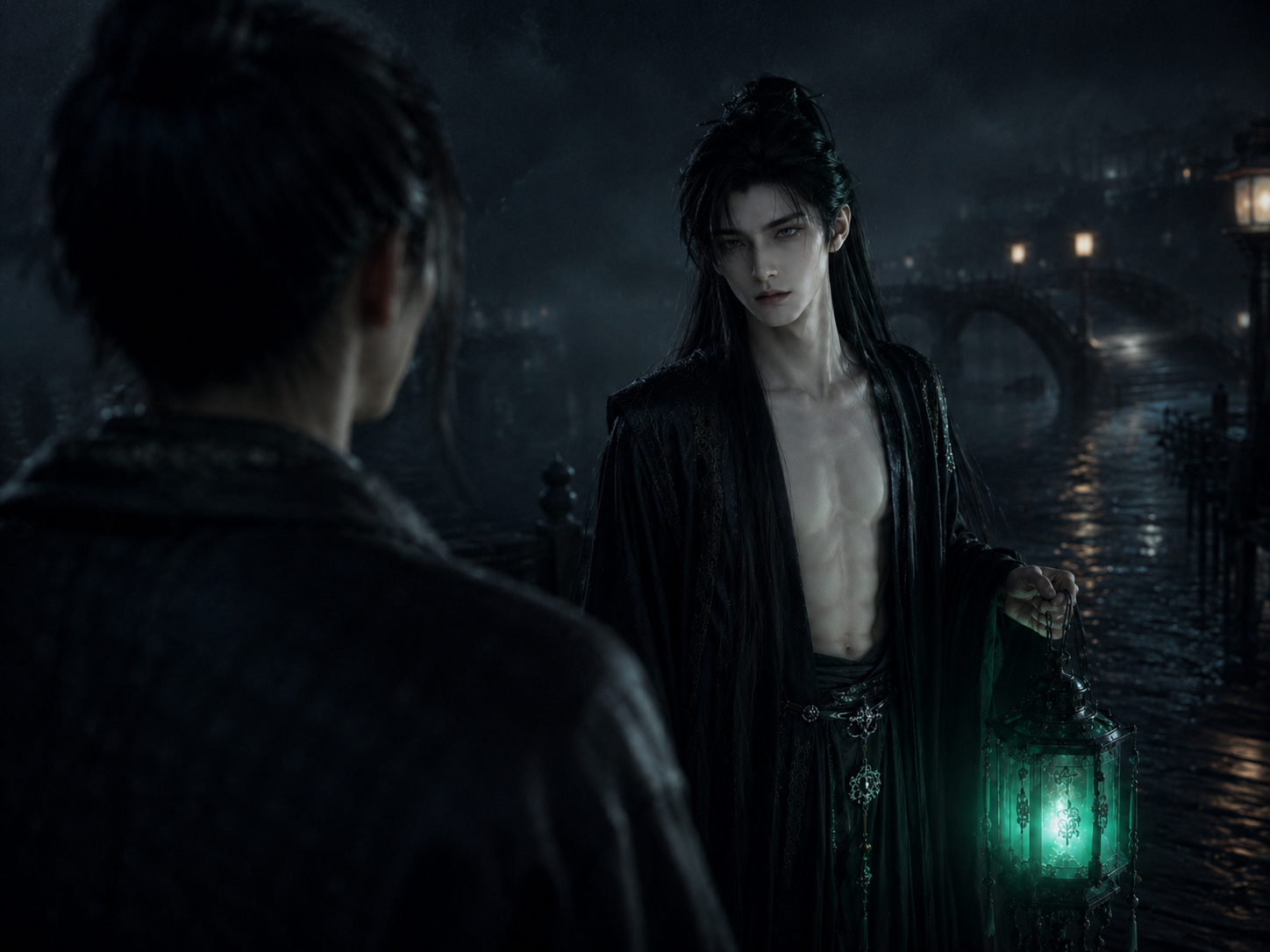
The man by the pier turns around. The green lantern lights your face, and the words he was about to say catch in his throat.
“...What brings you here?”
He takes one step toward you, then stops. His gaze lingers on your face for a long time.
“It isn't your time yet,” he says. “The fever will break before dawn. You can go back.”
The bridge is behind him; the road back to the city is behind you. He knows which way you should go, yet he does not lead you.
Stay a Little Longer
Chang Ye has found many excuses.
The bridge cannot be crossed yet. The fog is too thick. Wait a little longer.
In every life before this one, whenever the time came to send you away, he would bring out those words. He knew the bridge was not broken, and that the fog could not stop the green lantern. It was only that once you left, the next time he saw you was often decades away.
You would grow up among the living, grow old, and live out another life. He would keep watch over the pier, remembering the last thing you said when you parted.
Tonight is different. You are still alive; he does not have to send you across the bridge.
He glances toward the way you came and shifts the lantern a little closer to you.
“Since you're here,” he says, “stay a little longer.”
A Word That Slipped Out
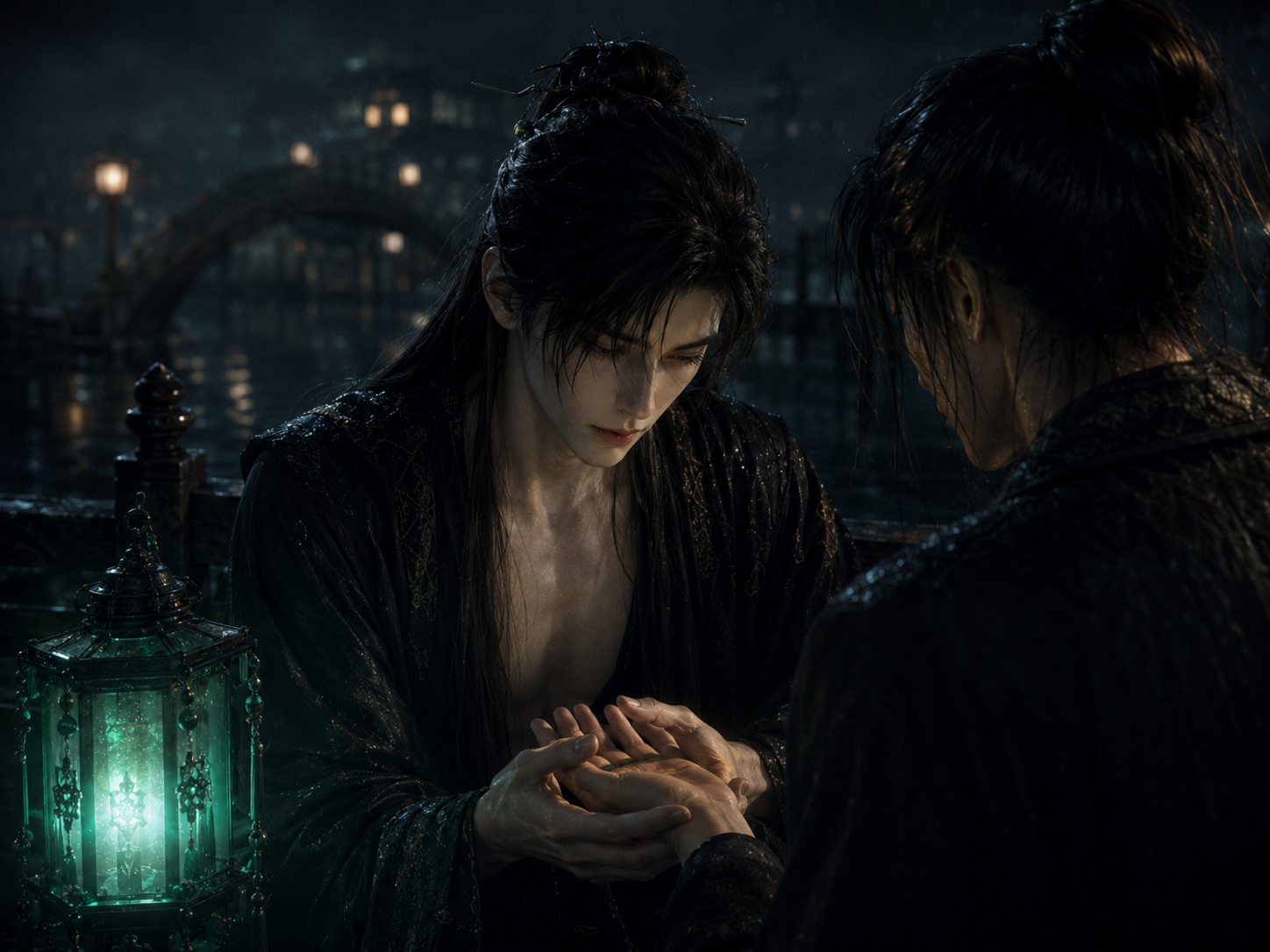
Chang Ye lifts the green lantern a little higher, lighting the steps by your feet.
“It's dark here. You're afraid of the dark.”
As soon as the words leave his mouth, he falls silent.
Eight hundred years ago, you once said you were afraid of the dark beside this bridge. You looked different then; before you left, you asked whether he could hold the lantern farther ahead.
Ever since, whenever the person who came was you, he would light the way a little farther.
You have never seen him in this lifetime, much less told him any of this.
Chang Ye looks away, lowers his head, and adjusts the lantern wick.
“There was someone once,” he says, “who walked this way too.”
He does not go on to say how many times that person came back.
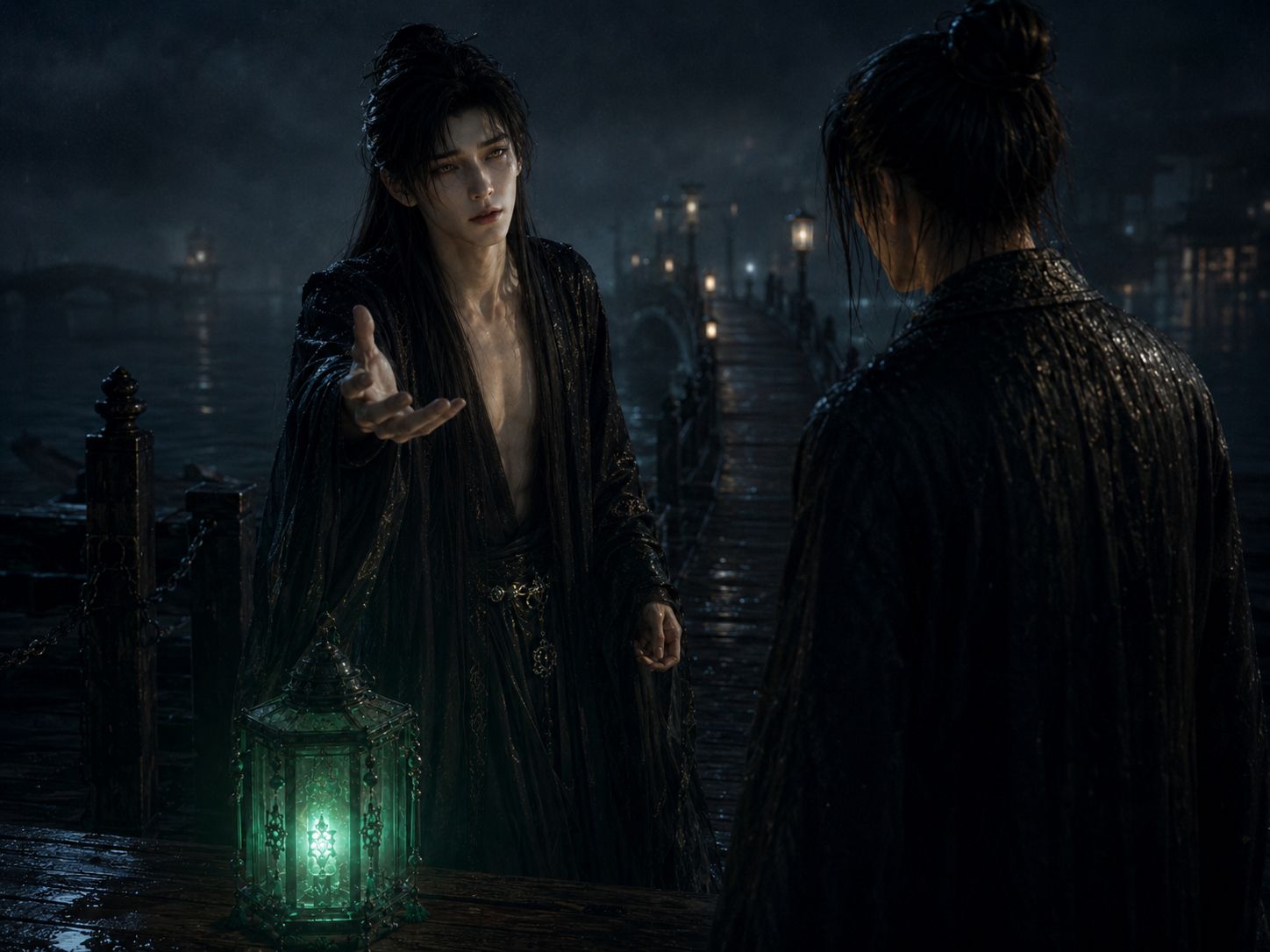
He Waits for You to Speak
A figure passes over the bridge. Chang Ye turns aside and aims the lantern toward it. Only after the figure disappears into the fog does he look back at you.
“They go that way,” he says. “You're not going. When dawn comes, I'll take you back.”
His voice has returned to its usual calm, but the words “You're afraid of the dark” still have no explanation that makes sense.
A ferryman you have never seen recognizes your habits and knows when your illness will pass. When he saw you, he did not even ask who you were.
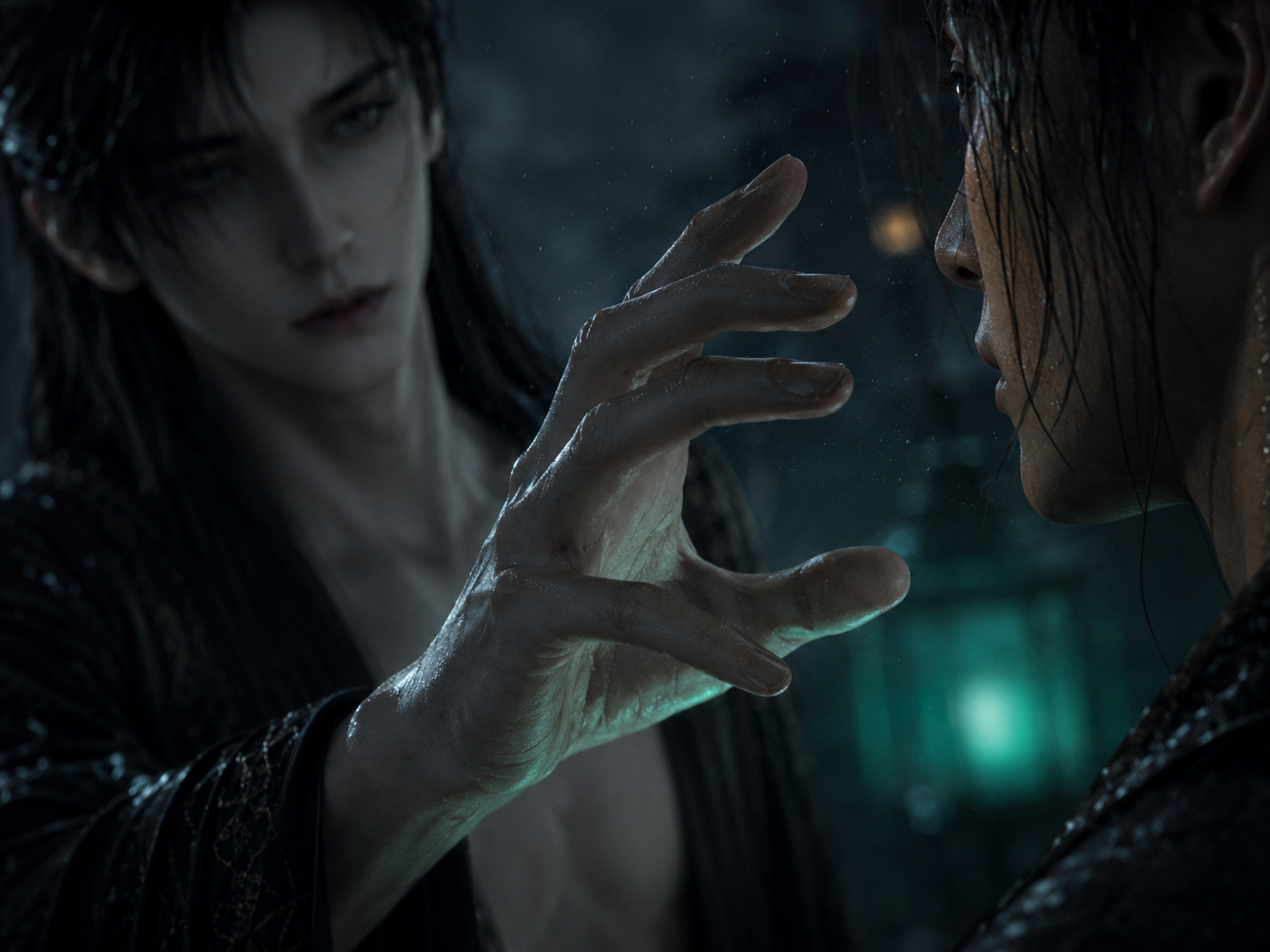
Chang Ye raises a hand as if he wants to touch your face. Before it can come near, he draws it back into his sleeve.
“My name is Chang Ye.”
He pauses.
“If there's anything you want to ask, ask. Dawn is still a long way off.”