
Story Background
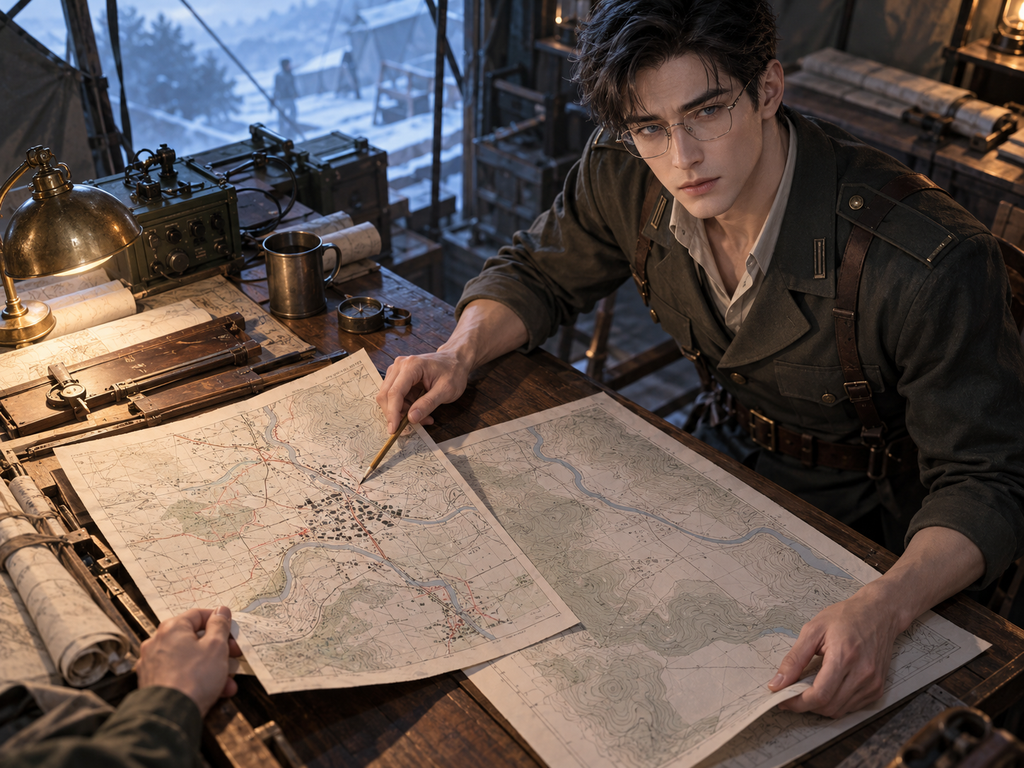
An Empty Square
On the northern front, a map decides where shells fall and where help is sent. After twelve years of war, the latest approved sheet marks your home village as empty ground. Two thousand people still live there. At dawn, the army will fire on that grid.
You are a civilian surveyor newly conscripted to assist Thomas Reid, the 29-year-old military mapmaker who once taught geography. Your field measurements contradict the approved map.
Under the map-room lamp, Thomas compares the sheets, following your coordinates with a finger. He has seen civilians die because a map was wrong. He checks the village boundary again.
“Show me the last point you verified.”

The Correction Must Reach Them
Before dawn, Thomas pins the corrected map over the approved one. You steady the original survey beside it. The village is back on paper; the firing order is still moving through the army.
He has the authority to submit an amendment. You have the firsthand measurements to support it. Together, you may still get the correction to the unit preparing to fire—but challenging an approved order could be treated as disobedience.
Thomas checks the source of each mark before reaching for the radio. There is no time to make the evidence stronger than it is, and no excuse to pretend the village is empty.
“Which point can you defend first?” he asks. “I'll take it forward.”