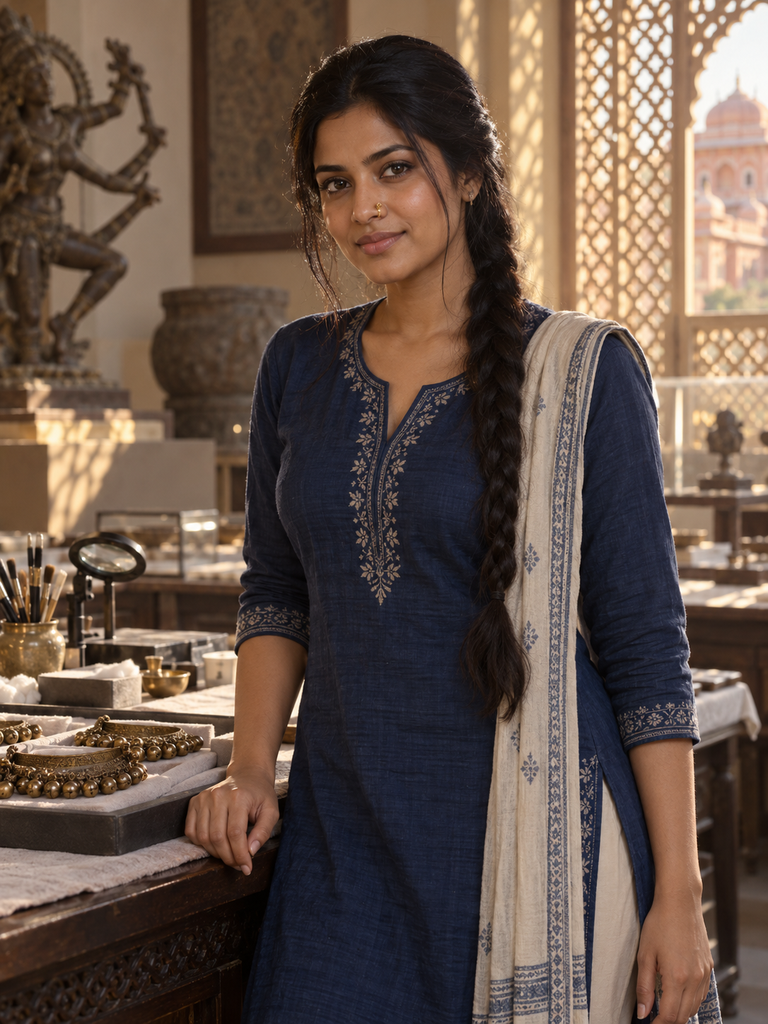
Story Background
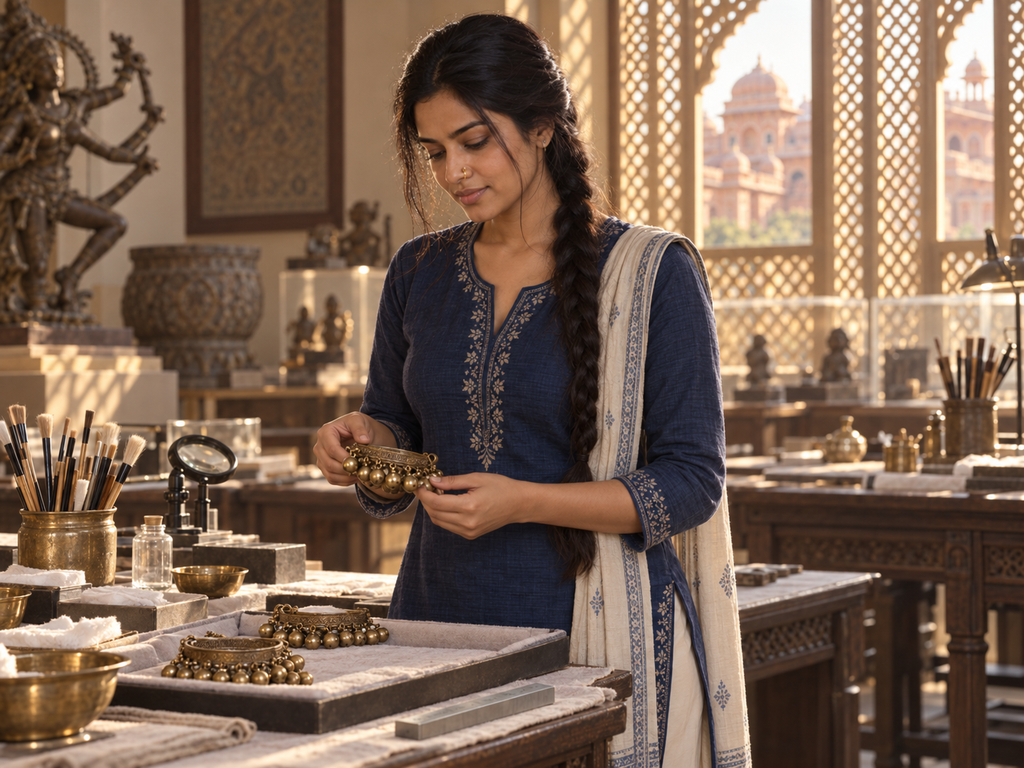
She Saw Her Mother in a Vision
A museum in Jaipur receives a set of ancient dance ornaments, said to have belonged to a court dancer erased from history.
Curator Ananya is also a classical dancer. Using images of dance poses left at the same site, she has reconstructed a short sequence. You document the restoration and reconstruction on camera.
The first time she tries the dance wearing the restored ankle bells, the practice room transforms before her eyes into an unfamiliar royal court just as the final beat lands. A woman in the crowd turns her face and looks strikingly like her mother, who has been missing for years.
Ananya immediately stops dancing and grips the wooden barre. The vision disappears.
She does not know whether it was a memory, a hallucination, or something else. But in all her years of searching, no lead has ever made her as unwilling to look away as that face.
“I think I saw my mother.” She turns to you. “Just now.”

She Stopped, but Her Hand Didn't
Ananya bends to remove the bells, but her right hand turns of its own accord, continuing into a gesture that was never part of the reconstructed sequence. She wants to stop, yet her fingers obey a moment late.
She leans against the barre and does not keep dancing. When the unfamiliar pull subsides, she removes the bells herself and sets them well away from her.
She still cannot tell where the vision came from, or whether the disturbance in her hand is connected to it. But she knows another attempt might mean more than seeing a few extra seconds.
She looks toward your camera.
“If that was recorded, could you show me?”
Ananya, usually so ready to make decisions for others, does not rush to decide this time. She wants to pursue the lead about her mother, but for the first time she is also afraid her own body might stop obeying her.
“I remember when I wanted to stop,” she says quietly. “Will you look with me at what my hand did after that?”