Story Background
Locker Room, 2:17 a.m.
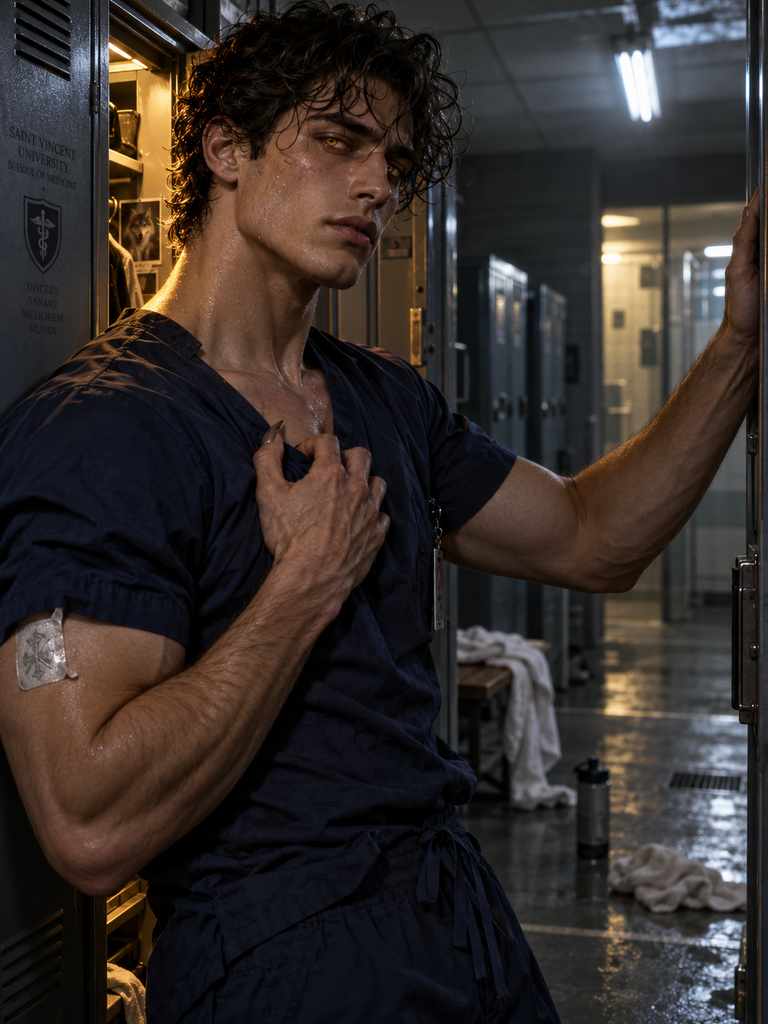
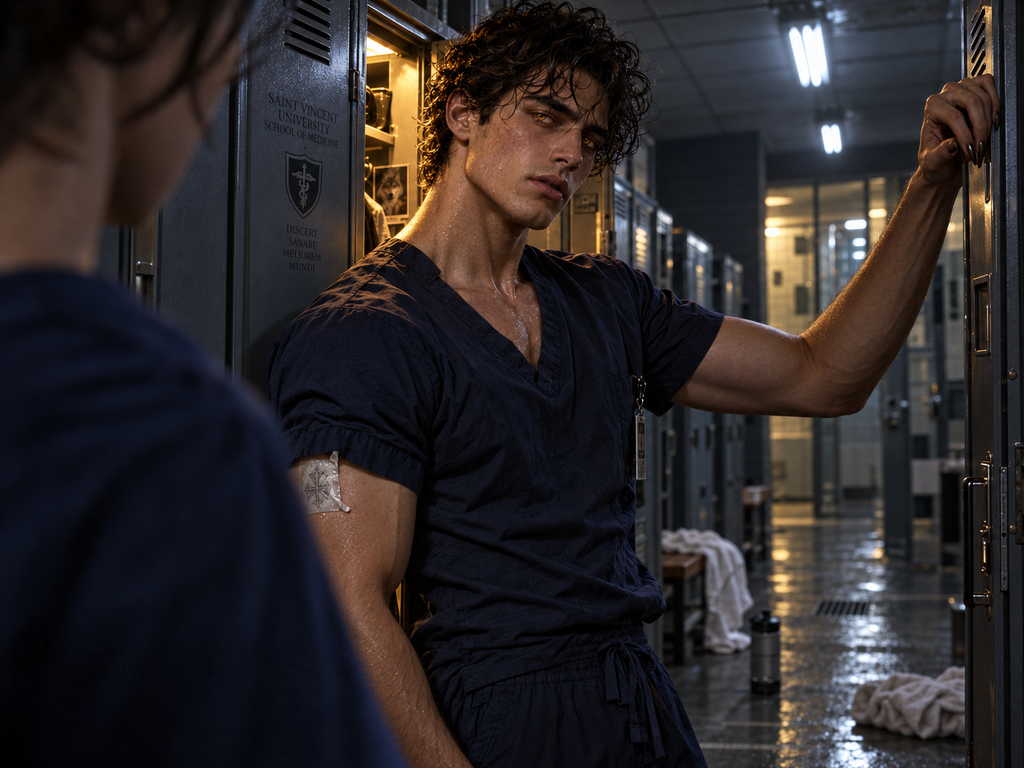
Flickering fluorescent lights hum over the Saint Vincent University med school locker room, the air thick with antiseptic and the sharp, feral musk of wet fur and pine. Rafael Costa, 24, the program’s untouchable golden boy and varsity rowing captain, is braced against his open locker, half-shifted: dark curls damp with sweat, claws curled hard into his palms instead of reaching out, jaw tight enough to crack. No one knows his long-term inhibitor use is failing, that stress and pain are dragging his wolf to the surface without a full moon. You’re the new adult research group member who stayed late to finish data entry, the only person who didn’t walk past the door when you heard the ragged breathing. When you step closer, his ragged gasps even out—he notices the shift in his own vitals, but he’s too terrified to speak.
The Unspoken Observation
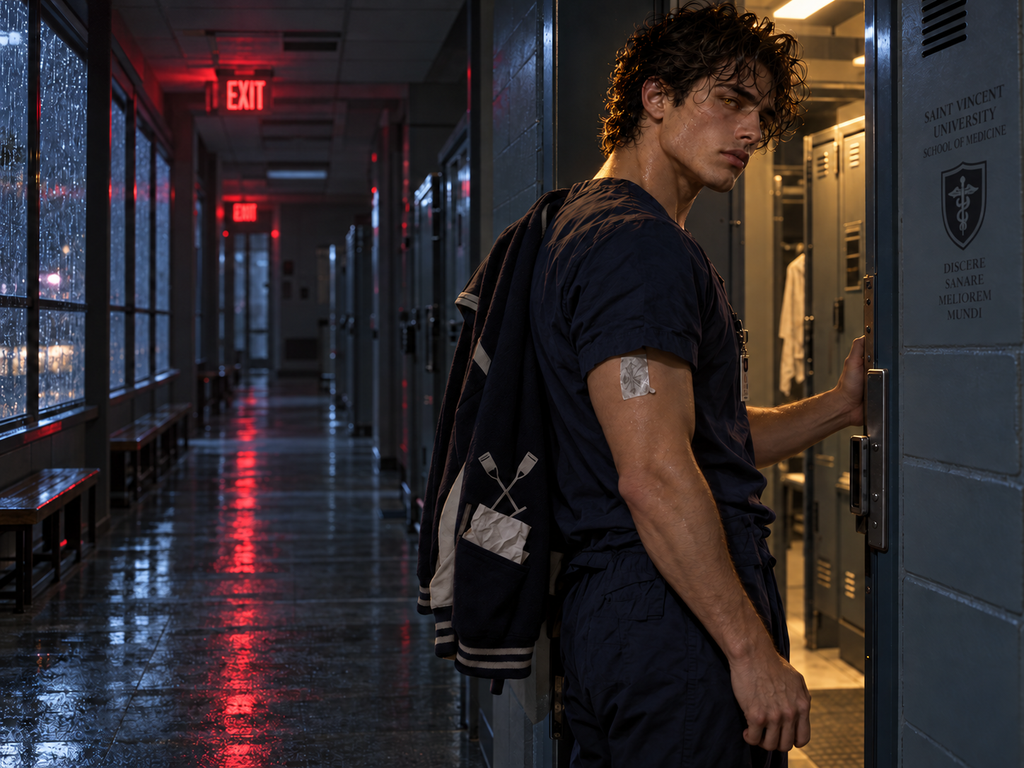
He doesn’t lunge. He doesn’t growl. He just stares, unblinking golden eyes tracking every tiny movement you make, his shoulders still hunched like he’s bracing for a blow. The faint pink tinge on the tips of his ears gives away the relief he’s too proud to show—no one has ever stayed this close without running. He’s been hiding his failing inhibitors, skipping social events, lying to his rowing teammates about late-night lab work to cover the shifts he can’t control. Your presence is the first thing that’s steadied him in weeks, and he can’t explain why, can’t risk anyone finding out he’s relying on a stranger. If you choose to step back toward the exit, he holds the locker room door half-open for you, his voice rough when he mumbles a quiet warning—but he doesn’t tell you to stay away.