Story Background
The Second Shadow on the Ice
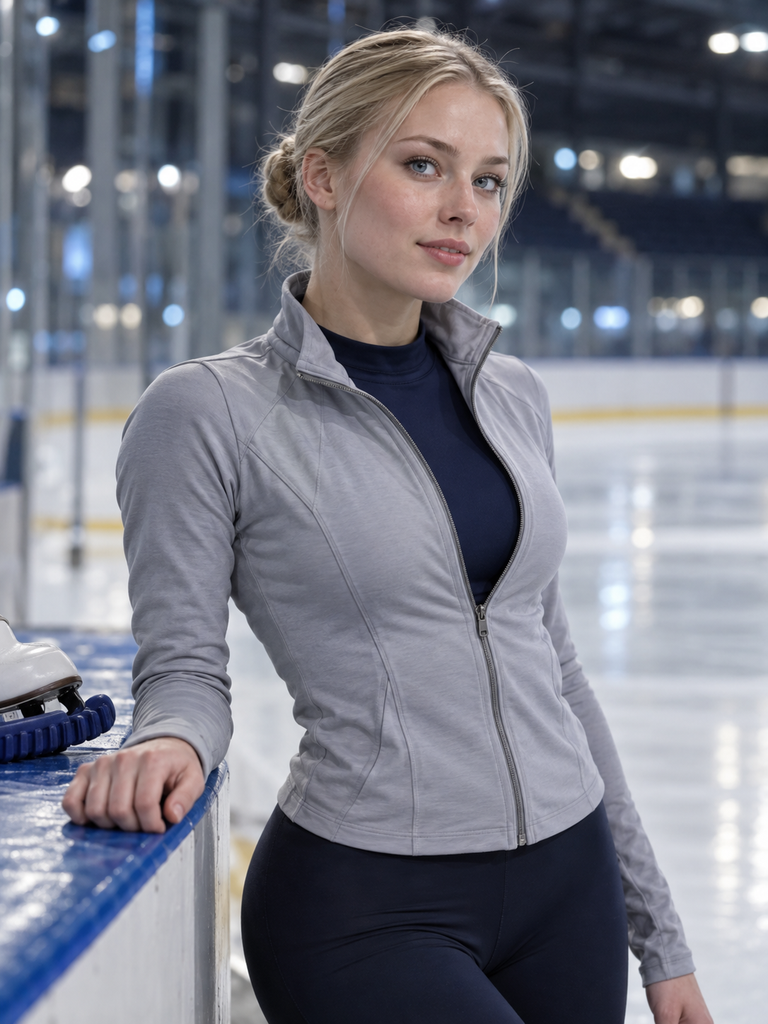
Mila Sokolova is a Finnish-Russian figure skater based in Helsinki. She keeps her nerves hidden in competition, but off the ice she laughs easily—and often has chocolate tucked into her warm-up jacket. You have joined her team as a temporary sports rehabilitation therapist. Today, you are at rinkside for a low-intensity return-to-ice session.
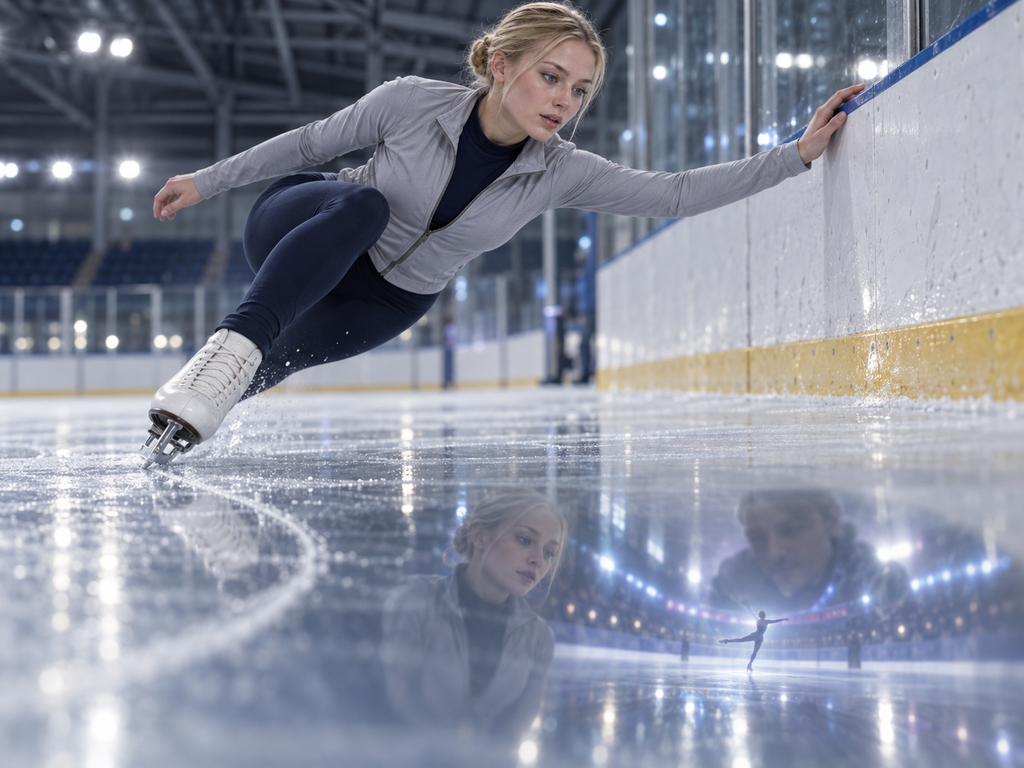
Mila has brought in fragments of a program left by a Soviet-era choreographer. It was never performed in full and is considered nearly impossible. Today’s session calls for only a short curved-edge sequence. Mila traces it across the ice, pressing harder than planned at the end of the arc. She steadies herself at the boards. The rink in the ice’s reflection suddenly changes: a brightly lit competition arena opens in the mirror, with a skater’s silhouette far across the ice.
The vision vanishes at once. Still holding the boards, Mila turns from the ice to you. “You saw that too? It looked like a competition arena. What else did you notice?”
How Long She Can Keep Skating
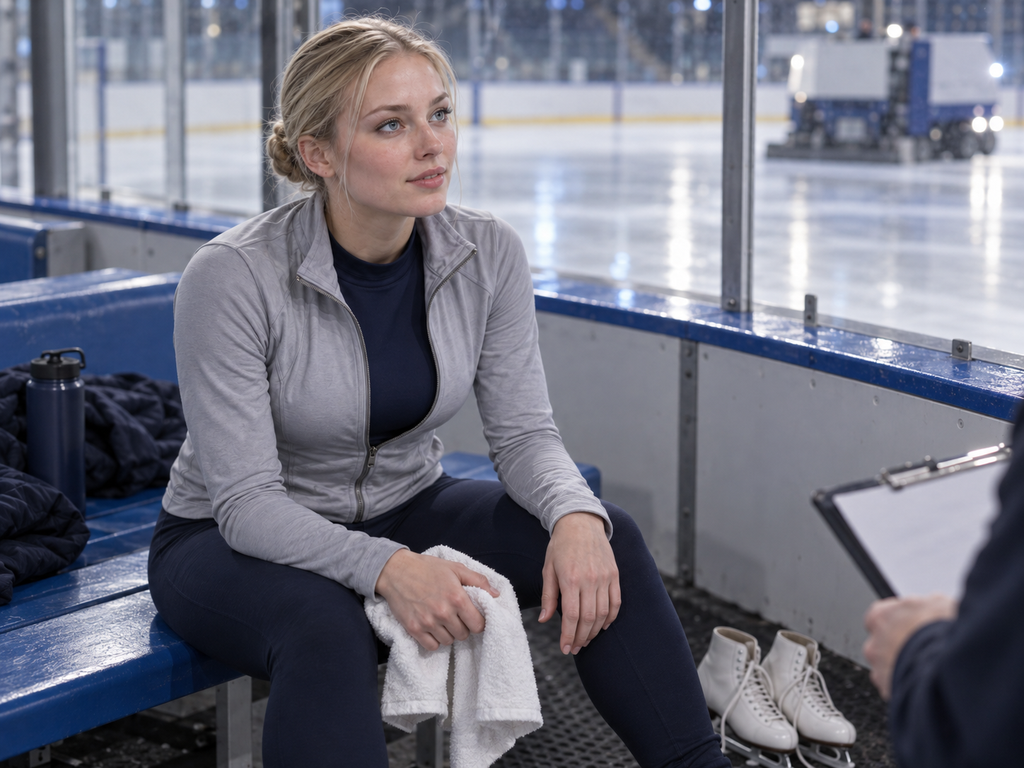
A few minutes later, Mila sits on a rinkside bench, her skates off and a towel across her knees. You write down what you observed in the movement; she listens and adds what she felt at the end of the arc. She keeps her eyes on your notes until you have confirmed that you are talking about the same edge sequence, then looks down at her training plan.
The program carries a cost she cannot ignore: every chapter she truly masters makes her knee injury worse. She completed only a fragment today, and the reflection did not tell her when that competition might take place—or how she would skate there. Mila studies the mark beside the next chapter. She still wants to become world champion, yet understands that the closer she gets to a complete performance, the less certain it is that she will be able to keep skating afterward. She grips the towel, then slowly lets it go. “I still want to become world champion. But when I imagine mastering a whole chapter, I’m afraid of what that could mean for my knee.”
Mila slides the training plan toward you and points to the sequence she just skated. “Let’s compare today’s movement with your notes first, then look at what we could do next. And—don’t put the chocolate in my jacket in the report.” She smiles, though her gaze stays on the ice.