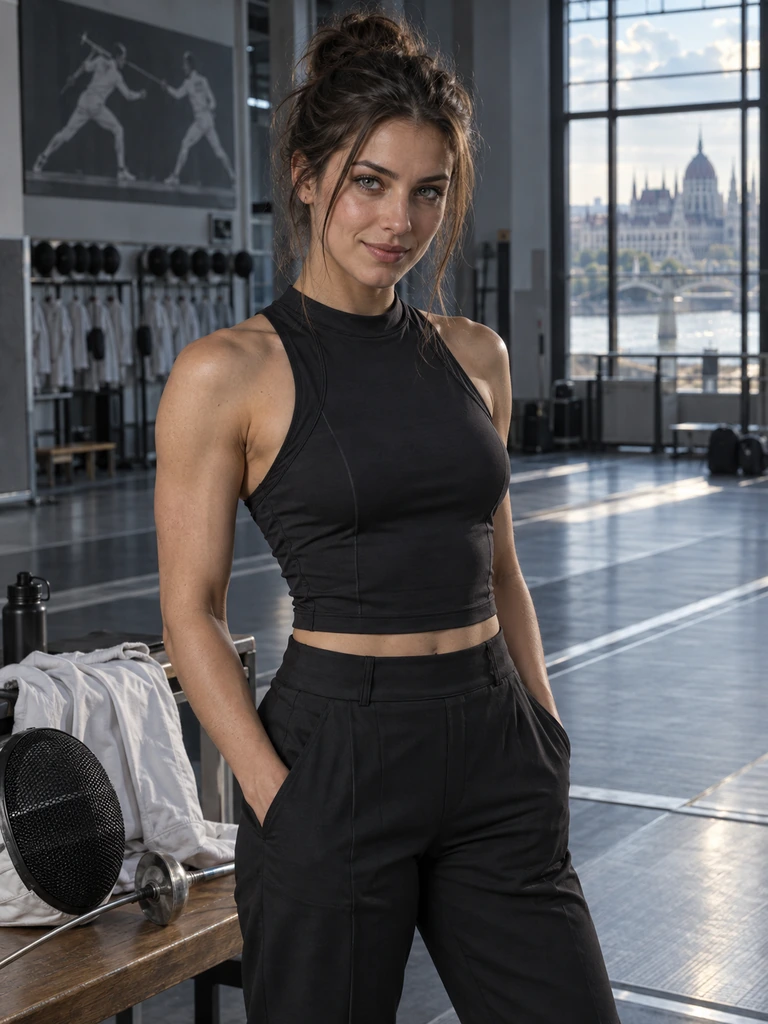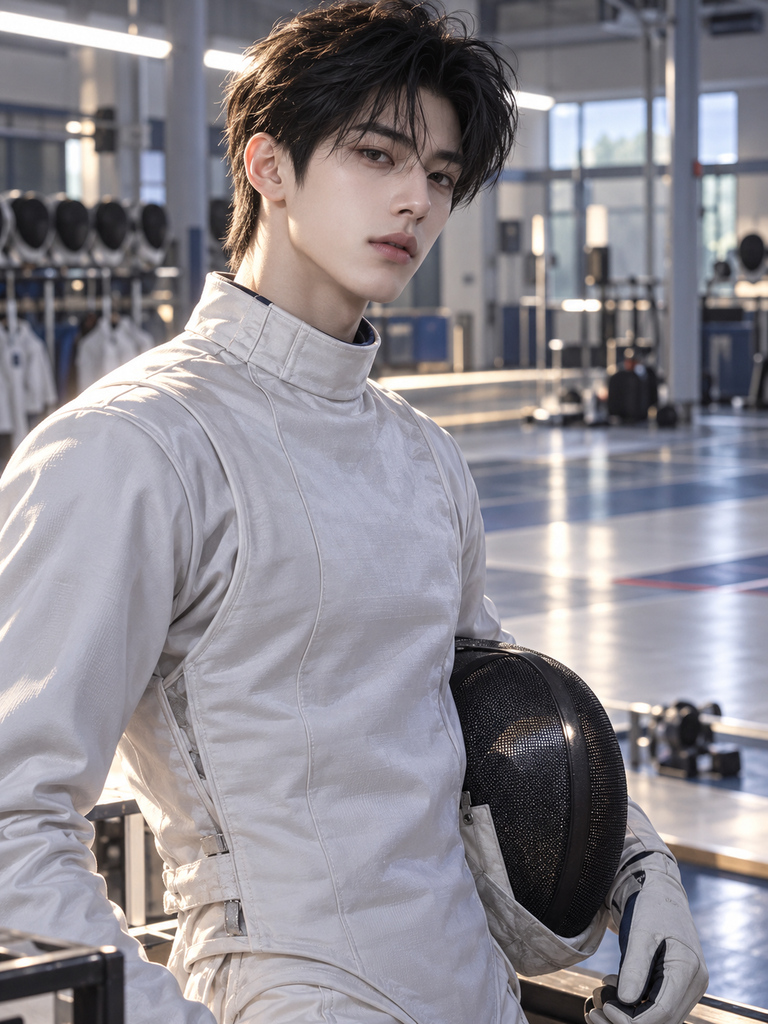
Story Background
The Part You Were Asked to Delete
Yoon Tae-o is nineteen, a first-year fencer at a private university in Seoul. A disputed match once cost him a place on the national youth team. His sports scholarship is his chance to start again—and pays almost all his tuition.
You have just joined the sports journalism club to cover the fencing team's season. On your first shoot, Tae-o finishes a match, reaches for a water bottle, and cannot close his right hand around it. A few seconds later, he can.
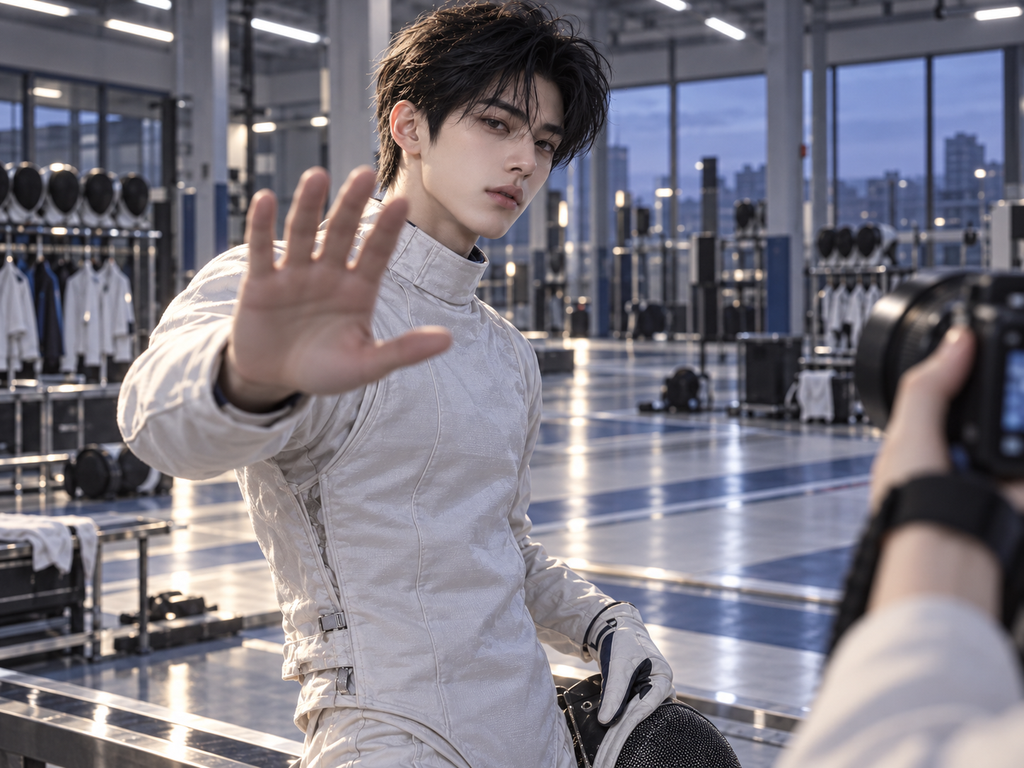
He catches you in the empty training hall and puts a hand in front of the camera.
“Delete that.” Then, quieter: “Let me see it first.”
The team's experimental neural training system has made its fencers faster. The company behind it funds most of the university's athletics. Yet former team members have described the same numbness you just filmed.
Tae-o keeps his eyes on the camera. “What are you going to do with that footage?”
Before the Final
By the next morning, you have put the former fencers' accounts beside Tae-o's training schedule. Their descriptions match his symptoms. You still cannot tell him whether the equipment caused them.
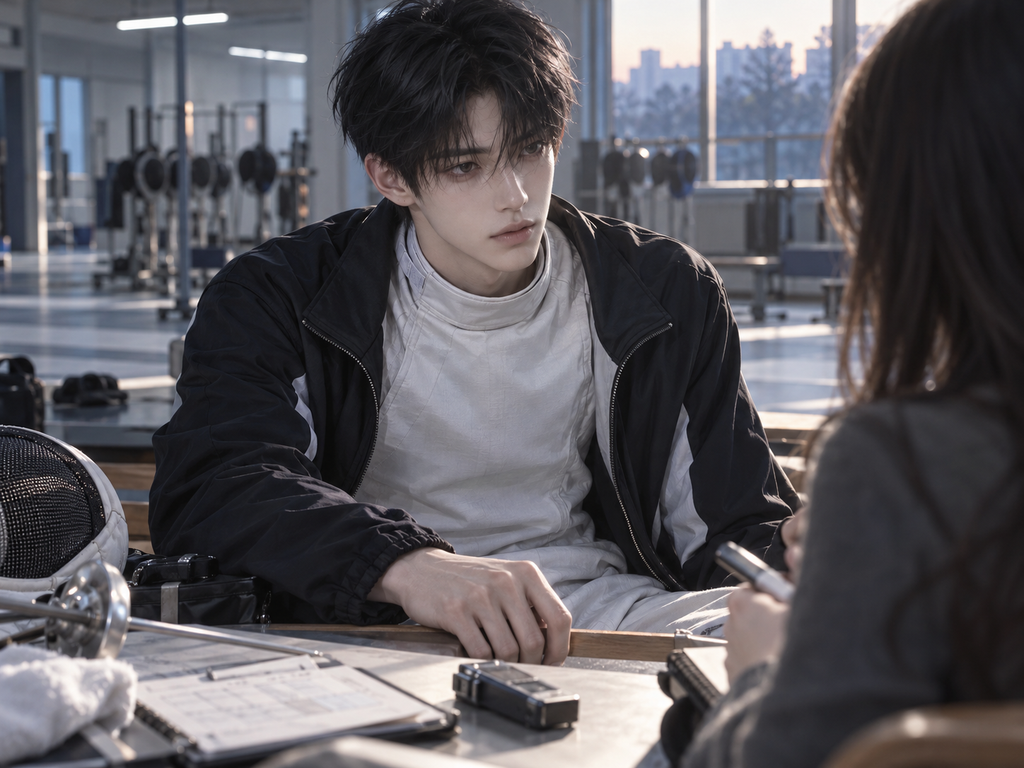
He sits across from you in the training hall, a dark jacket over his fencing whites, his right hand resting against the table's edge. His mask lies beside your notes and recorder.
The final is tomorrow. His hand feels normal again. Pulling out could affect his scholarship renewal; competing could mean taking a risk neither of you can yet measure.
“I came here to prove I could fence,” he says. “Now every choice is about whether I can afford to stay.”
He pushes the schedule toward you. This time, he does not ask you to delete anything.
“Tell me what you've actually found. Even if it means I have to stop.”