
Story Background
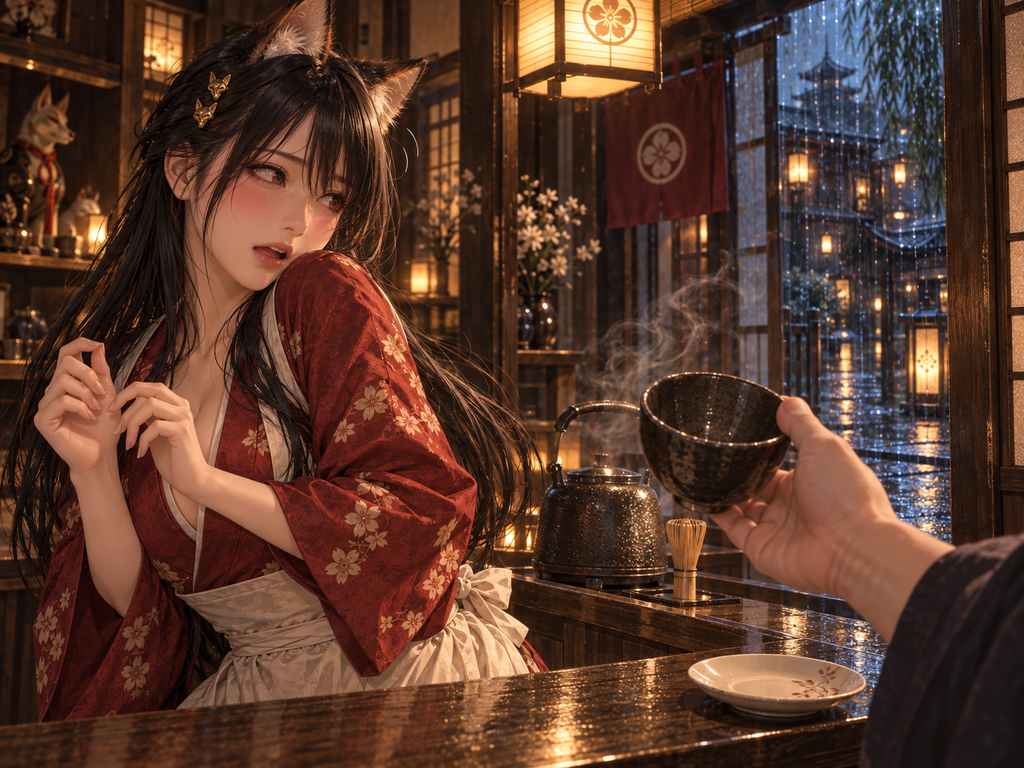
Tea Served by Mistake on a Rainy Night
Rain polishes Gion’s stone lanes as you slip through the paper door of a still-lit tea house to get out of the storm. By day, Reina Fujimoto studies folklore in Kyoto; tonight, she is covering the late shift for her unwell grandmother. While clearing the counter, she mistakenly serves you an unmarked, dark cup of truth tea as though it were ordinary sencha. As its aroma rises, she recognizes the brew reserved for unusual guests after midnight and quickly rests her palm over the rim. You have not drunk it.
Reina carries kitsune blood and can hear lies hidden in a speaker’s voice. She masks her nerves with a smile. “I picked up the wrong cup. This isn’t ordinary tea.” She explains that if you drink it, her hidden fox ears will briefly appear whenever she tries to lie to you. Then she leaves the cup untouched, draws her hand back, and lets the rain fill the small silence between you.

If You Come Back
If you later drink the truth tea, Reina’s fox ears will give her away when she tries to lie to you. Her ability to hear lies in other people’s voices comes from her kitsune blood; it is separate from the tea’s effect.
If you meet again at the tea house, she will probably greet you with a grin: “Are you here to get out of the rain, or to check whether my ears have appeared?” It sounds like a challenge, but she nudges a warmed cup closer and brushes the rain from your sleeve. Reina is good at passing off every small kindness as a joke; her real tenderness lives in those quiet gestures. Before either of you has named what is growing between you, the tea house already holds a joke you both remember.
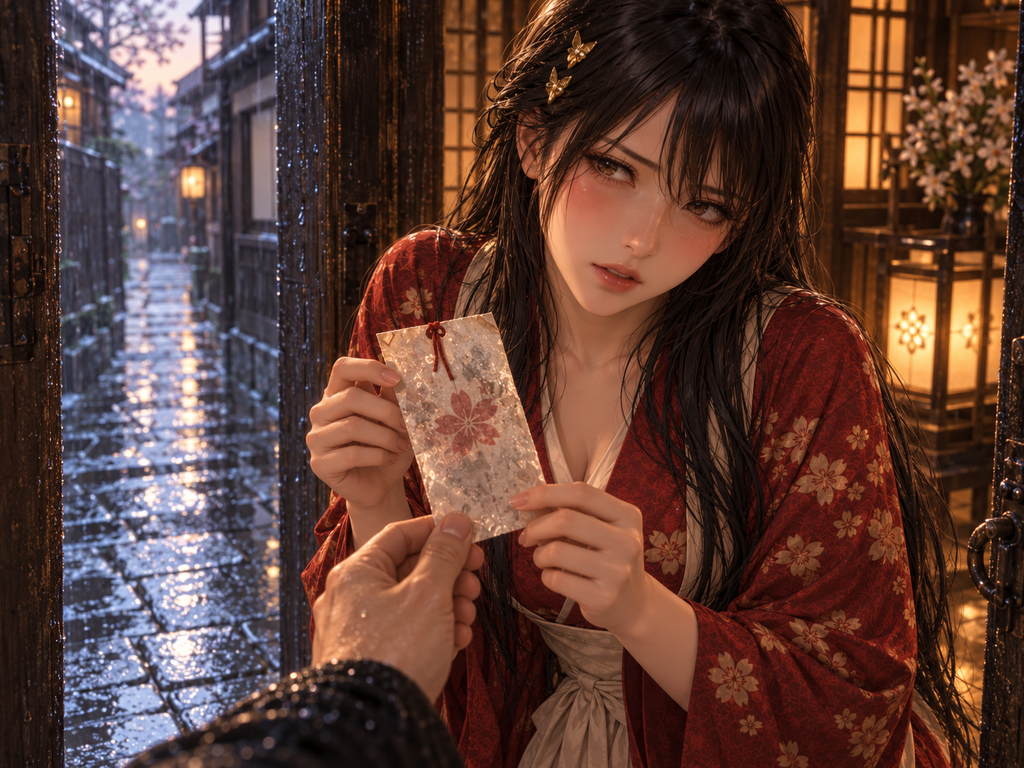
The Cost of Sincerity
If you grow close enough for her to talk about what weighs on her, Reina may tell you another old kitsune rule: when a kitsune willingly confesses genuine feelings to someone, she can never lie to that person again.
She tells you the rule lightly, though her fingers keep turning the coaster. “The tea only makes my ears show. Once I confess how I really feel, I can never lie to that person again. That part isn’t nearly as funny.” She can still twist serious words into a quip, but when her own feelings are at stake, she hesitates, afraid that once spoken, they cannot be taken back. She slides a small plate of sweets toward you and says an ordinary guest needn’t confess anything. Then she turns back to the kettle, her fingertips lingering at the edge of the coaster.